How to prevent and control strawberry powdery mildew? Master these methods
How to prevent and control strawberry powdery mildew? Please advise. Strawberry powdery mildew can be prevented and controlled by referring to the following techniques: 1. Disease symptoms. It mainly damages leaves, flowers, fruit stems and fruits, and rarely occurs on runners. In the early stage of leaf infection, a thin frost-like white powdery substance appears locally on the underside of the leaves, and then rapidly spreads to the whole plant. As the disease worsens...
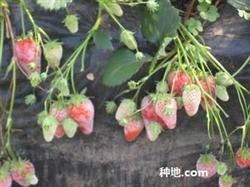
How to prevent and control strawberry powdery mildew? Please advise
Strawberry powdery mildew can be prevented and controlled by referring to the following techniques:
1. Disease symptoms. It mainly damages leaves, flowers, fruit stems and fruits, and rarely occurs on runners. In the early stage of leaf infection, a thin frost-like white powdery substance appears locally on the underside of the leaves, and then rapidly spreads to the whole plant. As the disease worsens, the leaves curl upward in the shape of a spoon, dark discolored spots of varying sizes appear on the leaves, and in the later stage they become reddish-brown lesions; the leaf margins begin to shrivel, and eventually the entire leaf dries up and dies. After flower buds and flowers are infected, the petals turn red and the flower buds cannot open. After fruits are infected with this disease, the fruit surface is covered with a white powdery substance, the fruits stop swelling, coloring becomes poor, and they lose their commercial value.
2. Disease pattern. Powdery mildew overwinters as pathogen residues on the ground or on old strawberry leaves, becoming the source of infection the following year. In the following spring, when environmental conditions are suitable, the overwintering mycelium produces new conidia, which spread through airflow and cause primary and secondary infection of strawberries. In solar greenhouses, strawberries are harmed by residual pathogens from the previous year, pathogens carried by seedlings, and other transmission routes. The optimum temperature for pathogen infection is 15-20°C; disease does not occur below 5°C or above 35°C, and both dry and high-humidity conditions can cause the disease to spread. However, pathogen spores cannot germinate when water droplets are present. Rainfall can inhibit spore dispersal, while on sunny afternoons spores disperse and spread in large numbers. This disease is especially severe in greenhouses. Severe outbreaks can significantly reduce fruit yield and also degrade seedling quality, making survival after transplanting difficult.
3. Prevention and control methods. Use varieties with strong resistance to powdery mildew, such as Baojiao Zaosheng, Hani and Allstar. Clean the orchard in winter and burn diseased leaves. Promptly remove old leaves, diseased leaves and diseased fruits from the ground, and bury them deeply in a centralized manner. Pay attention to the ventilation conditions of the orchard and drain promptly after rain. In the early stage of the disease, spray 30% triflumizole 5000-fold solution, or spray tetraconazole and sulfur suspension concentrate. The control period can generally be set before flowering under open-field cultivation, during the runner production stage, and after planting; under protected cultivation, around the flowering period.
Click to get more strawberry cultivation techniques
Click to get more fruit cultivation techniques