How Should a Strawberry Field Be Fertilized? Detailed Explanation of Fertilization Methods and Key Points
How should a strawberry field be fertilized? Please advise. Strawberry is a perennial herbaceous plant that absorbs large amounts of nutrients from the soil. Strawberry fertilization should be based mainly on base fertilizer, applying about 5000 kg of farmyard manure per mu, and should also be combined with quick-acting nitrogen, phosphorus, and potassium fertilizers to meet the needs of normal plant growth. The role of nitrogen fertilizer is to promote...
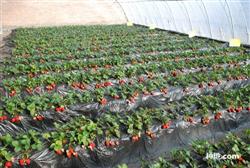
How should a strawberry field be fertilized? Please advise.
Strawberry is a perennial herbaceous plant that absorbs large amounts of nutrients from the soil. Strawberry fertilization should be based mainly on base fertilizer, applying about 5000 kg of farmyard manure per mu, and should also be combined with quick-acting nitrogen, phosphorus, and potassium fertilizers to meet the needs of normal plant growth. Nitrogen fertilizer promotes the formation of large numbers of leaves and runners, strengthens vegetative growth, increases fruit size, and raises yield; phosphorus fertilizer promotes flower bud differentiation and increases the fruit-setting rate; potassium fertilizer mainly promotes fruit ripening, increases the sugar content of the fruit, and improves fruit quality. Therefore, when the amount of base fertilizer applied is insufficient, fertilizer should be supplemented in a timely manner according to the various phenological periods of strawberry. Generally, topdressing should be carried out well during the following periods:
Pre-flowering fertilizer. This is carried out after strawberry begins to grow in early spring and before flowering (around mid-March) to meet the needs of flowering for various nutrients. Apply 10 kg of urea and 25 kg of phosphorus fertilizer per mu, and after fertilizing, carry out intertillage and irrigation.
Post-fruiting fertilizer. After strawberry has fruited heavily, the plant body lacks nutrients. In order to restore plant growth as quickly as possible, form more new leaves and new roots, and create conditions for flower bud differentiation in autumn, this topdressing should appropriately increase potassium fertilizer. Per mu, 10-15 kg of urea and ammonium sulfate, 15-20 kg of phosphorus fertilizer, and 7.5-10 kg of potassium chloride can be applied.
Flower-bud-promoting fertilizer. This is carried out before strawberry flower bud differentiation and plays a guaranteeing role in the normal growth of strawberry plants and flower bud differentiation. Mainly apply phosphorus and potassium fertilizers, with a small amount of nitrogen fertilizer.
In addition, strawberry can also be topdressed outside the roots (that is, foliar spraying). According to the growth condition of strawberry, fertilizers such as urea, monopotassium phosphate, zinc sulfate, ferrous sulfate, borax, and magnesium sulfate can be selected for foliar spraying of nitrogen, phosphorus, potassium, and some trace elements during the period from strawberry bud appearance to the end of flowering, generally 2-3 times. The spraying time should preferably be chosen on cloudy days or in the evening of sunny days, because evaporation is large at hot noon and strawberry is prone to fertilizer damage. Research results show that spraying a 0.3% urea solution during the flower bud differentiation stage and the flowering and fruit-setting stage of strawberry can increase yield by 10%-20%.
Click to get more strawberry cultivation techniques
Click to get more fruit cultivation techniques