What are the methods and steps for strawberry seedling propagation?
How do you propagate strawberry seedlings? Please introduce the following methods for reference in guiding strawberry seedling propagation: 1. Site selection, fertilization, and bed preparation. The nursery site should be a loose, fertile sandy loam plot, requiring convenient drainage and irrigation, and plots with heavy clay soil must be avoided. It is best to choose an insect-proof isolation screen house that has undergone soil disinfection....
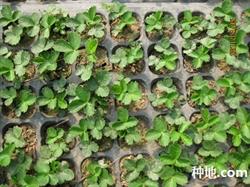
How do you propagate strawberry seedlings? Please introduce
For strawberry seedling propagation, you can refer to the following methods:
1. Site selection, fertilization, and bed preparation
The nursery site should be a loose, fertile sandy loam plot, requiring convenient drainage and irrigation, and plots with heavy clay soil must be avoided. It is best to choose an insect-proof isolation screen house that has undergone soil disinfection. After the nursery site is selected, thoroughly remove remaining branches, dead leaves, and weeds from it, then carry out full ploughing. The ploughing should be done carefully; in conjunction with ploughing, remove underground residual roots, especially the roots of perennial weeds. The ploughing depth is 20-25 cm, and finally rake it level. After raking level, apply base fertilizer using the whole-orchard fertilization method. Apply 4000-5000 kg of organic fertilizer and 30-40 kg of nitrogen-phosphorus-potassium compound fertilizer per mu. After fertilizing, plough once more so that the fertilizer and topsoil are mixed evenly. Strawberry nurseries should be planted in beds; the bed width is generally 1.0-1.2 m, and the bed ridge is about 25 cm. In arid areas, flat beds should be made; in rainy areas, high beds should be made, with a bed height of about 15 cm.
2. Seedling selection
The first step in propagation is to obtain more robust runner seedlings, so the planting stock should be tissue-cultured virus-free seedlings. This is because virus-free seedlings restore the varietal characteristics of the original cultivar, are pure in variety, grow vigorously, and produce many robust runners.
3. Planting of seedlings
In the Jianghuai region, most cultivars are generally planted in early April. For cultivars with a high propagation coefficient, plant 1 row per bed, with a plant spacing of 80 cm; for cultivars with a lower propagation coefficient, plant 2 rows per bed, with a row spacing of 30 cm and a plant spacing of 80 cm. When planting, first dig holes according to the determined plant and row spacing, apply a root-setting fertilizer at 1-2 g of urea per hole, and then plant. When planting, the plant roots should be allowed to spread naturally, and the soil should be firmed so that after leveling, the crown is neither buried nor the roots exposed. After planting, water thoroughly in time, and check carefully; promptly adjust seedlings planted too deep or too shallow, then set up a shade net. If planting is done in high-temperature weather, it is best to add straw mats around noon. If the seedlings show wilting at noon, water promptly in the morning and evening. After all the seedlings have survived, loosen the soil once to eliminate soil compaction caused by watering. Carbendazim or thiophanate-methyl can be sprayed to eliminate aboveground and underground pathogenic fungi.
4. Nursery site management
After the seedlings have recovered from transplanting, if the leaf color is relatively pale and the petioles are relatively thin, topdressing should be carried out. If foliar topdressing is used, the concentration of urea and potassium dihydrogen phosphate should be controlled at 0.3%, with a topdressing interval of 10-15 days. Because the nursery soil is fertile and the space is large, weeds easily grow, and repeated weeding is needed many times. Before runners appear, in conjunction with weeding and loosening the soil, promptly remove old leaves. When a large number of runners have appeared, hoeing is not suitable, and it is best to pull weeds by hand. After the seedlings produce runners, promptly guide the runners and press them down with soil so that the runners are evenly distributed on the ground and early adventitious roots form. When the number of runner seedlings produced has reached the propagation coefficient (30-60 plants), pinch off the growing tips of the runners, and any runners that appear afterward should also be removed in time to favor the growth of the runner seedlings, making them thicker and stronger, so they are suitable for use in production fields.
Click to get more strawberry cultivation techniques
Click to get more fruit cultivation techniques