How to manage strawberries in a greenhouse? Mastering these technical points is key
How should strawberries be managed in a greenhouse? Please guide greenhouse strawberry cultivation. The high-temperature and high-humidity environment inside the greenhouse is extremely favorable for the occurrence of various diseases and pests. Therefore, strengthening integrated disease control is a key step to achieving high and stable yields of greenhouse strawberries. 1. Leaf blight mainly damages leaves, petioles, fruit stalks,...
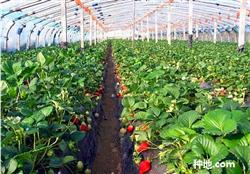
How should strawberries be managed in a greenhouse? Please advise
When cultivating strawberries in a greenhouse, the high-temperature and high-humidity environment inside the greenhouse is extremely favorable for the occurrence of various diseases and pests. Therefore, strengthening integrated disease control is a key step to achieving high and stable yields of greenhouse strawberries.
1. Leaf blight. It mainly damages leaves, petioles, fruit stalks, tender stems and sepals. On the leaves, purple-brown, irregular spots with indistinct margins first form, then expand into irregular lesions 3-4 mm long. If multiple lesions occur on one leaf, the whole leaf turns dark, then yellow-brown and dies. Small black dots are scattered within the lesions. On fruit stalks and petioles, the lesions are black-brown, initially spot-like, then expanding into streaks. Control measures: promptly remove diseased leaves and old leaves. In the early stage of the disease, spray with 70% chlorothalonil wettable powder at 500-700 times dilution, then spray again after 10 days, or use 200 g of 70% mancozeb wettable powder per mu diluted in 75 kg of water for spraying.
2. Powdery mildew. It mainly damages leaves, flowers, fruits, fruit stalks, petioles and runners. When leaves are affected, a thin frost-like white powder appears on the underside of the leaves at first, then spreads to the whole plant. As the disease intensifies, the leaves curl upward into a spoon shape; affected flower buds and petals turn purple-red and cannot bloom or cannot bloom fully; when fruits are infected, the fruit surface is covered with a white powdery substance, does not enlarge, becomes slender, and the young fruit loses its luster and hardens. Control measures: in the early stage of the disease, promptly use triadimefon at 2500-4000 times dilution for 2-3 treatments. After harvest, cut all leaves in the whole field and spray 70% thiophanate-methyl at 1000 times dilution or 50% thiram at 800 times dilution.
3. Gray mold. It mainly damages flowers, petals, fruits and leaves. On fruits, the disease starts near the sepals at the base of the fruit. In the early stage, the lesions are water-soaked, gradually turn brown, and form elongated brown lesions. Later they gradually expand and are densely covered with gray mold, causing the fruit to soften and rot; when flowers are affected, the petals turn brown and dry up; when fruit stalks and petioles are affected, they initially turn brown, then gray mold grows, and finally they rot and dry up, seriously affecting yield. Control measures: from bud stage to flowering stage, spray with 25% carbendazim wettable powder at 300 times dilution, 70% thiophanate-methyl at 800 times dilution, 50% procymidone at 800-1000 times dilution, etc. In rainy seasons, fumigation with "Yixunling" smoke fumigant can be used for control, fumigating once every 10-15 days.
4. Root rot. In affected plants, starting from the lower leaves, the leaf margins turn red-brown, gradually wilt upward, and finally the plant dies. Control measures: before transplanting strawberries, pour 40% asparagus green powder at 600 times dilution onto the bed surface, then cover with soil and transplant.
5. Verticillium wilt. The aboveground part of infected plants grows poorly. The main symptoms of this disease are deformed young leaves that become narrow and small and boat-shaped; leaves turn yellow, the surface becomes rough and lusterless, and the leaf margins turn brown and wilt inward until the plant dies. Control measures: implement crop rotation, strictly introduce disease-free plants for planting; shorten the renewal period; infected plants must be pulled up and burned. Before transplanting strawberries, use 40% asparagus green powder at 600 times dilution or 70% thiophanate-methyl at 700 times dilution for soil disinfection and sterilization.
6. Viral disease. Infected plants show stunting, smaller leaves, sharp serrations on the margins of small leaflets, and yellowing of the heart leaves; flowering occurs earlier, fruits become smaller, and yield decreases; the number of runners produced decreases. Control measures: use virus-free seedlings, rotate virus-free seedlings once every 2-3 years, and at the same time strengthen aphid control.
Note: On the basis of chemical control, agricultural control must also be strengthened. Ventilate promptly to reduce humidity inside the greenhouse, strengthen fertilizer and cultivation management, cultivate robust plants, advocate crop rotation, use virus-free seedlings, open deep drainage ditches around the greenhouse to ensure the ditches are dry after rain stops, promptly pull up diseased plants, and remove diseased leaves, old leaves and diseased fruits, etc.
Click to get more strawberry cultivation techniques
Click to get more fruit cultivation techniques