What are the precautions for growing kiwifruit?
What should be noted when growing kiwifruit? Please advise: when growing kiwifruit, note the following points: 1. Pay attention to variety selection. New orchards should choose new and superior varieties according to market trends. In Shaanxi, varieties such as Hayward, Xixuan No. 2 (Mifuhua), and Yate can be developed. 2. Pay attention to adapting to local conditions. Kiwifruit likes water but fears waterlogging, ...
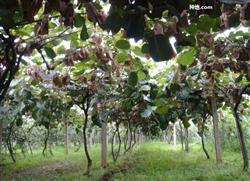
What should be noted when growing kiwifruit? Please advise
When growing kiwifruit, note the following points:
1. Pay attention to variety selection. New orchards should choose new and superior varieties according to market trends. In Shaanxi, varieties such as Hayward, Xixuan No. 2 (Mifuhua), and Yate can be developed.
2. Pay attention to adapting to local conditions. Kiwifruit likes water but fears waterlogging, likes warmth but fears freezing, and likes light but fears shade. Areas with extreme low temperatures below minus 15°C, low-lying areas prone to waterlogging, areas without irrigation conditions, or areas with a pH value above 7.5 are all unsuitable for establishing an orchard.
3. Pay attention to planting pollinizer trees. Kiwifruit is dioecious. When planting, pollinizer trees should be planted at a female-to-male ratio of 8-12:1. When planting, check carefully to ensure there are enough male plants.
4. Pay attention to the planting time. Spring planting should be early, and planting should be done promptly after the soil thaws. In areas with severe spring drought, autumn planting is preferable, and in the autumn rainy season, planting with leaves is also possible. Autumn planting makes it easy for the root system to recover, and the survival rate is high. The disadvantage is that in severely cold winter areas, young seedlings have poor cold resistance, so attention should be paid to hilling soil, and using Hushu Jiangjun to coat the trunk to keep it warm, prevent freezing, and protect the seedlings.
5. Pay attention to density. For orchard establishment on land with high water and fertilizer levels, a plant-to-row spacing of 3 m x 4 m is preferable. For orchards with medium and low fertility, 2-3 m x 3 m is suitable, which helps early shaping and early high yield.
6. Pay attention to the planting method. Kiwifruit has fleshy roots and a high respiration intensity. When planting, the soil should not be buried too deep, otherwise the seedlings recover slowly and grow poorly; nor should it be too shallow, otherwise the soil dries out easily and survival is affected. Generally, burying soil up to the root crown of the plant is sufficient. Before planting, cut off rotten, damaged, and excessively long roots. When planting, ensure the seedlings are upright and the roots are spread out. After planting, water thoroughly to stabilize the roots, so that the root system fully contacts the soil, storing water and preserving moisture. Combined with spraying a 800-fold solution of Xin Gao Zhi Mo, it can effectively prevent aboveground moisture from evaporating, prevent moisture in the seedling body from transpiring, isolate pests and diseases, shorten the seedling recovery period, quickly adapt to the new environment, and grow healthily.
Click to get more kiwifruit growing techniques
Click to get more fruit growing techniques