Detailed Explanation of Kiwifruit Seedling Raising Methods and Technical Points
How should kiwifruit be propagated? Here is an introduction to growing kiwifruit seedlings from seed: Collect seeds from fully ripe fruit of robust mother trees; once the fruit softens, separate the seeds from the flesh, wash them, and dry them in the shade for later use. Seed treatment: 40 days before sowing, soak the shade-dried seeds in 45°C warm water for a full day and night. Place wet sand at the bottom of a flower pot...
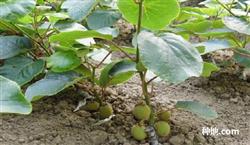
How should kiwifruit be propagated? Here is an introduction
Growing kiwifruit seedlings from seed: Seed collection - Select fully ripe fruit from robust mother trees; once the fruit softens, separate the seeds from the flesh, wash them, and dry them in the shade for later use. Seed treatment - 40 days before sowing, soak the shade-dried seeds in 45°C warm water for a full day and night. Place wet sand at the bottom of a flower pot (wet enough that water just seeps out when squeezed by hand), then spread the seeds evenly on top, alternate layers of sand for stratification, and cover with asphalt felt.
Sowing: Sow in early spring of the following year. Before sowing, apply sufficient base fertilizer at 4000 kg to 5000 kg per mu, irrigate thoroughly, and sow after the water has infiltrated. Because kiwifruit seeds are small, it is best to mix them with sifted fine nutrient soil and sow in rows. Row spacing 15 cm, sowing width 20 cm, seeding rate 1 g per square meter. After sowing, cover with 2 mm to 3 mm of sifted fine soil and mulch with straw to keep the soil consistently moist.
Planting out: After seedlings emerge, promptly remove the mulch. When seedlings have 3 true leaves, thin and transplant them, with a spacing of 10 cm to 15 cm; the removed seedlings can be transplanted with soil elsewhere. During the seedling stage, apply light fertilizer frequently. When the seedling diameter reaches 0.5 cm, grafting can be carried out. Softwood cutting propagation - Cutting time: The best time for softwood cuttings is mid-June and mid-September; by then the kiwifruit growth peak has passed, and the high summer temperatures have also been avoided.
Cutting selection and treatment: Select semi-lignified current-year branches free of pests and diseases as cuttings; keep 2 to 3 buds per cutting and 1 to 2 leaves at the top, cutting the retained leaves in half. The lower cut of the cutting should be made flat or slanted close to the node below, and the cut must be smooth; then dip the cut end in 2×10⁻⁴ ABT Rooting Powder No. 1 solution. Cutting bed preparation and management: Choose a location with a good water source for the cuttings, use sifted sandy soil as the bed soil, and disinfect the soil with zineb or potassium permanganate. After leveling the land, build a 2 m high shade frame for shading. After inserting the cuttings, check regularly to keep the humidity inside the frame at 90%; generally spray water once in the morning and once in the afternoon on sunny days. Roots form about 20 days after insertion; after 25 days, spray 0.2% urea or monopotassium phosphate for foliar feeding. The cuttings can be transplanted 60 days after insertion.
Root cutting propagation: Kiwifruit has strong root tillering ability. Root segments dug up during land preparation or seedling lifting can be used to promote sprouting of rootstock seedlings, thus saving a large amount of seeds and branches. The method is to cut pencil-thick roots into 10 cm to 15 cm segments, insert them with the thick end up and the thin end down; the thin end should be trimmed flat with pruning shears. After insertion, they can sprout and take root to form plants. Cuttings made in early to mid-April have the highest survival rate. The preparation of the cutting bed and post-insertion management are the same as for softwood cuttings.
Click to get more kiwifruit cultivation techniques
Click to get more fruit cultivation techniques