How to grow pomegranate trees for high yields? These cultivation techniques are essential
How can pomegranate trees be grown for high yields? Let me explain. Pomegranate flowers are beautiful and the fruit is colorful, juicy and delicious, with rich nutritional and medicinal value. Besides being eaten fresh, it can also be processed into juice, fruit wine and more. The high-yield cultivation techniques for short, densely planted, early-bearing pomegranates are described below: I. Orchard establishment 1. Deep plowing and land preparation. October 30...
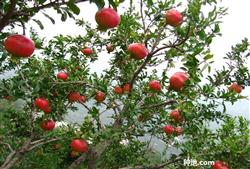
How can pomegranate trees be grown for high yields? Let me explain
Pomegranate flowers are beautiful and the fruit is colorful, juicy and delicious, with rich nutritional and medicinal value. Besides being eaten fresh, it can also be processed into juice, fruit wine and more. The high-yield cultivation techniques for short, densely planted, early-bearing pomegranates are described below:
I. Orchard establishment
1. Deep plowing and land preparation. Clear the orchard site before October 30, dig out old tree roots, carry out preliminary leveling, spread 4000 kg of high-quality farmyard manure per mu, then flood-irrigate once. After the water dries, deep-plow mechanically to a depth of about 25 cm.
2. Open furrows and form ridges, dig planting holes. Open furrows along the east-west direction of the field strips, with the furrow bottom 20 cm below ground level and the top opening 1.2 m wide, forming wide-mouthed furrows with flat bottoms. After the furrows are opened, dig planting holes on the sunny side of the furrow bottom, 60 cm deep and 80 cm in diameter. Stack topsoil and subsoil separately. Place 20 cm of decomposed farmyard manure at the bottom of the hole, then backfill 20 cm of topsoil and tamp it down, then irrigate. Plant the seedlings when the water has infiltrated and the soil moisture is suitable.
3. Seedling selection. Select seedlings with complete root systems, no major wounds, relatively highly lignified stems, relatively dense needle-like branches (short internodes), and more fine hairs on the stems. The base diameter of the seedlings should be no less than 0.8 cm, and the height no less than 80 cm.
4. Seedling planting. Clean out the prepared planting hole slightly, then backfill 5 cm of topsoil at suitable moisture, and place the seedling in. Continue backfilling with topsoil at suitable moisture, firming the seedling while filling. Note that when planting, the seedling must lean 70° toward the sunny side to facilitate soil mounding. After planting, tamp the filled soil, pile a "soil pillow" about 10 cm high at the slanted base of the seedling, bend the base of the seedling onto the soil pillow, then cover the seedling with soil at suitable moisture to a thickness of 40 cm, to help the seedling survive the winter cold.
If time permits, you can also water immediately after planting, and once the water dries, mound soil for winter protection as described above. The ideal soil moisture is 70%.
II. Management in the spring and summer of the same year
1. Removing the soil mound and releasing the seedlings. The time for removing the mound and releasing seedlings should not be too early; late April is ideal. Before removing the mound, strictly do not release water into the furrow. When removing the mound, be careful not to damage the seedlings. Dig the soil mound open until level with the furrow bottom surface, clean the planting furrow, and water immediately.
2. Trunk determination. Pomegranate is a shrub in **, and because it needs soil mounding for winter protection, the trunk height should not be too high. Generally, determine the trunk at 10 cm from the base, and wrap the cut with plastic film.
3. Training and pruning. Use a multi-stem open-center tree form. After the trunk is determined, new branches sprout from the base. Select and keep 3-5 vigorous, evenly growing new branches as main branches, and remove the rest. When the new branches of the year reach 60 cm in height, bend them to open the angle, opening the angle to 70° in all directions, and at the same time thin out new shoots growing inward. The main branches should be spaced evenly at 360°.
4. Fertilizer and water management. After the seedlings' mounds are removed, water thoroughly once. After the water dries, loosen the soil around the tree plate and remove weeds in the furrow. If conditions permit, cover the tree plate with film after removing the mound to raise soil temperature and help early sprouting. Loosen the soil around the tree plate 3-4 times throughout the year.
When the new shoots grow to about 20 cm, apply 50-100 g of urea per plant, and fertilize 3-4 times throughout the year. In the following two applications, add phosphorus and potassium fertilizer. From late August to late September, control water and fertilizer.
After one year of growth, the newly planted seedlings can develop 3-6 main branches, with a height of 80 cm and a thickness of 0.8 cm.
5. Selection of intercrops in the same year. In densely planted pomegranate orchards, strictly do not plant tall-stemmed crops; choose short-trellis tomatoes, potatoes, mung beans, sweet potatoes and similar crops. Autumn crops can also only be mainly soybeans, mung beans, and short-trellis tomatoes; do not plant winter cabbage, winter radish and other crops that require heavy fertilizer and water later.
III. Management in the autumn and winter of the same year
1. Fertilizing and watering. In August and September, control fertilizer and water to help the branches fully lignify. After late September, water once depending on soil dryness and moisture, until the winter irrigation. Winter irrigation is best done in late November; it is most suitable when the water infiltrates rapidly after irrigation and the surface soil does not freeze. Before leaf fall, apply about 10 kg of farmyard manure per plant, and fertilize by opening a ring-shaped furrow or strip furrow outside the canopy and covering with soil. After fertilizing, carry out winter watering at the time described above.
2. Mounding soil for winter protection. For each main branch, mound soil according to the method used in the previous autumn, mounding in the direction each branch was bent, and mound the soil slightly thicker at the base of the canopy.
IV. Management in the spring and summer of the following year
1. Removing the mound. After removing the mound, use supports to prop up the main branches at 70°, and some secondary shoots on the main branches begin to flower and set fruit.
2. Strengthen summer pruning. Remove all excess branches sprouting from the base and all new shoots sprouting below 30 cm on the main branches, and thin out overly dense branches and inner-canopy branches. Because pomegranate does not have a strong central leader, it easily produces side shoots, and generally does not need pinching.
V. Management in the autumn and winter of the following year and in the third year
1. By autumn and winter, the canopy spread can reach about 1-1.5 m. Repeat the field management work of the previous year. However, the amount of farmyard manure applied as base fertilizer should gradually increase to 20 kg per plant. The soil mounding method is the same as the previous year.
2. In the third year, repeat the field management work of the previous year: removing the mound, clearing the furrow, propping the branches, removing moldy and damaged branches, removing sprouts, pest control (summer aphids), and thinning dense branches.
Click to get more pomegranate cultivation techniques
Click to get more fruit cultivation techniques