What are the cultivation methods for pomegranate bonsai?
How do you cultivate a pomegranate bonsai? Here is some guidance: a pomegranate bonsai can be cultivated like this: 1. Management during the trunk-growing stage. For making bonsai, people mostly choose small pomegranate species with a dwarf habit, small leaves, and small flowers and fruit, such as the fire pomegranate, four-season pomegranate, and agate pomegranate. Pomegranates can be propagated by sowing or by cuttings. Using the above two...
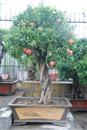
How do you cultivate a pomegranate bonsai? Looking for guidance
A pomegranate bonsai can be cultivated like this:
1. Management during the trunk-growing stage. For making bonsai, people mostly choose small pomegranate species with a dwarf habit, small leaves, and small flowers and fruit, such as the fire pomegranate, four-season pomegranate, and agate pomegranate. Pomegranates can be propagated by sowing or by cuttings. Saplings obtained by these two methods must be grown in the ground for more than 3 years before the trunk can be cut back and branches trained to produce small or medium bonsai. To make a large bonsai, you can dig up stumps in the wild or buy old potted pomegranate stumps at a flower and plant market.
2. Management during the branch-training stage. According to the form of the pomegranate tree, cut the trunk off at an appropriate height and shorten the main branches. Pomegranate bonsai can be trained into many tree forms, such as the straight-trunk style, slanting-trunk style, and curved-trunk style. In some ancient-stump pomegranate bonsai, the trunk is made up of two pieces of bark with xylem, and the branches at the top of each piece of bark bear fruit.
Pomegranate trees have a certain cold tolerance; with slight protection in a wind-sheltered, sunny spot, they can overwinter outdoors in North China. To make the trees grow fast, growing them in the ground is best. Pomegranate trees like fertilizer. In addition to applying a good base fertilizer when planting, during the vigorous growth period in spring and summer apply a thin, well-rotted organic fertilizer once every 15 days. Pomegranate trees grow relatively fast. When the thickness of a branch reaches about 70% of the ideal thickness, cut the branch short to encourage the growth and development of side branches.
3. Management during the shaping stage. After several years of branch training, pruning, and cultivation, when the pomegranate tree has basically reached the designed composition standard, plant the pomegranate stump in early spring into an ornamental pot of suitable size and style. Straight-trunk and slanting-trunk styles can be planted in oval pots of medium depth or a little shallower; the curved-trunk style can be planted in square pots of medium depth. During this stage of cultivation, still apply a little more fertilizer to promote tree growth and better refine the shape; on the other hand, you must also take the needs of appreciation into account.
4. Care after shaping. After several years of cultivation, pruning, and shaping, the care of a pomegranate bonsai, while maintaining its shape, aims to achieve the goal of enjoying the flowers in spring and the fruit in autumn (flowering pomegranates do not bear fruit). Pay attention to the following points:
1. Pruning and shaping. Pomegranate trees have strong sprouting ability and grow new branches several times within 1 year. Generally, the robust new branches that grow in spring can become fruit-bearing mother branches; the following spring, the terminal buds or axillary buds on these branches produce short new shoots that often flower, and the flowers from terminal buds are the most likely to set fruit. Buds that grow in summer and autumn should be cut off promptly. Pomegranate bonsai shaping is often carried out before bud break in spring, cutting off water sprouts, overly dense branches, and thin, weak branches, while taking care to keep those robust fruit-bearing mother branches.
2. Fertilizing. Pomegranate trees like fertilizer more than ordinary flowering plants. When repotting, put a suitable amount of fermented hoof pieces or cake fertilizer in the bottom of the pot. When fertilizing during the vigorous growth period in spring and summer, apply fertilizer containing more phosphorus.
3. Light and watering. The period from late April to early June is the pomegranate's bud differentiation stage; there should be plenty of light and watering should be appropriately reduced to keep the potting soil on the dry side. When the new leaves at the branch tips wilt slightly, place the pomegranate tree in a shaded spot for 30 minutes, then water the pot thoroughly. Repeat this several times, and flower buds will appear in about 20 days.
4. Fruit thinning. After the fruit has set firmly, cut off the excess fruit not needed for the shape. A medium pomegranate bonsai only needs to keep 3-5 fruits. The fruit should be distributed at different heights, some sparse and some dense, not at equal distances. If there is too much fruit, besides looking messy, it will also affect next year's fruiting.
Click to get more pomegranate growing techniques
Click to get more fruit growing techniques