How to scientifically apply topdressing during the sugarcane jointing and elongation stage
How should topdressing be applied during the sugarcane jointing and elongation stage? Please give guidance. After May, rainfall will increase, and sugarcane will enter the jointing and elongation stage, with a very large demand for fertilizer. A fertilizer shortage during this period will affect sugarcane growth and have the greatest impact on yield. Therefore, early May to early June is the key period for sugarcane topdressing, and most...
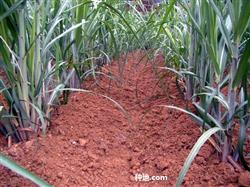
How should topdressing be applied during the sugarcane jointing and elongation stage? Please give guidance
After May, rainfall will increase, and sugarcane will also enter the jointing and elongation stage, with a very large demand for fertilizer. A fertilizer shortage during this period will affect sugarcane growth and have the greatest impact on yield. Therefore, early May to early June is the key period for sugarcane topdressing, and most topdressing should be applied during this period. The main topdressing technical measures are as follows:
1. Topdressing amount
1. The yield of mountain sugarcane is generally between 2-3 tons, and the application rate is pure N 5.5-6 kg (equivalent to urea 10-13 kg), pure K 5-6 kg (equivalent to potassium chloride 8-10 kg);
2. For high-yield fields such as flat land (converted from paddy fields), with a yield between 4-5 tons, the fertilizer application is pure N 7-8.5 kg (equivalent to urea 15-18 kg), pure K 7-8 kg (equivalent to potassium chloride 10-13 kg);
3. For high-yield fields with a yield of more than 6 tons per mu, apply pure N 10-11 kg per mu (equivalent to urea 20-25 kg), pure K 10-11 kg (equivalent to potassium chloride 16-20 kg). P fertilizer is generally used as base fertilizer, and topdressing is only supplemented when the base fertilizer is insufficient.
2. Fertilization method
Fertilization is generally carried out after rain or when the soil is moist. Topdressing should be combined with heavy earthing up, which can reduce workload and improve work efficiency. First remove weeds, then apply the uniformly mixed fertilizer in a band (or by spot application) 10 cm beside the sugarcane stool, and cover it with thick soil.
3. Points to note in fertilization
(1) It is strictly forbidden to broadcast fertilizer onto the sugarcane stool, so as to avoid burning the bud eyes at the base of the sugarcane seedlings and affecting the sprouting of the ratoon sugarcane in the coming year;
(2) Do not fertilize before heavy rain, so as to avoid the rain carrying away the fertilizer;
(3) Do not fertilize when the soil is dry, so as to avoid reducing the drought resistance of sugarcane. If ammonium bicarbonate is used, generally 1 kg of urea is equivalent to 2.5-2.6 kg of ammonium bicarbonate.
Click to get more sugarcane planting techniques
Click to get more fruit planting techniques