Detailed Explanation of Pear Tree Planting Methods and Technical Points
How to plant pear trees? A detailed introduction. Pear trees have strong adaptability to the natural environment and relatively strong waterlogging tolerance and stress resistance, and can be planted on both mountainous and flat land. Pollinator trees need to be planted alongside them. For example, pair Huanghua with Xinshiji or Hangqing. 1. The planting time for pear trees is generally from late November to January of the following year, and at the latest should not exceed early spring...
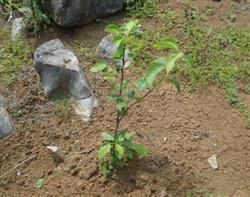
How to plant pear trees? A detailed introduction
Pear trees have strong adaptability to the natural environment and relatively strong waterlogging tolerance and stress resistance, and can be planted on both mountainous and flat land. Pollinator trees need to be planted alongside them. For example, pair Huanghua with Xinshiji or Hangqing.
1. The planting time for pear trees is generally from late November to January of the following year, and at the latest should not exceed early spring. The spacing between plants should preferably be 4×6 m. With the close-planting method, it can be 2×3 m, and after the trees reach maturity they can be thinned or transplanted in batches. In this way, the yield per mu can reach one thousand jin in the third year, and exceed three thousand jin in five years.
2. During the management period, attention should be paid to bud removal, flower bud thinning, manual pollination, and placing bees during the flowering period. In addition, spraying 0.2-0.5% boric acid, 0.3% urea, and 15PPM sodium phenylacetate during the flowering period can all increase the fruit-setting rate. Irrigating the pear trees during the high-temperature and drought period from July to August can increase pear yield.
3. Fertilization is an important measure in management. Pear trees need to absorb elements such as nitrogen, phosphorus, and potassium. Therefore, organic fertilizers applied to pear trees can include bean cake, cottonseed, plant ash, and human feces and urine, while inorganic fertilizers can include urea, ammonium sulfate, and potassium sulfate.
4. Pruning of pear trees is very important, and requires winter pruning and summer pruning. Winter pruning includes the single-trunk form, the open-center form, and the delayed open-center form; summer pruning mainly focuses on pinching off the growing tips.
Click to get more pear tree planting techniques
Click to get more fruit planting techniques