Symptoms and Control Methods of Pineapple Black Heart Disease
What is pineapple black heart disease? How to control it? Please advise. Pineapple black heart disease is one of the major diseases of pineapple, mainly affecting the fruit. In mild cases it affects fruit quality; in severe cases it causes the fruit to lose its commercial value. Symptoms: This disease mainly affects ripe fruit. There are two types of symptoms: one is that the fruitlets are affected and turn brown or form...
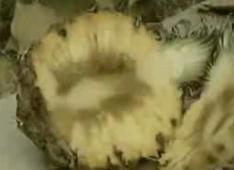
What is pineapple black heart disease? How to control it? Please advise.
Pineapple black heart disease is one of the major diseases of pineapple, mainly affecting the fruit. In mild cases it affects fruit quality; in severe cases it causes the fruit to lose its commercial value.
Symptoms: This disease mainly affects ripe fruit. There are two types of symptoms: one is that the fruitlets are affected and turn brown or form black lesions, and gradually become suberized, making the flesh hard, which is the main feature distinguishing it from black rot; the other is that the pathogen infects part of the carpels, and when the diseased fruit is cut open, the area near the fruit core becomes dark and water-soaked, then turns black. The exterior of an infected fruit is no different from a normal fruit, but it can be distinguished by the different sound when tapping the fruit; diseased fruit sound louder.
Pathogen: The pathogen of this disease is still not very clear. Some believe that what causes the fruitlets to turn black is a bacterium; the pathogen causing the area near the fruit core to turn black is a fungus. However, most scholars believe that this disease is a physiological disorder caused by low temperature. Conditions for onset: Low temperature and fluctuating temperatures are the leading factors in the epidemic of this disease. A climate with large warm-cold fluctuations below 25°C is most likely to cause black heart disease. Summer fruit generally does not develop black heart disease, or develops it rarely, while winter fruit has the highest incidence. There are obvious differences in resistance among pineapple varieties. According to research, the Philippine (Bali) variety belongs to the highly susceptible type, and the Smooth Cayenne variety belongs to the susceptible type, while "Nanyuan No. 5", which is being promoted in the Guangxi area, is moderately resistant. The degree of maturity at harvest also has a great influence: the higher the maturity, the more severe the disease. In addition, applying nitrogen fertilizer excessively or late, and excessive use of plant hormone pesticides such as "920", will also aggravate the disease.
Control methods:
1. Select good disease-resistant varieties. Among the currently cultivated varieties, apart from "Nanyuan No. 5", no other variety is disease-resistant.
2. Cultivation for disease prevention. ① Reasonable fertilization: Apply sufficient base fertilizer, mainly farmyard manure, increase the application of phosphorus and potassium fertilizers, and control the amount of nitrogen fertilizer. The commonly used ratio of nitrogen, phosphorus and potassium is 3:1:2. Topdressing should be done early, and concentrated application during the fruit-setting period should be avoided. ② Strictly control the concentration and frequency of "920" and naphthalene acetic acid when promoting fruit development. Usually, a mixture of 75 units of "920" and 200 units of naphthalene acetic acid is better; attention should also be paid to the timing of use: start using it from the petal-fall stage, applying it as drops or spray once every 10-15 days, and it can only be used three times in one fruit season. ③ Supplementing calcium during the fruit enlargement period also has a certain disease-resistant effect. Be careful to control the spray concentration of calcium chloride within 3% to avoid burning the fruit.
3. Harvest and process at the proper time. Autumn and winter fruit should preferably be harvested when maturity is about 65%; fruit for canning should be processed within 2-5 days after harvest. Do not harvest fruit on rainy days or when dew has not yet dried. For long-distance transport, refrigerated trucks should be used and a constant temperature of 7-8°C is best.
Click to get more pineapple cultivation techniques
Click to get more fruit cultivation techniques