How to control longhorn beetle pests on honey pomelo trees?
What should be done when honey pomelo trees are attacked by longhorn beetles? Please explain the methods. To control longhorn beetles on honey pomelo trees, you can refer to the following methods: 1. Raise chickens in the honey pomelo orchard: this not only helps control longhorn beetle damage, but also preys on other pests, increases income, raises soil organic matter content, promotes fruit growth, and improves fruit quality. 2. Fuse...
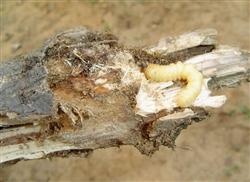
What should be done when honey pomelo trees are attacked by longhorn beetles? Please explain the methods.
To control longhorn beetles on honey pomelo trees, you can refer to the following methods:
1. Raise chickens in the honey pomelo orchard: this not only helps control longhorn beetle damage, but also preys on other pests, increases income, raises soil organic matter content, promotes fruit growth, and improves fruit quality.
2. Fuse control method: based on the traces of insect frass and wood shavings expelled by the longhorn beetle, locate the damaged holes. Use a sharp small knife or chisel to carve the hole opening into a narrow, elongated shape tapered at both ends (to help the wound heal), then use fine steel wire to remove the insect frass from inside the hole. Take 30-50 cm of fuse, insert about 17 cm into the hole, light it with fire (leave one end of the fuse exposed so it burns), finally pull out the fuse, and immediately seal the hole with yellow mud. When the fuse burns, it consumes the oxygen in the hole and produces an instant high temperature, causing the pest to suffocate and die.
3. Mothball control method: crush commercially available mothballs (also called camphor balls) into powder, clean out the insect frass from the longhorn beetle larval boreholes, then use fine iron wire to push the powder into the holes, with each hole using 1/5-1/4 of a ball, and finally seal the insect holes with wet yellow mud. You can also dissolve mothball powder in an appropriate amount of alcohol, gasoline, or diesel, dip cotton or cotton yarn in the medicinal liquid, and then use fine iron wire to push the medicated cotton into the holes; or use a syringe to directly inject the liquid into the holes, injecting 0.3-1 milliliter per hole, and finally seal the insect holes with yellow mud. The main component of mothballs is naphthalene, and its powder quickly sublimates into gas inside the insect holes, and the special odor causes the pests to suffocate and die.
Click to get more pomelo cultivation techniques
Click to get more fruit cultivation techniques