How to manage longan during the fruiting period? Detailed explanation of key technical points
How should longan be managed during the fruiting period? Please provide guidance on methods. During the longan fruit expansion period, good or poor management not only directly affects this year's yield, but also affects the normal sprouting of new shoots after harvest, indirectly affecting next year's yield. Therefore, we must cherish a year's labor and strengthen the mid-to-late stage management of longan. 1...
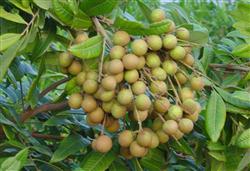
How should longan be managed during the fruiting period? Please provide guidance on methods
During the longan fruit expansion period, good or poor management not only directly affects this year's yield, but also affects the normal sprouting of new shoots after harvest, indirectly affecting next year's yield. Therefore, we must cherish a year's labor and strengthen the mid-to-late stage management of longan.
1. Apply fruit-sizing fertilizer well. Longan fruit development consumes a large amount of nutrients. To ensure normal fruit expansion, quick-acting fertilizers must be supplemented in time. First, take advantage of rain to broadcast a water-soluble chemical fertilizer once. For fruits whose seeds have not yet turned black, compound fertilizer is preferable; for fruits whose seeds have already turned black, potassium chloride is preferable. For each tree bearing 50 kg, the application rate depends on leaf color and fruit density, applying 0.5-1 kg. Second, combine with pest and disease control or spray separately, applying foliar fertilizer once every 7-10 days to supplement nutrients. Foliar fertilizers can include Bio Chicken Soup, Limanglong, rare earth amino acids, vitality essence, nucleotide phosphorus and potassium, etc. When there are more cloudy days, it is advisable to choose the above foliar fertilizers and spray them together with sugar, adding 20 g of sugar per 10 kg of water.
2. Prevent pests and diseases well. Recently there has been more rain, and pests and diseases on lychee fruits are severe. After lychee harvest is completed, they can easily shift to harm longan fruits. It is necessary to prevent fruit-boring pests such as the litchi stem-end borer and small gray butterfly, as well as longan downy mildew. The control method should focus on the litchi stem-end borer. According to the insect stage determined by litchi stem-end borer monitoring and forecasting, spray pesticide during the peak emergence of adults and the early stage of larval occurrence. Insecticides can include Sidasu, Ruichongte, Biqiaoling, Chongji, Chongwushe, trichlorfon, dimehypo, etc. Fungicides can include Zouhong, Baofusi, Feifan, Jiusheng, Baosheng, Tuoshangtuo, Pujunte, etc. Mountain longan orchards should also do a good job in controlling rats, fruit-sucking noctuid moths, and fruit bats. Before the fruit ripens, clear the orchard of miscellaneous trees and weeds, remove the hiding places of the above pests, and use trapping agents to trap and kill them. Rats should be poisoned with rodenticide 1-2 times before the fruit becomes sweet. Fruit-sucking noctuid moths should also be controlled before the fruit becomes sweet by using sugar and vinegar plus carbofuran, hanging it on trees to trap and kill, then hanging sesame oil paper on trees to drive them away. Fruit bats can be captured by setting up nets around the orchard using bamboo or wooden poles.
Click to get more longan planting techniques
Click to get more fruit planting techniques