What are the key points of wampee cultivation and management techniques?
How do you manage wampee cultivation? Here is a detailed introduction: wampee cultivation can be managed by referring to the following methods: Fertilization and soil management. For young wampee trees planted for 1~3 years, the purpose of fertilization is mainly to promote growth, so that they produce multiple new shoots in a year, rapidly expand the canopy, increase leaf area, and lay a good foundation for early fruiting and high yield...
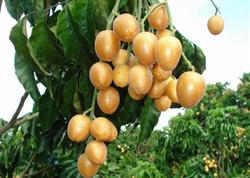
How do you manage wampee cultivation? Here is a detailed introduction
Wampee cultivation can be managed by referring to the following methods:
Fertilization and soil management
For young wampee trees planted for 1~3 years, the purpose of fertilization is mainly to promote growth, so that they produce multiple new shoots in a year, rapidly expand the canopy, increase leaf area, and lay a good foundation for early fruiting and high yield. Fertilization should follow the principle of frequent light applications, and according to their shoot growth, apply fertilizer once each in February, May, and August every year. In addition, orchard intercropping, ground covering, irrigation and drainage, weeding and loosening the soil, and deep plowing to improve the soil must all be carried out in a timely manner to create good soil conditions for the growth of young wampee trees.
Shaping and pruning
The purpose of shaping and pruning young trees is to cultivate scaffold branches, balance tree vigor, regulate branch growth, form a certain number of main branches and side branches, build a strong canopy framework, and lay a good foundation for early fruiting and high yield. The wampee canopy should be trained into a round-headed shape. Cut off the top at a trunk height of 70~80 cm, then cultivate 3~4 evenly distributed main branches, on which side main branches and branchlets will then sprout, gradually forming a natural round-headed canopy year by year. Pruning of young trees should focus on light heading cuts, combined with appropriate thinning of branches. During the period of vigorous branch growth, pinching can be done moderately to weaken growth vigor, stimulate 2~3 side buds below the cut to sprout, promote branching, and increase growth. Every winter, prune out dead branches, shaded branches, overly dense branches, water sprouts, and diseased and pest-damaged branches inside the canopy to improve ventilation and light penetration inside the canopy and prevent the occurrence of pests and diseases.
Disease control
The main diseases of wampee are anthracnose and sooty mold. Anthracnose can be controlled by spraying chlorothalonil at 800~1000 times dilution or carbendazim at 800 times dilution; for sooty mold, aphids and scale insects should mainly be controlled. To control scale insects, spray 1:20 rosin mixture or 40% dimethoate 800 times dilution plus 90% trichlorfon 800 times dilution; to control aphids, spray 50% trichlorfon 500 times dilution or 40% dimethoate 800 times dilution; to control citrus leafminer, spray 80% dichlorvos emulsifiable concentrate 1000 times dilution or 50% omethoate 1000 times dilution.
Click to get more wampee cultivation techniques
Click to get more fruit cultivation techniques