How to manage winter jujube during the young fruit stage? These technical key points must be mastered
How to manage winter jujube during the young fruit stage? Please introduce the methods. After the flowering stage of winter jujube ends, the heavy vegetative growth and reproductive growth consume a large amount of nutrients stored in the tree. At this time, it is also the critical period just after the girdling wound has healed and the root system is rapidly competing for nutrients. It is also the period when the jujube tree has weaker tree vigor, lacks nutrients, and has the weakest resistance to adverse external factors...
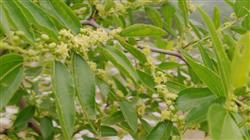
How to manage winter jujube during the young fruit stage? Please introduce the methods
After the flowering stage of winter jujube ends, the heavy vegetative growth and reproductive growth consume a large amount of nutrients stored in the tree. At this time, it is also the critical period just after the girdling wound has healed and the root system is rapidly competing for nutrients. It is also the period when the jujube tree has weaker tree vigor, lacks nutrients, and has the weakest resistance to adverse external factors, often showing yellow leaves, leaf drop, fruit drop, etc., and is most susceptible to disease invasion. Therefore, management of winter jujube trees needs to be strengthened during this period.
1. Prevent fruit drop. In the late stage of young fruit expansion, fruit often drops due to insufficient nutrient supply. To reduce fruit drop, spray the canopy with 20pppm naphthaleneacetic acid plus 0.3% potassium dihydrogen phosphate solution. If there are symptoms of nitrogen deficiency, add 0.3% urea solution and spray together, once every 7-10 days, for 1-2 consecutive sprays.
2. Reasonable topdressing. After winter jujube fruit set, water promptly and increase the application of compound fertilizer or organic compound fertilizer rich in major elements and trace elements required by winter jujube, such as nitrogen, phosphorus, potassium, iron, boron, calcium, and zinc. Generally, apply 0.2-0.3 kg of diammonium phosphate and 0.5 kg of potassium sulfate per young tree; double the amount for fruiting trees, applied in ring-shaped multiple holes.
3. Timely prevention and control of pests and diseases. The main pests at this stage are peach fruit borer, red spider mite, and green plant bug, etc. Special attention must be paid to their control. If control is not timely, it will seriously cause leaf drop and fruit drop. You can choose 2000 times of Suchongqing or 3000 times of Wanling + 3000 times of 1.8% abamectin emulsifiable concentrate for control, spraying once every 5-7 days; the diseases at this stage mainly include jujube rust, spotted leaf drop disease, ring rot, etc. You can choose 100-140 units of agricultural streptomycin + 800-1000 times of Baolian solution or Kekunkang + 800 times of triadimefon or 800 times of tebufenozole solution for spray control, once every 7-10 days, for 3-4 consecutive sprays. Note that various pesticides should be used alternately to improve control effectiveness. In addition, for jujube trees with severe iron deficiency, iron supplementation is also needed. You can apply 20-30 grams of chelated iron per tree by flushing or dilute 1500 times solution for spraying.
Click to get more jujube tree planting techniques
Click to get more fruit planting techniques