What aspects should jujube tree management start from?
How is jujube tree management carried out? Please give guidance. Jujube tree management can be carried out with reference to the following methods: 1. The number of fruit set on jujube trees is directly related to "flowers." Carrying out necessary management measures before and during jujube flowering can effectively increase the fruit-setting rate of jujube trees and increase jujube yield. 1. Fertilizing during the flowering period. In late April...
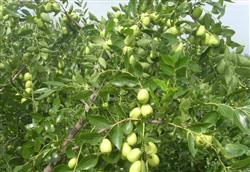
How is jujube tree management carried out? Please give guidance.
Jujube tree management can be carried out with reference to the following methods:
1. The number of fruit set on jujube trees is directly related to "flowers." Carrying out necessary management measures before and during jujube flowering can effectively increase the fruit-setting rate of jujube trees and increase jujube yield.
1. Fertilizing during the flowering period. From late April to early May, use 0.4-0.6 kg of urea, 1.5-2 kg of superphosphate, and 0.6 kg of potassium chloride per jujube tree, mix with water, open holes, and pour in the application. Alternatively, use 10-15 kg of decomposed human manure and urine and 4-6 kg of plant ash per jujube tree, mix with water, and pour in the application.
2. Pest control before flowering. In March, dig out overwintering pupae of the jujube looper, and use poisonous rings made of straw rope to control adult jujube loopers and jujube weevils. In mid-to-late April and late May, spray once each time with a 3000-fold dilution of pyrethroid pesticides.
3. Pinching before flowering. Before flowering, for jujube heads not kept as scaffold branches, when 4-5 permanent secondary branches appear on the scaffold branches, pinch the jujube heads according to growth vigor, leaving 4 or 3 secondary branches respectively. Because jujube heads appear at different times, pinching must be carried out in stages.
4. Girdling during the flowering period. Girdling during full bloom can temporarily interrupt the downward transport of nutrients produced by the leaves, thereby meeting the needs of flowering, fruit setting, and early development of young fruit. The specific method is: on the trunk at a height of 10-20 cm from the ground, make two ring cuts, each 3-5 mm wide and deep to the xylem, and remove the phloem. The girdled wound should be left with no residual bark and no rough edges to facilitate healing. Afterward, perform the procedure upward every year with an interval of 3-5 cm, and when reaching the main branch fork, girdle back downward. Girdling should be suited to the tree; it is not suitable for young or weak trees. After girdling, apply medicine to prevent pests, and wrap tightly with paper or plastic film to prevent water evaporation.
5. Placing bees during the flowering period. According to surveys, placing bees in jujube orchards during the flowering period can increase the fruit-setting rate by about 1 time, increase yield by 20-30%, and the closer the beehives are to the jujube trees, the higher the fruit-setting rate.
6. Three sprays during the flowering period. First, spraying water. When the relative air humidity during the jujube flowering period is below about 60%, use a sprayer to evenly spray clean water onto the jujube flowers, once every 6 days, for 3 consecutive times. Second, spraying fertilizer. During the initial flowering stage and young fruit stage, spray the leaves with a 0.3-0.5% urea solution and a 0.1-0.3% potassium dihydrogen phosphate solution. Fertilizer spraying should be done in windless, cloudy weather, or in the early morning or evening. Spray until the leaf surface is moist. Third, spraying hormones. During full bloom, spray strong trees with 10-15 PPm sodium naphthaleneacetate, or 5-10 PPm 2,4-D. During the young fruit stage, use 30-60 PPm naphthaleneacetic acid, or 30 PPm 2,4-D twice (with a 20-day interval), which can effectively prevent flower and fruit drop. Spraying 0.2-0.3% borax or boric acid during the flowering period can also effectively increase the fruit-setting rate.
2. Summer pruning of jujube trees is equally important. Summer pruning of jujube trees is mostly carried out from May to July. The main purpose of summer pruning is to inhibit excessive and overly long growth of jujube heads, reduce useless nutrient consumption, regulate nutrient flow, improve light conditions, increase the fruit-setting rate, promote fruit development, and improve yield and quality.
1. Bud removal. For newly sprouted jujube heads with no useful value, remove them from the base as early as possible to save nutrients and facilitate ventilation and light penetration.
2. Pinching. After buds sprout and leaves unfold, until June, pinch the primary branches, secondary branches, and fruiting spurs of jujube heads to stop their elongation growth, which helps fruiting in the current year and cultivates robust fruiting branch groups. The degree of pinching the primary branch of a jujube head depends on the space available to the jujube head and its growth vigor. Generally, weak branches are pinched heavily (leaving 2-4 secondary branches), and strong branches are pinched lightly (leaving 4-7 secondary branches). For dwarf dense jujube orchards, secondary branches and fruiting spurs can also be pinched. Pinching should be moderate. If too severe, although there is more fruit in the current year, it affects the increase of fruiting area, and the following year a large number of jujube heads sprout on secondary branches. If too light, the fruit-setting rate decreases, quality is poor, and fruiting branch groups tend to be weak.
3. Branch bending. Generally carried out from May to July to make branch distribution even and provide good ventilation and light penetration within the canopy.
Click to get more jujube tree planting techniques
Click to get more fruit planting techniques