What are the key technical points for summer management of jujube trees?
How should jujube trees be managed in summer? Please give an introduction. Because jujube trees bud relatively late, and flowering and fruit setting are concentrated in summer. Therefore, if you want to obtain high and stable yields, you must scientifically manage them in summer according to their biological characteristics. The management methods can refer to the following: 1. Pruning: By mid-June the peak growth of jujube shoots...
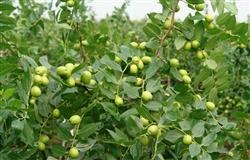
How should jujube trees be managed in summer? Please give an introduction
Because jujube trees bud relatively late, and flowering and fruit setting are concentrated in summer. Therefore, if you want to obtain high and stable yields, you must scientifically manage them in summer according to their biological characteristics. The management methods can refer to the following:
1. Pruning: By mid-June the peak growth period of jujube shoots has passed, so pruning at this time will not stimulate the main buds to sprout. Pruning can adjust nutrient distribution, reduce flower and fruit drop, and promote fruit development.
Branch thinning: In spring and summer, new jujube shoots sprout from jujube spurs, and water sprouts growing from the base of jujube shoots should, if they have no useful value, be removed at the base before such branches become woody, so as to concentrate nutrients and promote fruit setting.
Pinching: After the main buds sprout into jujube shoots, they grow very quickly. If they are to be used for shaping, then in mid-June cut them back at 1/3 of the jujube shoot length to control their vigorous growth, so as to concentrate nutrients, increase the fruit-setting rate, and improve fruit quality.
2. Girdling: For older vigorous trees, during the full flowering period, choose a sunny, windless day for girdling. At a smooth spot 20-30 cm from the ground, use a knife to make a ring cut through to the xylem, then 0.3-0.5 cm above, make another ring cut, and then peel away the phloem between the two cuts. During the operation, make sure the cuts have no frayed edges. After peeling, apply a 1000-fold omethoate solution to the wound to prevent insects. And wrap it with film to prevent water evaporation.
3. Spraying hormones during the flowering period: At the early full-bloom stage, spray 10-15 mg/L gibberellin or 5-10 mg/L 2,4-D solution, and at the full-bloom stage spray 0.3% borax as well, to increase the germination rate of pollen. Spraying can significantly increase the fruit-setting rate of jujube trees.
4. Fertilizer and water management: Jujube trees consume a large amount of nutrients for budding, leaf expansion, and flowering, so urea should be applied as a top dressing in mid-May to supplement the nitrogen needed for branch and leaf growth, about 500 grams per 5-year-old tree. August is the fruit enlargement period, so another top dressing should be applied in early August. This time use a compound fertilizer rich in nitrogen, phosphorus, and potassium, with 1000 grams per 5-year-old tree. After each fertilization, turn it into the soil and water, so as to facilitate the fertilizer effect.
5. Disease and pest control: In mid-to-late June, spray 25% chlorbenzuron No. 3 2000-fold solution or 1% abamectin 400-fold solution or imidacloprid 2000-fold solution to control jujube gall midge, peach fruit borer, jujube leaf roller, and jujube looper, and spray again 15 days later. In early July, spray 50% thiophanate-methyl 1000-fold solution or 50% thiram powder 600-fold solution to control jujube rust. For branches suffering from jujube witches' broom, remove them from the base.
Click to get more jujube cultivation techniques
Click to get more fruit cultivation techniques