Post-Harvest Management Techniques for Feizixiao Lychee
How should Feizixiao lychee be managed after harvest? What management methods can be referenced? Feizixiao lychee is harvested quickly, and then it is time for post-harvest management. After picking the fruit, management should be carried out promptly so the lychee can receive nutrient supplementation as early as possible and lay the foundation for a bumper harvest next year. Otherwise, the tree vigor cannot recover in time, the autumn shoots cannot be brought out...
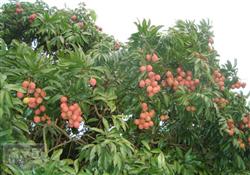
How should Feizixiao lychee be managed after harvest? What management methods can be referenced
Feizixiao lychee is harvested quickly, and then it is time for post-harvest management. After picking the fruit, management should be carried out promptly so the lychee can receive nutrient supplementation as early as possible and lay the foundation for a bumper harvest next year. Otherwise, the tree vigor cannot recover in time, the autumn shoots cannot be brought out well, and next year there will certainly not be a high yield. How to do a good job of post-harvest management? There are mainly the following five aspects:
I. Orchard cleaning
The first thing after harvest is to clean the lychee orchard once, achieving the "three cleanings": first, clearing dead branches and fallen leaves. Collect all dead branches, fallen leaves, and fallen fruit in the orchard and burn them in a centralized manner to eliminate pests and diseases and prevent their accumulation and harm. Second, clearing weeds in the orchard. Weeds in the orchard both compete for fertilizer and attract insects, so they must be thoroughly cleared away to prevent the weeds from competing for the fertilizer applied to the lychee. Third, clearing garbage in the orchard. Garbage in the orchard that cannot be used as fertilizer should be cleared out of the orchard to keep the lychee orchard clean and give the lychee a good growing environment.
II. Spraying pesticide
After cleaning the orchard, spray pesticide comprehensively once over the tree bodies and the ground. There are many pests and diseases that harm lychee, especially after this spring and the flowering and fruiting stage of the lychee, when the types and numbers of pests and diseases that have accumulated are very large, and spraying pesticide during flowering and fruiting is also subject to certain restrictions. Therefore, after harvesting and cleaning the orchard, spray insecticide and fungicide once each according to the main pests and diseases that occurred during the fruiting period, or mix them and spray once, such as 2.5% Kung Fu emulsifiable concentrate at 2000 times plus Jinleiduomier water-dispersible granules at 750 times, etc., to reduce the accumulation of pest and disease sources, reduce harm, and protect the normal growth of the lychee.
III. Pruning
After a year of growth, the tree body will grow many useless branches, which also consume nutrients. Therefore, after harvest, prune the lychee once, cutting away shaded branches, crossing branches, overly dense branches, water sprouts, overlapping branches, diseased branches, slender branches, dead branches, and so on one by one, to reduce nutrient consumption, make the lychee tree shape attractive and scientific, grow into a high-yielding canopy, and lay the foundation for a bumper harvest next year.
IV. Fertilizing
After harvest, applying fertilizer reasonably for the tree body is especially important. Fruiting consumes a large amount of nutrients in the lychee, especially in high-yielding trees. In order to quickly restore tree vigor and allow normal, robust growth, this fertilization work must be taken seriously and not done carelessly. After harvest, fertilization should be mainly nitrogen fertilizer, with phosphorus and potassium fertilizers applied together. According to the experience of relevant fruit growers, the nitrogen fertilizer application amount accounts for 50% of the whole year, phosphorus fertilizer accounts for 33%, and potassium fertilizer accounts for 25%. In order to maintain long-term fertilizer effectiveness, more organic fertilizer should be applied, together with quick-acting nitrogen fertilizer. Organic fertilizer is best applied in ditches dug 60 cm deep and 50 cm wide along the drip line at the outer edge of the canopy or between rows, with green manure, leaves, weeds, and soil-and-miscellaneous manure, human and livestock manure, etc. applied in layers, to preserve long-term fertilizer effectiveness.
V. Drainage and irrigation
The growth characteristics of lychee mean it needs a certain amount of water but is also afraid of being waterlogged. According to the actual situation of the lychee orchard, drainage and irrigation work should be done well. Low-lying lychee orchards should have channels dug for drainage. Especially in summer, rainstorms often occur. If drainage is poor, the lychee orchard will accumulate water and become waterlogged, causing a lack of oxygen in the soil, poor root development, and thus affecting growth. However, summer is also a high-temperature season, and lychee orchards on high, dry land are very prone to drought. At this time, attention should be paid to irrigation to prevent the lychee trees from suffering from water shortage and drought. Places with a water source can channel water into the orchard for irrigation, and places without a water source should also carry water to sprinkle and irrigate, so as to maintain the normal growth of the lychee trees.
Click to get more lychee cultivation techniques
Click to get more fruit cultivation techniques