How to manage lychee during the pollination period? Key technical points explained in detail
How should lychee be managed during the pollination period? What are the things to note? Lychee is a dichogamous, insect- and wind-pollinated flower, mainly pollinated by insects. The pollen ball carried on the hind leg of a single honeybee contains about 8 million pollen grains, and a female flower's stigma only needs one normally developed pollen grain to be delivered to it. This shows how great a role honeybees play in pollination...
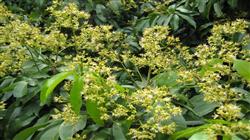
How should lychee be managed during the pollination period? What are the things to note
Lychee is a dichogamous, insect- and wind-pollinated flower, mainly pollinated by insects. The pollen ball carried on the hind leg of a single honeybee contains about 8 million pollen grains, and a female flower's stigma only needs one normally developed pollen grain to be delivered to it. This shows how great a role honeybees play in pollination. According to observations, honeybees are most active within a radius of 250 m, so bee colonies are best placed in a dispersed manner throughout the orchard. Generally, on sunny days with a temperature of 22-25°C and a relative humidity of 75%-80%, lychee flowers have the most abundant pollen and nectar, and honeybees are also most frequent in their activity. Bees should be brought into the orchard when a small number of the first flowers have opened. In addition, during the bee-release period, pesticide spraying should be stopped in the lychee orchard and in nearby orchards or vegetable gardens, to prevent bees from being poisoned, or flowers from being contaminated and bees from not visiting the trees to collect nectar, which would affect pollination. If there are no bees or very few bees during the flowering period, flies and other insects can also be attracted into the orchard, which is also very helpful for lychee pollination. The specific method is to place some smelly salted fish in the orchard to attract flies and other insects. After the flies and other insects have entered the orchard, bury the salted fish in the soil, so as to prevent the flies from only crawling on the salted fish to feed and not visiting the trees to pollinate. Therefore, in production, in order to create good conditions for pollination and fertilization, pesticide spraying should be stopped during the flowering period, and pest and disease control work should be done in a timely manner before lychee flowering, that is, at the flower bud stage.
The importance of artificial supplementary pollination
The female flowers of lychee must complete the process of pollination and fertilization before the ovary can start developing. Therefore, during the lychee flowering period, conditions should be created for pollination and fertilization. On sunny days, bees and other insects can be used for pollination, but when bee sources are few, or when encountering rainy days or clear intervals during rain, because bees do not visit the trees, and the male flower pollen sacs do not split open due to high humidity and do not release pollen, artificial supplementary pollination plays a very large role. Mature pollen can be collected manually, placed in a drying box and dried by moisture absorption using a desiccant, so that the pollen sacs split open and release pollen; then artificial pollination is carried out by transferring the pollen to the stigma of the currently open female flowers, so that they complete the normal process of pollination and fertilization, thereby enabling the fruit to start developing. Otherwise, when the flowers fade, the fruit also drops, seriously affecting fruit set.
In addition, during the flowering period, spray the lychee and longan pollination agent "Liguo 123" 1-2 times. On sunny days, it can be sprayed from 9:00 to 11:00 in the morning when female flowers open relatively concentratedly; on cloudy and rainy days, it should be sprayed by seizing a sunny day. When female flowers are open, it can be sprayed once every other day, for a total of two sprays. In high temperature and dry conditions, spraying clear water once more on the second day after spraying gives an even better effect: it can increase the pollen germination rate by nearly 1 times, increase the elongation speed of the pollen tube by more than 30%, and significantly increase the fertilization and fruit-setting rate of lychee.
Click to get more lychee cultivation techniques
Click to get more fruit cultivation techniques