How should basal fertilizer be applied to plum trees correctly?
How should basal fertilizer be applied to plum trees? When is the best time to apply basal fertilizer to plum trees for the best effect? Currently, most plum orchards have less than 1% organic matter, and some plum orchards are even below 0.5%, far below the requirements for high-quality, high-yield orchards, so the amount of basal fertilizer must be increased. If the dual needs of tree growth and soil improvement are taken into account at the same time...
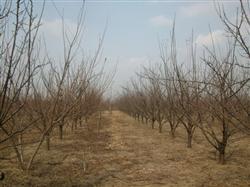
How should basal fertilizer be applied to plum trees? When is the best time to apply basal fertilizer to plum trees for the best effect?
Currently, most plum orchards have less than 1% organic matter, and some plum orchards are even below 0.5%, far below the requirements for high-quality, high-yield orchards, so the amount of basal fertilizer must be increased. If the dual needs of tree growth and soil improvement are taken into account at the same time, the application rate of organic fertilizer should be kept at the standard of 1 to 3 jin of fertilizer per jin of fruit. Therefore, for a medium-yield plum orchard with a yield of about 1500 kg per mu, the amount of organic fertilizer used must not be less than 3000 kg.
The most suitable period for applying basal fertilizer is autumn (1 month before leaf fall), followed by the period from leaf fall to before the soil freezes, and from spring thawing to before bud break. When basal fertilizer is applied in autumn, the fertilizer has enough time to decompose, and it can also allow broken roots to heal and send out new roots, because this is precisely the peak period of root growth, when root absorption capacity is relatively strong. After absorption, it can raise the level of stored nutrients in the tree, and can promote the development and plumpness of flower buds, a relatively high nutrient reserve in the tree, and the timely supply of nutrients in the soil in early spring, which can meet the needs of spring bud break and leaf expansion, flowering and fruit setting, and new shoot growth. When basal fertilizer is applied after leaf fall and in spring, the fertilizer effect takes effect later and has little effect on the early spring growth and development of fruit trees; by the time the fertilizer is absorbed and utilized in large amounts, it is often already the vigorous growth period of new shoots. In mountainous areas, for orchards that are dry and have no irrigation conditions, because the orchard cannot be irrigated immediately after basal fertilizer is applied, basal fertilizer can also be applied during the rainy season while taking advantage of soil moisture. However, the organic fertilizer must be fully decomposed, refined fertilizer, the fertilization speed should be fast, and care should be taken not to injure thick roots.
When organic fertilizer sources are insufficient, straw, weeds, and the like can also be used as supplements and mixed with organic fertilizer. It is worth noting that although organic fertilizer sources are limited, the principle of ensuring a local area and ensuring the concentrated distribution layer of roots must be followed, and concentrated hole application should be used to give full play to the fertilizer effect of organic fertilizer. Concentrated hole application means digging holes about 50 cm deep and 30 to 40 cm in diameter from the edge of the tree canopy inward, with the number of holes determined by the amount of fertilizer, then mixing organic fertilizer with soil at 1:3 or adding some straw as well, filling the mixture into the holes, and then watering. In addition, phosphorus and potassium fertilizers, and even zinc and iron fertilizers, can be mixed with organic fertilizer to improve their utilization rate.
Click to get more plum tree planting techniques
Click to get more fruit planting techniques