Plum Tree Greenhouse Cultivation Methods and Key Technical Points
How to grow plum trees in a greenhouse? How should plum trees be managed when grown in a greenhouse? Please provide guidance. Greenhouse cultivation of plum trees can be managed with reference to the following methods: 1. Greenhouse construction and production procedures. The greenhouse is converted from an ordinary winter-warm vegetable shed. The varieties are 3-year-old 'Zao Meili' and 'Merton' plums, with a plant-to-row spacing of 1.8 x 2.5 m and an east-west row orientation. After proper pruning using the multi-main-branch natural open-center form and the improved central-leader form...
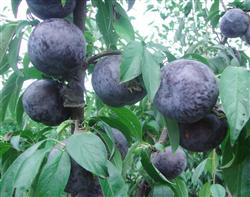
How to grow plum trees in a greenhouse? How should plum trees be managed when grown in a greenhouse? Please provide guidance.
Greenhouse cultivation of plum trees can be managed with reference to the following methods:
1. Greenhouse construction and production procedures. The greenhouse is converted from an ordinary winter-warm vegetable shed. The varieties are 3-year-old 'Zao Meili' and 'Merton' plums, with a plant-to-row spacing of 1.8 x 2.5 m and an east-west row orientation. After proper pruning using the multi-main-branch natural open-center form and the improved central-leader form, the greenhouse was covered and heated on January 12. The plum flower buds began to swell on January 30, began to bloom on February 13, and entered full bloom on February 17. During this period, bees should be released in the shed and artificial pollination carried out. The flowers dropped on February 27, and the fruit ripened on April 26.
2. Regulating temperature and humidity inside the shed. After the shed is covered, different temperatures are required at different growth stages. During the flowering-forcing stage, cover the ground with plastic film; the night temperature should not be lower than 0 degrees C, the daytime temperature should not exceed 20 degrees C, and this should be maintained for 18-20 days, at which point the flower buds begin to swell. The most suitable temperature during the flowering period of the fruit tree is 18-22 degrees C, and at night it should generally be maintained at 7-8 degrees C. However, this is the period when outside temperatures are at their lowest, so keeping warm at night is key. During the fruit enlargement stage, the temperature requirement is higher and can be maintained at around 25 degrees C, later raised to 28 degrees C, with the night temperature preferably 10-15 degrees C. During the fruit coloring and ripening stage, the day-night temperature difference is generally large; daytime should be 25-28 degrees C and must not exceed 30 degrees C, while at night it should be maintained at 13 degrees C. During this period, attention must be paid to ventilation, otherwise high-temperature damage is easily caused. After covering, the temperature inside the shed rises noticeably and the relative humidity can reach about 80%; mulching with plastic film can control the humidity inside the shed. Apart from watering during the fruit enlargement stage as needed, the shed is generally not watered at other stages. If humidity is too high, it can be reduced by combining this with ventilation.
3. Fertilizer, water, flower and fruit management. Before covering the shed, apply base fertilizer in autumn: 3000-6000 kg of organic fertilizer, 5 kg of phosphate fertilizer and 50 kg of potassium sulfate compound fertilizer per mu. After flowering and during the young fruit enlargement stage, carry out 2 supplementary fertilizations, applying 1-1.5 kg of special fruit-tree fertilizer per plant. Starting 1 week after flowering, spray 0.3% urea + 0.3% potassium dihydrogen phosphate once every 2 weeks or so, for 3-4 consecutive sprays. Plum trees have a low self-fruit-setting rate, and in addition the greenhouse lacks the pollination opportunities available under open-field cultivation conditions, so measures such as releasing bees in the shed, spraying 20 x 10-6 gibberellin at flowering, and artificial pollination should be adopted to increase the fruit-setting rate.
4. Pest and disease control. The greenhouse is isolated from the outside, so pests and diseases are relatively mild. However, because the humidity inside the shed is high and relatively stable, it readily induces gray mold. The control measures are: ventilate in good time to remove moisture, remove diseased leaves and diseased fruit, and at the same time use 35% metalaxyl at 2000-3000 times dilution or 50% carbendazim at 1000 times dilution, spraying once every 15-20 days for 2 consecutive applications, which can effectively control gray mold.
Click to get more plum tree cultivation techniques
Click to get more fruit cultivation techniques