How to Fertilize Fuchuan Navel Oranges? Detailed Explanation of Methods and Technical Key Points
How to fertilize Fuchuan navel oranges? Please give guidance. Fuchuan navel orange fertilization includes soil fertilization and foliar topdressing, with soil fertilization being the main method. The fertilization methods are as follows: (1) Soil fertilization: Soil fertilization should not only help the root system absorb fertilizer quickly, but also prevent the root system from suffering fertilizer damage. Therefore, fertilization should be adapted to the timing, the tree, and the fertilizer...
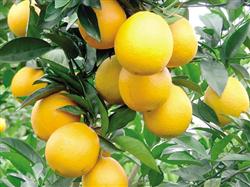
How to fertilize Fuchuan navel oranges? Please give guidance.
Fuchuan navel orange fertilization includes soil fertilization and foliar topdressing, with soil fertilization being the main method. The fertilization methods are as follows:
(1) Soil fertilization: Soil fertilization should not only help the root system absorb fertilizer quickly, but also prevent the root system from suffering fertilizer damage. Therefore, fertilization should be adapted to the timing, the tree, and the fertilizer. Adhere to shallow application for shallow roots and deep application for deep roots, shallow application in spring and summer, and deep application in autumn and winter; apply inorganic nitrogen shallowly, and apply phosphorus and potassium fertilizers and organic fertilizers deeply. Autumn and winter fertilization should be combined with deep plowing to expand the planting holes and improve the soil, and bury green manure; phosphorus fertilizer is easily fixed by the soil, so mixing it with decomposed organic fertilizer or biological organic compound fertilizer and applying it deeply gives good results.
There are various methods of soil fertilization. Young navel orange trees use ring-shaped trench application; mature fruiting navel orange trees use strip trench application; navel orange trees on narrow terraced plots use radial trench application. Given that navel orange fruit trees are deep-rooted crops, with roots mainly distributed at a depth of 40-80 cm, the fertilization position should be outside the tree crown drip line, not near the main roots directly below the trunk.
① Ring-shaped trench fertilization: According to the size of the tree crown, with the trunk as the center, dig a ring-shaped trench near the outer edge of the tree crown. The depth of the trench depends on the depth of root distribution, generally 20-30 cm deep and 30 cm wide. The advantage of ring-shaped fertilization is that it saves fertilizer and is simple and easy to carry out, but the area is small and roots are easily damaged, so it is often used for fertilizing young trees.
② Radial fertilization: According to the size of the tree crown, dig 4-6 radial trenches in the tree plate, with a trench width of about 30 cm, shallower near the trunk and gradually deeper outward. This method damages fewer roots. Change the fertilization position every other year or every other time to expand the fertilization area.
③ Strip trench fertilization: Dig strip trenches between the rows or between plants of navel orange trees, 30 cm deep and 30 cm wide, and cover with soil after fertilization; alternate trenching between plants and rows in different years. This is suitable for mature navel orange orchards, especially for fertilizing closed-canopy navel orange orchards.
④ Hole fertilization: Evenly dig 4-8 holes at the outer edge of the tree crown, 20-30 cm deep and 30 cm wide. Apply fertilizer into the holes, and cover with soil after it seeps down. Hole fertilization is simple and damages fewer roots, but the fertilization area is small, so it is suitable for applying liquid fertilizer.
⑤ Whole-orchard fertilization: Evenly broadcast fertilizer over the entire orchard, then turn it into the soil. This is suitable for mature navel orange orchards where roots are distributed throughout the orchard, but the fertilization depth is shallow and it easily causes roots to grow upward, so it should be used alternately with other methods.
(2) Foliar topdressing: Foliar topdressing is also called leaf surface fertilization. The nitrogen fertilizers used for foliar spraying are mainly urea, ammonium sulfate, and ammonium nitrate, with urea being the best; phosphorus fertilizers are mainly ammonium phosphate (a mixture containing monoammonium phosphate and diammonium phosphate), superphosphate, monopotassium phosphate, dipotassium phosphate, etc., among which ammonium phosphate has the best effect. When using superphosphate for foliar fertilization, soak it in water for a full day and night before use, then prepare it at the required concentration; potassium fertilizers are mainly monopotassium phosphate, potassium sulfate, potassium chloride, potassium nitrate, and dipotassium phosphate, etc., with monopotassium phosphate being the best.
When fertilizing, in order to save labor, different fertilizers are usually mixed and applied, simultaneously meeting the comprehensive nutritional element requirements for navel orange growth and development, and sometimes proper mixing of fertilizers can improve fertilizer efficiency.
Click to get more navel orange cultivation techniques
Click to get more fruit cultivation techniques