Key Management Techniques for Fuchuan Navel Orange During the Fruiting Period
How to manage Fuchuan navel orange well during the fruiting period? Please provide guidance and introduce methods. The following methods may be referenced for managing Fuchuan navel orange during the fruiting period: 1. Apply fruit-stabilizing fertilizer according to tree condition and strengthen foliar spraying. After young fruiting trees sprout buds and bloom, they consume a large amount of nutrients. To improve fruit set, a fruit-stabilizing fertilizer should be applied in time before the second physiological fruit drop (early June)...
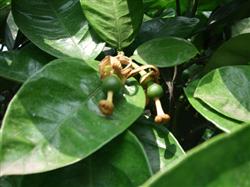
How to manage Fuchuan navel orange well during the fruiting period? Please provide guidance and introduce methods
The following methods may be referenced for managing Fuchuan navel orange during the fruiting period:
1. Apply fruit-stabilizing fertilizer according to tree condition and strengthen foliar spraying. After young fruiting trees sprout buds and bloom, they consume a large amount of nutrients. To improve fruit set, a fruit-stabilizing fertilizer should be applied in time before the second physiological fruit drop (early June), adhering to the principle of "fertilizing according to tree condition." Method: Loosen the soil in the tree basin by shallow tillage, open a ring-shaped shallow trench at the drip line, apply 150-250 grams of imported compound fertilizer plus 10-15 kg of decomposed manure water per tree as a drench, then cover with soil. During the young fruit growth period, spray the foliage with 0.3% monopotassium phosphate + 0.3% urea, once every 15 days.
2. Remove summer shoots and thin fruit reasonably. Young fruiting trees produce a relatively large amount of summer shoots. To reduce the conflict between shoots and fruit and improve the fruit-setting rate, thoroughly remove summer shoots from mid-May to late July, and uniformly release autumn shoots in early August to cultivate fruiting mother branches for the following year. Thin fruit before the second physiological fruit drop in early June, mainly removing small and weak fruit, deformed fruit, pale-colored fruit, and diseased and insect-damaged fruit. If fruit set is excessive, some healthy fruit should also be thinned, with a leaf-to-fruit ratio of 50-60:1
3. Prevent navel yellow fruit drop. There are usually three types of navel yellow: physiological navel yellow, pathogenic navel yellow, and insect-damaged navel yellow. For physiological navel yellow, apply 200-300 ppm gibberellin (920) or 800 times diluted YiHuangZhi solution to the navel, once every 10-15 days, for 2-3 consecutive applications. For pathogenic and insect-damaged navel yellow, add thiophanate-methyl (or carbendazim, thiram) and insecticides such as omethoate to the above agents, and apply the mixed solution to the navel, but the concentrations of fungicides and insecticides should be increased by 3-5 times compared with normal use concentrations.
4. Strengthen orchard soil management and prevent fruit cracking. Mulching the tree basin (with a 10-15 cm thick layer of weeds) and reasonably interplanting leguminous green manure can effectively lower soil temperature, keep the soil moist, and significantly reduce fruit cracking caused by sudden water absorption and expansion after drought followed by rain. During the young fruit period, spray 0.3% monopotassium phosphate on the foliage, once every 10-15 days. In early July, apply 250-500 grams of potassium fertilizer per tree once. From early June to late July, use 200-250 ppm gibberellin (920) to dot-apply the navel of young fruit. If cracked fruit is found, add 800 times diluted thiophanate-methyl solution. During the fruit expansion period from July to August, spray the canopy with a mixture of 0.5% urea + 0.2% monopotassium phosphate + 0.2% vinegar + 0.1% lime + 0.1% salt for a better effect in preventing fruit cracking.
5. Control pests and diseases. In summer, emphasis should be placed on the control of rust mites and citrus canker to improve the external quality of the fruit. Rust mites: from late May to early June during the young fruit period, begin spraying when 3-5 mites are found on the fruit surface, spray once every 10-15 days, for 2-3 consecutive sprays, and spray another 1-2 times from July to September. Agents include 40% isocarbophos 1000-2000 times dilution, fenbutatin oxide 1500-2000 times dilution, propargite 3000-5000 times dilution, and zineb 800-1000 times dilution. To control citrus canker, thoroughly remove summer shoots and prune diseased branches and leaves. Focus on spraying control after summer rains, using 0.5:0.5:100 Bordeaux mixture plus 2% laundry detergent, 77% copper hydroxide 600-800 times dilution, Guobingke 1000-1200 times dilution, or Kasumin 600-800 times dilution. .
Click to get more navel orange planting techniques
Click to get more fruit planting techniques