What is banana black spot disease and what harm does it cause?
What is banana black spot disease? What harm does black spot disease cause? How should it be prevented and controlled? Please explain. Black spot disease is an uncommon disease of banana plants, mainly affecting leaves and fruit. When leaves are affected, they age prematurely and wither; diseased fruit has a poor appearance and low commercial value, and is prone to rotting during storage and transport. On infected plants, the lower leaves are affected first, with many small black spots scattered across the leaf surface...
What is banana black spot disease? What harm does black spot disease cause? How should it be prevented and controlled? Please explain
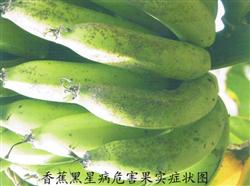
Black spot disease is an uncommon disease of banana plants, mainly affecting leaves and fruit. When leaves are affected, they age prematurely and wither; diseased fruit has a poor appearance and low commercial value, and is prone to rotting during storage and transport. On infected plants, the lower leaves are affected first, with many small black grains scattered across the leaf surface (these are the pathogen's pycnidia), and the disease gradually spreads to the middle and upper leaves, causing a large number of leaves to become diseased (though young leaves are rarely affected). After the plant sets fruit, many small black grains gradually appear on the green peel, with more disease on the outward-facing side of the bunch than on the inner side; in severe cases, large numbers of tiny black grains also cluster on the rachis and the inner side of the bananas. When the fruit ripens, a more pronounced brown ring forms around the small black grains. The primary infection source comes from diseased leaves and fruit in the field, and conidia spread with rain and airflow. Every year during the spring rains, mature pycnidia splash out large numbers of conidia, infecting leaves and fruit and causing disease. Banana plantations with heavy fertilization and dense planting are more prone to the disease; plants are most susceptible in the late stage after fruit set; bananas are more susceptible than Fenjiao (ABB group bananas) and Dajiao (plantains).
Prevention and control methods: (1) Pay attention to field sanitation to reduce the primary infection source (refer to banana leaf spot disease). (2) Bag the fruit to protect it after removing the male bud. The bag specifications are blue polyethylene film bags 80-120 cm long, 50 cm wide and 0.3-0.4 mm thick, with small holes punched in the bag to dissipate heat in summer. The specific method is to slip the fruit bunch into the bag, tie the upper end tightly to the base of the bunch stalk, and leave the lower opening for ventilation. Bagging can prevent the pathogen from being transferred to the fruit by rain and also provides some protection against cold, but in midsummer it can easily cause sunscald on the fruit. (3) Spray the leaves and fruit with 75% chlorothalonil wettable powder at 800-1000 times dilution, or 70% thiophanate-methyl wettable powder at 800-1000 times dilution, or 40% miebingwei suspension concentrate at 600-800 times dilution; spraying the fruit after removing the male bud but before bagging is especially preferable.
Click to get more banana cultivation techniques
Click to get more fruit cultivation techniques