How should bananas be fertilized at different growth stages?
How do you fertilize bananas by stage? Please give guidance. The banana growth period can be divided into three phases: vegetative growth (vegetative growth stage), simultaneous vegetative and reproductive growth (bud initiation stage), and fruit growth and development through maturity, and each phase has its own nutritional characteristics. The nutritional management throughout a banana's life must...
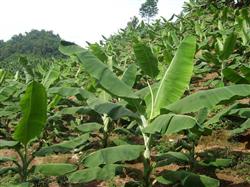
How do you fertilize bananas by stage? Please give guidance.
The banana growth period can be divided into three phases: vegetative growth (vegetative growth stage), simultaneous vegetative and reproductive growth (bud initiation stage), and fruit growth and development through maturity, and each phase has its own nutritional characteristics. The nutritional management throughout a banana's life must be based on these three stages, selecting fertilizers suited to each stage and adopting corresponding fertilization methods for nutrient and water management. This article is for reference by banana growers; the nutrient ratios and fertilizer amounts at each nutritional stage should be flexibly adjusted according to the banana's growth vigor and soil fertility.
1. Fertilization during the banana vegetative growth stage
The vegetative growth stage of bananas is generally the first 3-6 months after transplanting. The length of the vegetative growth stage is related to the climate and environment: in Hainan it is the first 3 months after transplanting, while in the Guangdong-Guangxi region, because bananas must go through the overwintering period, it is 5-6 months after transplanting. The main purpose of fertilization at this nutritional stage is to help the seedlings recover, promote seedling growth, and promote rapid growth of banana roots, stems, and leaves so as to form a strong trunk as early as possible. Therefore, while ensuring sufficient potassium, nitrogen and phosphorus should be supplied in appropriate amounts. For example, 20-9-11 sulfur-containing compound fertilizer and similar high-nitrogen compound fertilizers are more suitable for the first half of the banana vegetative growth stage; when choosing for the second half, because it is close to the banana bud initiation stage, it is better to choose 17-7-17 and similar compound fertilizers with higher nitrogen and potassium. At the same time, an appropriate amount of organic fertilizer (true farmyard organic fertilizer) should be applied in coordination with the turning of small suckers and large suckers. The fertilizer amount during the vegetative growth stage is about 30% of the total fertilizer amount.
However, the specific fertilizer amount should also take into account the local soil fertility. If the soil is deficient in phosphorus and potassium, an appropriate amount of phosphorus and potassium fertilizer should also be applied. At present, banana plantations in Hainan are in the large-sucker turning period, so while applying chemical fertilizers, an appropriate amount of organic fertilizer should also be applied.
Fertilization method: if ordinary water-soluble fertilizer is used, then in the month of planting, water-fertilizer should be irrigated once a week; afterward, soil broadcast topdressing should be carried out three times a month, that is, small amounts more frequently, and sprinkler irrigation should be carried out promptly after each topdressing.
2. Fertilization during the banana bud initiation stage
The bud initiation stage is the period when vegetative and reproductive organs coexist. During this period bananas grow fastest, lasting about 2 months. The main purpose of fertilization at this stage has two aspects: first, to continue promoting the growth of roots, stems, leaves, and other vegetative organs; second, to promote bud development and early bud emergence. Therefore, while moderately increasing the potassium application rate, nitrogen should be supplied in appropriate amounts. For example, 15-6-20 sulfur-containing compound fertilizer can be applied. According to local soil fertility, single-element fertilizers should be used in coordination, so as to effectively promote high banana yields. The fertilizer amount at this application is recommended to be 40%-45% of the total fertilizer amount.
Fertilization method: carry out soil broadcast topdressing three times a month, but each application amount should be greater than in the vegetative growth stage, and sprinkler irrigation should be carried out promptly after each topdressing.
3. Fertilization during the fruit growth and development stage
The fruit growth and development stage refers to the period from bud emergence to 20-30 days before harvest. This period lasts varying lengths of time depending on the cultivation area: in high-temperature areas it is 3 months, and in the Guangdong-Guangxi region it takes 5-6 months. The main purpose of fertilization during this period is to promote fruit expansion, increase fruit sugar content, prevent cracking, and improve fruit quality. Therefore, fertilization should be treated in two phases. In the first half, potassium fertilizer should be applied heavily and nitrogen should be supplied in appropriate amounts; for example, 15-6-20 sulfur-containing compound fertilizer can be chosen. In the second half, potassium fertilizer should be applied heavily and nitrogen supply should be controlled; for example, 15-6-20 plus potassium sulfate can be chosen (but the total amount is based on the mixture of the two). The fertilizer amount during this period accounts for 25%-30% of the total. In this way, the first half of fruit growth and development can be ensured to promote rapid fruit growth, and once the fruit reaches commercial standards, nutritional regulation can then be used to increase banana sugar content and improve banana quality.
Fertilization method: in the first half of fruit growth, carry out soil broadcast topdressing three times a month; in the second half, topdress at least twice a month, but stop fertilization 20-30 days before harvest to avoid waste, and carry out sprinkler irrigation promptly after each topdressing. In addition, according to the banana's growth condition, nitrogen fertilizer and micronutrient fertilizer should be supplemented in a timely manner by foliar application, thereby ensuring healthy and vigorous banana growth.
In summary, bananas, as a typical potassium-loving crop, have consistent absorption characteristics for N, P, and K at different stages, that is, the order of absorption amounts is K>N>P. According to the nutritional characteristics of bananas, it is recommended to apply potassium nutrition heavily from transplanting or retaining suckers. In particular, a reminder: after fertilization, irrigation must be carried out; fertilizer must be combined with water, as fertilizer without water equals no fertilizer. Bananas have a large biomass and grow quickly, with a high fertilizer requirement, and banana-growing areas either have abundant rainfall and frequent rainstorms or seasonal drought, so small amounts should be applied more frequently, and it is not easy to overapply fertilizer at one time.
Click to get more banana cultivation techniques
Click to get more fruit cultivation techniques