How to Grow Cherry Tomatoes: A Detailed Guide to Cherry Tomato Cultivation Methods
How to grow cherry tomatoes? Here are some methods you can refer to for growing cherry tomatoes: The most ideal soil for cultivating cherry tomatoes is deep, fertile, well-drained soil with fairly good water retention, with a soil pH of 5.6-6.7, ranging from sandy loam to clay loam. Tomatoes should not be grown continuously on the same land; crop rotation with rice, legumes,...
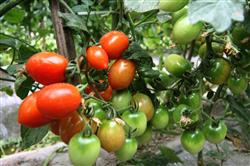
How to grow cherry tomatoes? An introduction
Cherry tomatoes can be grown by referring to the following methods:
The most ideal soil for cultivating cherry tomatoes is deep, fertile, well-drained soil with fairly good water retention, with a soil pH of 5.6-6.7, ranging from sandy loam to clay loam. Tomatoes should not be grown continuously on the same land; crop rotation with rice, legumes, corn, etc. is recommended.
I. Variety Selection
1. Shengyun: This variety is a mid-early maturing variety introduced by Lihe Agriculture Co., Ltd., tolerant to high temperatures and suitable for storage and transport. It is mid-early maturing, indeterminate, with medium-green leaves and medium internodes, strong disease resistance, and high yield. It can be harvested in clusters, with 2-24 fruits per cluster, and a single fruit weight of 20 grams. The fruit is bulb-shaped, tolerant to rain and heat, with strong fruit-setting ability, tough skin resistant to cracking, good storage and transport qualities, and a slightly green shoulder color. The taste is moderately sweet and sour, and the sugar content can reach above 8.5.
2. Aixin: The plant is semi-determinate, highly heat-tolerant, resistant to Fusarium wilt, and also fairly tolerant to moisture. The flesh is good quality, the fruit is firm, and it stores and transports well. The fruit is long oval-shaped, weighing 13 grams, with a uniformly bright red color, a sugar content of 8.5, good taste, and excellent flavor.
3. Mali: The plant is tall, with darker leaf color, resistant to late blight and leaf mold. Each cluster can bear up to about 30 fruits; when pruned to two stems, about 350 fruits per plant is considered a bumper harvest. The fruit is long oval-shaped, with a uniformly bright red color, weighing about 30 grams, with a sugar content of about 8.5, easy to harvest, not prone to cracking, relatively firm, and suitable for storage and transport.
4. Yasu No. 6: This variety is semi-determinate, with a plant height of about 170 cm. The fruit is bright red, weighing 13-15 grams, long oval-shaped, with an attractive fruit shape. This variety is highly heat-tolerant, resistant to Fusarium wilt, tomato mosaic virus, and other diseases. The sugar content is 10-11, the fruit is relatively firm, not prone to cracking, suitable for storage and transport, and high-yielding.
II. Sowing Period
Cherry tomatoes have strong adaptability. By using different sowing periods and different protected cultivation facilities, four-season production and year-round supply can be achieved. For open-field cultivation, cherry tomatoes can be planted from August to February of the following year.
III. Sowing and Raising Strong Seedlings
Before sowing, the seeds must be disinfected: To prevent tomato early blight, first soak the seeds in warm clean water for 3-4 hours, then soak them in a 100-fold dilution of 40% formalin. After 20 minutes, remove them and keep them sealed for 2-3 hours, then rinse thoroughly with clean water. To prevent tomato viral disease, likewise first soak in clean water for 3-4 hours, then transfer to a 10% trisodium phosphate or 2% sodium hydroxide aqueous solution, soak for 20 minutes, remove, and rinse several times with clean water until the pH tests neutral. When sowing, first water the seedbed thoroughly, mix the seeds with fine sand or crumbled soil, evenly scatter them on the seedbed, and cover with 0.5 cm of loose soil. When the seedlings grow 2-3 true leaves, thin them out; when they have 5-6 true leaves, they can be transplanted.
IV. Land Preparation, Bed Making, and Transplanting
Choose a field where Solanaceae plants have not been previously grown and that has convenient drainage and irrigation. After plowing and harrowing the land, open planting furrows according to the row spacing, apply base fertilizer, then form raised beds, with beds oriented north-south as a principle. The bed width is 1.4-1.7 m (including ditches), the plant spacing is 45-55 cm, and the planting density per mu is between 1,600 and 2,000 plants. Select strong, healthy seedlings for transplanting, and irrigate immediately after transplanting.
V. Field Management
1. Reasonable Fertilization and Irrigation: Cherry tomatoes have a well-developed root system and vigorous growth. Fertilizer should be mainly organic fertilizer, combined with compound fertilizer, and appropriately increase potassium fertilizer application.
2. Staking and Tying Vines: After transplanting and seedling establishment, stake and tie the vines promptly. For early-maturing self-topping varieties, use low trellises with a height below 1 m. For tall varieties, use trellises over 1.5 m high. Generally, use A-frame or vertical trellises, and the stakes should be sturdy and firm to prevent lodging. Tie the stem to the trellis from above the first fruit cluster, then tie once every 2-3 leaves thereafter. Pay attention to tightness when tying: when the plant is growing vigorously, tie more tightly; when growth is weak, tie more loosely.
3. Pruning and Removing Side Shoots: According to the growth conditions of cherry tomatoes, there are two methods: single-stem pruning and double-stem pruning. Single-stem pruning keeps only the main stem and removes all side buds. Double-stem pruning, in addition to the main stem, keeps only one side branch growing from the leaf axil below the first inflorescence, and removes all other side buds. Pay attention to removing buds early, preferably on sunny days. Keep the wound dry to avoid pathogen infection. If done on rainy days, spray fungicide immediately after the operation to prevent disease.
VI. Harvest
Depending on the characteristics of different varieties, tomatoes should be harvested immediately when they reach commercial fruit maturity; overripe harvesting is not conducive to storage and transport.
Click to get more cherry tomato cultivation techniques
Click to get more fruit cultivation techniques