Cherry Tomato Cultivation: How to Grow Cherry Tomatoes in Pots?
How to grow cherry tomatoes in pots? Here is a guide to the method. Growing cherry tomatoes in pots gives you both a delicious fruit-type vegetable and a bonsai-like plant that beautifies your home. Growing potted cherry tomatoes kills two birds with one stone. The following introduces the pot cultivation techniques for cherry tomatoes. 1. Variety selection. You can choose the Meimei (Delicious) cherry tomato...
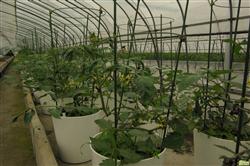
How to grow cherry tomatoes in pots? Here is a guide to the method
Potted cherry tomatoes serve both as a delicious fruit-type vegetable and as a bonsai-like plant to beautify the home. Growing potted cherry tomatoes kills two birds with one stone. The following introduces the pot cultivation techniques for cherry tomatoes.
1. Variety selection
You can choose the Meimei (Delicious) cherry tomato bred by the Institute of Vegetables and Flowers, Chinese Academy of Agricultural Sciences. Japanese cherry tomato is equally suitable, but Japanese cherry tomato seeds are expensive, costing 600 yuan per 1000 seeds, while Meimei cherry tomato costs only 6 yuan per 1000 seeds. In terms of fruit quality, Meimei cherry tomato is even better than Japanese cherry tomato. This variety is an indeterminate growth type, with strong vigor, resistance to viral diseases, and extremely early maturity; the fruit is round, red, evenly colored, and brightly hued. Its fruit-setting ability is strong, with 30-60 fruits per cluster, a single fruit weight of 12-15 g, uniform and even size, a sugar content of 8%-10%, and a sweet-and-sour, tasty flavor with a rich aroma.
2. Raising seedlings
Both spring sowing and autumn planting are fine. If planted in pots in August in autumn, the plants will be loaded with fruit by New Year's Day and the Spring Festival, catching a good price, with each pot selling for up to 10-20 yuan. Use nutrient pots for raising seedlings; pots with a diameter of 5 cm are sufficient. For the substrate materials, peat, vermiculite, furnace slag, and corn stalk powder can all be used; choose any 2-3 of them and mix them at a 1:1 ratio. Sow dry seeds directly, or soak the seeds before sowing them into the pots, with 1-2 seeds per pot. After sowing, cover with 0.8 cm of fine moist soil and cover with 1 layer of film; remove the film after the seedlings emerge. You can also raise seedlings by sowing in beds, and when the seedlings reach the 2-leaf 1-heart stage, transplant them into pots. During the seedling stage, pay attention to foliar fertilizer spraying and pest and disease control.
3. Water and fertilizer management
After the tomatoes are put into pots, water them thoroughly once. After 20 days, apply 100-150 g of expanded chicken manure or sesame paste residue as a top dressing to each pot of tomatoes, top-dress once every 10 days, and water once every 3-5 days. Control the amount of watering before fruit set, and keep the potting soil moist during the fruit-swelling stage.
4. Pruning techniques
1. Continuous pinching. Because tomatoes have strong growth vigor, and the axillary buds on each side can all form branches, bloom, and bear fruit, you can carry out two-stem or three-stem pruning. When the plant reaches about 80 cm tall, pinch off the growing point, so the plant stays short and strong and the fruits ripen uniformly. To increase the plant's photosynthetic area and promote the fruit-setting rate, for side branches growing from multiple main stems, when they have 1-2 flower clusters, leave 1-2 leaves above and pinch off the growing point, so that each pot of tomatoes takes on an umbrella, fan, or hemispherical shape, with fruit clusters evenly distributed on it. In the cold winter, when the indoor temperature and light are suitable, potted tomatoes can likewise bear abundant tomatoes.
2. Twisting branches, removing leaves, and removing side shoots. By twisting branches to shape the potted plant, you increase the load-bearing capacity of the basic branches, raise the fruit-setting rate of each pot of tomatoes, and make light distribution even, which helps promote fruit ripening. Branch twisting should be done on sunny afternoons; never do it on cloudy or rainy days or on sunny mornings. When removing leaves, try to keep the fruit clusters sitting on the surface of the pot; yellow old leaves and branch forks at the base should also be removed in time to improve ventilation and light penetration and reduce nutrient consumption. Removing side shoots is also for shaping, promoting plant growth and fruit swelling, and helping the fruit receive light and color up.
3. Make use of its indeterminate growth characteristic. In winter, place the potted tomato on an enclosed balcony or indoors, and hang a plastic string, guiding one branch of the potted tomato upward to climb, so as to make full use of space for more flowers and more fruit. Use a flower pot with a diameter of 17 cm and a height of 12 cm to plant one tomato pruned to four vines; after the fruit on the long vine is harvested, you can change the head and renew the fruiting branches. If you use a self-topping variety for potted tomatoes, you can omit the pinching step, and nutrients can be supplied to the fruit more intensively, giving a somewhat better effect. But if you use an indeterminate tomato variety, you can likewise achieve good results through repeated pinching and head changing.
5. Pest and disease control
Potted tomatoes have very light pests and diseases. Because the indoor air is dry, pay attention to frequently spraying water and 0.5% potassium dihydrogen phosphate on the leaves, or spray 100-fold rice vinegar solution weekly, which can prevent insects and diseases and also serve as foliar top dressing. Where conditions permit, spraying a low-toxicity, odorless pesticide once every 10 days can control the occurrence of pests and diseases.
Click to get more cherry tomato cultivation techniques
Click to get more fruit cultivation techniques