Greenhouse Peach Tree Cultivation Management Methods and Technical Key Points
How do you manage peach trees grown in a greenhouse? Please introduce the following methods for reference in managing peach trees grown in a greenhouse: 1. Removal of sprouts and pruning. During the bud break stage of peach trees in the greenhouse, promptly remove unreasonable sprouts. After flowering, according to the situation, promptly thin out overly dense branches, water sprouts, upright branches, shade-casting branches, and crossing branches. 4 to 6 weeks before harvest, cut back overly vigorous fruiting trees...
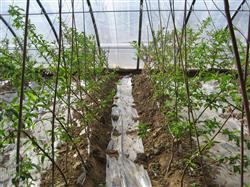
How do you manage peach trees grown in a greenhouse? Please introduce
Peach trees grown in a greenhouse can be managed with reference to the following methods:
I. Removal of sprouts and pruning. During the bud break stage of peach trees in the greenhouse, promptly remove unreasonable sprouts. After flowering, according to the situation, promptly thin out overly dense branches, water sprouts, upright branches, shade-casting branches, and crossing branches. 4 to 6 weeks before harvest, cut back overly vigorous fruiting trees; on fruit spur shoots, leave only one new shoot at the front, and part of the new shoots may be appropriately shortened. It is advisable to adjust the tree structure until there is uniform dappled light under the tree at noon.
II. Canopy control. Keep one appropriately oriented vigorous new shoot on each scaffold branch; when the secondary shoot on the fruit spur growing upward reaches 10 large leaves, repeatedly pinch the growing tip and remove side buds to make it form a blind branch; for other vigorous new shoots, dip the tips in 50 times 15% PP333. Taking these measures effectively controls excessive vigor, increases yield per tree, and reduces physiological fruit drop and pre-harvest fruit drop.
III. Leaf removal and branch tying. 20 days before harvest, remove leaves that affect the fruit's exposure to light, and lift drooping branches to the light-receiving side to promote fruit coloring. 4 to 6 weeks before harvest, use rope to lift or pull drooping fruiting branches above the canopy, which can greatly improve the light conditions of the tree and increase fruit coloring.
IV. Spraying plant growth regulators and supplementing fertilizer. Spray once each during the flowering stage and 2 weeks after flowering with LXL fruit-setting agent or fruit-shaping agent containing 1.8% GA4+7 and 1.8% 6-benzyladenine to increase the fruit-setting rate and promote fruit enlargement. About 10 days after flowering of peach trees, spray 2 to 3 times a mixture of 0.5% urea and 0.2% monopotassium phosphate; spraying should preferably be done on a windless evening or cloudy day, once every 2 weeks.
V. Topdressing and watering. During the pit-hardening stage and fruit enlargement stage of peach fruit in the greenhouse, apply topdressing once each time, with 30 grams of urea and 30 grams of monopotassium phosphate per tree. Combine each fertilization with one watering; the amount of watering depends on soil moisture conditions.
VI. Pest and disease control. ① Diseases. The main diseases include peach bacterial shot hole, mildew spot shot hole, and brown spot shot hole. Before bud break, evenly spray the tree with 5 degrees Baume lime sulfur mixture once, which can reduce sources of pathogen infection and the overwintering base of pests. After root diseases are found, promptly drench the roots with Duoxiaoling medicinal solution. ② Insect pests. Peach aphid, mealy aphid, and peach leaf-curling aphid mainly damage leaves and tender shoots. Commonly used pesticides include Yashu Yicijing, Kuaishaling, and Decis. ③ Pest and disease prevention after harvest. After harvest, greenhouse peach trees should also have pest and disease control strengthened, combined with foliar fertilization, to prevent abnormal early autumn defoliation and promote leaf photosynthetic efficiency and accumulation of photosynthetic products, thereby overcoming poor flower bud differentiation quality and pistil degeneration caused by insufficient stored nutrients.
Click to get more peach tree cultivation techniques
Click to get more fruit cultivation techniques