How to prevent and control strawberry anthracnose? Detailed explanation of control methods
What harm does strawberry anthracnose cause? How to prevent and control strawberry anthracnose? Experienced netizens are also asked to help give guidance. Strawberry anthracnose is a very important disease during the strawberry seedling-raising period. Zhongdiwang has compiled the harm and control methods of strawberry anthracnose, listed below for netizens' reference. Causes of strawberry anthracnose...
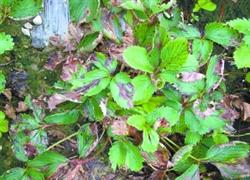 What harm does strawberry anthracnose cause? How to prevent and control strawberry anthracnose? Experienced netizens are also asked to help give guidance
Strawberry anthracnose is a very important disease during the strawberry seedling-raising period. Zhongdiwang has compiled the harm and control methods of strawberry anthracnose, listed below for netizens' reference.
Causes and harm of strawberry anthracnose:
When temperatures are high and rainfall occurs frequently, strawberries are highly prone to anthracnose; if it occurs and is not controlled in time, it will reduce the strawberry's reproductive capacity and the quality of strawberry seedlings, and in severe cases it will cause a large number of seedling deaths in the seedling field, or even total loss of the strawberry seedlings.
If strawberry seedlings infected with anthracnose are used for production, varying degrees of seedling death are also likely to occur for a period after transplanting, and in severe cases the entire crop must be destroyed and replanted. Therefore, prevention and control of anthracnose should begin during the strawberry seedling-raising period.
Control methods for strawberry anthracnose:
I. Heavy and moderate rain easily causes flooding in the seedling field, so ditching and drainage in the seedling field must be done in advance to ensure that water does not reach the surface of the beds, that the seedling beds do not accumulate water, and that the ditches are dry after rain.
II. Timely watering helps lower soil temperature and replenish plant moisture. Watering should be done in the early morning and evening, preferably by drip irrigation, and absolutely avoid flood irrigation and watering heavily on extremely hot days. Apply fertilizer reasonably; nitrogen fertilizer should not be excessive, and increase the application of organic fertilizer and phosphorus and potassium fertilizer to cultivate robust plants and improve their disease resistance.
III. For seedling fields with compacted soil, use a short-handled two-tooth hoe to loosen the soil gently; for floating seedlings, press them firm with soil to promote root development; weeds in the seedling field should be removed promptly by hand to enhance ventilation and light penetration.
IV. Manage the plants reasonably, promptly remove old withered leaves and leaves, stolons, etc. infected with anthracnose, and gather them and take them outside the seedling field for deep burial or burning. Reasonably control the density of daughter seedlings; when the density is relatively high, cut the stolons of the mother plants and promptly pull out the mother plants.
V. Strawberry seedling-raising fields can be covered with a shed and film for rain sheltering to reduce humidity, and shade nets can be used for coverage during high-temperature periods to lower the temperature.
Chemical control methods:
In the early stage of strawberry anthracnose, you can choose 75% chlorothalonil wettable powder 500x solution, or 25% azoxystrobin suspension concentrate 2000x solution, or 50% prochloraz wettable powder 1500x solution, or 10% difenoconazole water-dispersible granules 1500x solution, or 70% mancozeb wettable powder 500x solution for spray control.
Spray once about every 7 days, for 3-4 consecutive sprays, and the chemicals should be used in rotation. Pay special attention that for open-field seedling raising, chemicals must be sprayed promptly after each rain for prevention or control.
Click to get more strawberry cultivation techniques
Click to get more fruit cultivation techniques