How to manage strawberries during the flowering and fruiting period? Detailed explanation of key planting techniques
How should strawberries be managed during the flowering and fruiting period? What should be noted? We also ask experienced friends to help explain. Generally, strawberries enter the flowering and fruiting period in April-May, and the flowering and fruiting period lasts 20-25 days. With proper management, yields will increase considerably. Zhongdiwang has compiled the key management points for the strawberry flowering and fruiting period, listed below...
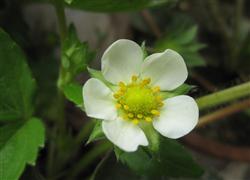 How should strawberries be managed during the flowering and fruiting period? What should be noted? We also ask experienced friends to help explain
Generally, strawberries enter the flowering and fruiting period in April-May, and the strawberry flowering and fruiting period lasts 20-25 days. With proper management, yields will increase considerably. Zhongdiwang has compiled the key management points for the strawberry flowering and fruiting period, listed below for netizens' reference.
Key point one: Top-dress strawberries in time:
From late March to early April, apply 10-15 kg of urea or compound fertilizer per mu of land to accelerate plant growth, help new leaves unfold, and promote flowering and fruiting. Top-dressing should be combined with watering to ensure the soil is moist. Spray the leaves with 0.3%-0.5% monopotassium phosphate 2-3 times.
Key point two: Remove runners from strawberries:
Removing strawberry runners can increase yield by 40%-50%. Remove them as soon as the runners begin to grow, doing this 3-4 times a year.
Key point three: Thin the flower buds of strawberries:
The flowers that bloom later on a strawberry inflorescence often fail to form fruit, so they should be thinned when the buds are separated from one another, preferably removing 1/5-1/4 of the inflorescence; weak inflorescences need not be kept.
Key point four: Remove leaves from strawberries:
Strawberries continually produce new leaves throughout the year, while old leaves turn yellow and wither one after another. During the flowering and fruiting period, old leaves and diseased leaves should be removed promptly, along with weak lateral buds, which can effectively reduce nutrient consumption and improve ventilation and light penetration between plants.
Key point five: Mulch the fruit of strawberries:
Strawberry plants are short, and the fruit easily droops and touches the ground, becoming contaminated by soil and harmed by pests and diseases, which also causes uneven fruit coloring. Use chopped straw or wheat straw to spread around the plants. This is even more important for areas without plastic film mulching and in rainy regions.
Key point six: Prevent diseases in time:
To prevent and control powdery mildew, leaf spot, and gray mold during the strawberry flowering period, spray 50% carbendazim 500x solution, 70% thiophanate-methyl 1000x solution, 20% triadimefon emulsifiable concentrate 1500x solution, 2% wuyimycin aqueous solution 200x solution, etc.
Key point seven: Control insects at the right time:
For aphids, use 50% pirimicarb wettable powder 2000-3000x solution, or 2.5% Uranus emulsifiable concentrate 3000x solution. If red spider mites are found, spray 5% hexythiazox emulsifiable concentrate 2000x solution, or 20% compound liuyangmycin emulsifiable concentrate 1000x solution. Note that pesticides must not be used within 20 days before harvest.
Click to get more strawberry planting techniques
Click to get more fruit planting techniques