Winter Management Methods and Key Technical Points for Longan Trees
How should longan trees be managed in winter? What should be noted? Experienced netizens are also invited to share their advice. Zhongdiwang has compiled the key management points for longan trees in winter, listed in detail below for netizens' reference. Key management point one, watering and cold protection methods for young longan trees: In winter, the weather is dry, and young trees, due to their shallow root systems...
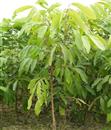 How should longan trees be managed in winter? What should be noted? Experienced netizens are also invited to share their advice.
Zhongdiwang has compiled the key management points for longan trees in winter, listed in detail below for netizens' reference.
Key management point one, watering and cold protection methods for young longan trees:
In winter, the weather is dry. Because young trees have shallow roots and weak stress resistance, they need frequent watering to stay moist; in addition, weeds or other materials should be used to cover the tree basin to reduce soil moisture evaporation, keep the tree basin moist, reduce the number of waterings, and keep the roots from freezing.
When covering the tree basin, there must be a certain thickness (15 cm or more) for it to be effective. If there is too little mulch, the effect is poor. In areas with lower winter temperatures, special attention must be paid to cold protection for young trees, and straw can be used to wrap the trunks for cold protection.
Key management point two, cleaning the longan orchard:
Winter is the best time to clean the orchard. Dead branches, fallen leaves, weeds, and the like in the orchard can be transported outside the orchard and burned in a centralized manner. At the same time, whitewash the trunks with limewater. This can effectively reduce overwintering sources of pests and diseases. At the same time, weeds in the orchard can be used for green manuring to improve the soil or to cover the tree basin.
Key management point three, deep plowing of the soil in the longan orchard:
Deep plowing to improve the soil in the orchard is generally carried out from mid-December to January. Soil improvement materials can be obtained locally, making full use of the orchard's topsoil and weeds. For orchards with relatively clayey soil, in addition to adding organic matter, soil improvement should also loosen the soil and improve soil aeration. Materials can be selected from high-efficiency, high-quality organic fertilizer plus weeds, green manure, or crop stems and household waste and other soil-loosening substrates; for soil that is relatively sandy, soil improvement is mainly to increase its water- and fertilizer-holding capacity, and materials can be selected from high-efficiency, high-quality organic fertilizer plus pond mud or household waste.
Specific operation method for deep plowing and soil improvement: generally dig two symmetrical soil improvement pits under the canopy drip line and apply fertilizer. Taking a tree with a canopy diameter of 5 m as an example, in an orchard with poor soil, two large pits 60 cm deep, 40-50 cm wide, and 2 m long can be dug, and 100-150 kg of soil improvement materials applied; in an orchard with better soil, two shallow trenches 40 cm deep, 40 cm wide, and 1.5-2 m long can be dug, and 20-30 kg of chicken manure applied. The amount of fertilizer applied should also depend on the amount of fertilizer applied to promote autumn shoots. If heavy organic fertilizer was already applied in autumn, the winter fertilizer can be appropriately reduced. When applying fertilizer, coarse fertilizer should be placed in the bottom layer and refined fertilizer in the surface layer. If there are weeds, green manure, or crop stems, an appropriate amount of lime should be added to promote decomposition.
Click to get more longan cultivation techniques
Click to get more fruit cultivation techniques