What are the key management techniques for wampee (Clausena lansium) trees during the flowering period?
How should wampee trees be managed when flowering? Is there anything to watch out for? Is there any fellow gardener who can help? Zhongdiwang has compiled the post-flowering management methods for wampee trees and the differences between spring shoots and autumn shoots of wampee trees, listed in detail below for fellow gardeners' reference. Key points for post-flowering management of wampee trees: Point one, timely...
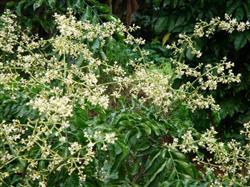 How should wampee trees be managed when flowering? Is there anything to watch out for? Is there any fellow gardener who can help?
Zhongdiwang has compiled the post-flowering management methods for wampee trees and the differences between spring shoots and autumn shoots of wampee trees, listed in detail below for fellow gardeners' reference.
Key points for post-flowering management of wampee trees:
Point one: Apply flower-promoting and flower-strengthening fertilizer to wampee trees at the right time:
After the flower spikes appear and before flowering, apply 0.5 kg of high-quality compound fertilizer per tree, or about 20 kg of fully decomposed peanut bran liquid per tree, both applied in shallow ring-shaped trenches, to provide sufficient nutrients for spike emergence and flowering, so as to promote large spikes with many flower buds and uniform flowering, improve flower quality and favor fruit set. At the same time, apply foliar fertilizer to strengthen the flowers; generally during the flowering period, spray the canopy with 0.1%--0.2% borax plus 0.1% zinc sulfate plus 0.1% magnesium sulfate.
Point two: Prune flower spikes according to different varieties:
The flower spikes of seedless wampee are relatively long, reaching 25 cm, with sparse and scattered side spikes and uneven flowering. From spike emergence to before flowering, pinch off 1/5--1/6 of the spike tip and remove excessive side spikes to promote uniform flowering and improve flower quality, which favors fruit set. Promptly cut off flower branches with no fruit to reduce nutrient consumption.
Point three: Apply fertilizer and spray hormones at the right time to retain fruit:
Before the end of the second physiological fruit drop, that is, when young fruits are about 0.4 cm in diameter, spray the foliage with a mixture of 50 ppm "920" + 0.2% monopotassium phosphate + 0.3% urea, then spray again every 7--10 days, for a total of 2--3 sprays. In this way, young fruits are supplemented with auxin and nutrient elements, stimulating and promoting ovary development and effectively reducing physiological fruit drop.
Point four: Thin fruits reasonably:
If wampee fruits show obvious differences in fruit size and uneven ripening, in order to make fruit development uniform and improve fruit quality, some small fruits and deformed fruits can be thinned in May and June; for trees bearing too much fruit, some weak and small fruit spikes can also be removed.
Differences between spring shoots and autumn shoots of wampee trees:
Mature wampee trees produce shoots 2--3 times a year, with a few producing 4 times. Spring shoots generally sprout in mid-to-late February; some spring shoots also bear flower spikes at the same time; spring shoots without flowers or fruit send out summer shoots around mid-June; after summer shoots mature, autumn shoots emerge around September, and some can also sprout a second batch of autumn shoots. Autumn shoots are the main fruiting mother branches for the following year. Flower buds begin to appear in February, full bloom occurs around mid-April, the flowering period is about 20 days, and the fruit ripening period is from July to August.
Click to get more wampee cultivation techniques
Click to get more fruit cultivation techniques