Wampee Cultivation Methods and Key Points of Young Tree Management Techniques
How are wampee trees planted? How should they be managed during the young tree stage? We have also asked experienced netizens for guidance. Zhongdi Web has compiled the wampee tree cultivation methods and wampee young tree management methods, listed in detail below for netizens' reference. Suitable planting time for wampee trees: wampee trees are generally suitable for planting from March to May...
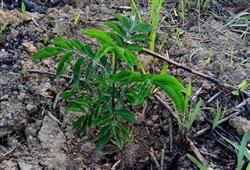 How are wampee trees planted? How should they be managed during the young tree stage? We have also asked experienced netizens for guidance
Zhongdi Web has compiled the wampee tree cultivation methods and wampee young tree management methods, listed in detail below for netizens' reference.
Suitable planting time for wampee trees:
Wampee trees are generally suitable for planting from March to May, when there is more rain and the temperature rises, making it easy for them to take root and giving a high plant survival rate. When transplanting nutrient-bag seedlings, the root system is less affected; in orchards with irrigation conditions, planting can be done in spring, summer, autumn or winter.
Suitable planting density for wampee trees:
Generally, 50-80 wampee trees are planted per mu, and the spacing between plants and rows can be 3 m x 4 m or 2.5 m x 3.5 m. When close planting is planned, about 110 trees are planted per mu, and the spacing between plants and rows can be 2 m x 3 m. Dig holes measuring 1 m in length and width and 0.8 m in depth, and bury 50 kg of green manure, 50 kg of farmyard manure, 500 g of lime and 500 g of phosphate fertilizer in each hole; when backfilling, the topsoil should be about 20 cm above the ground.
Precautions when planting wampee trees:
When planting, the roots of the wampee seedlings must avoid contact with fertilizer; the seedlings should be kept upright, with the roots spreading out naturally in all directions, and the depth should be such that fine soil covers the seedlings up to the root crown.
Key points for managing the young stage of wampee:
Point 1. Fertilization of young wampee trees:The root system of young trees is not yet well developed, is relatively shallow and has weak absorption capacity, so fertilization should follow the principle of frequent and light applications, mainly nitrogen fertilizer, combined with phosphate fertilizer, potassium fertilizer, calcium fertilizer, magnesium fertilizer, foliar micronutrient fertilizer, etc. Fertilization can begin 1 month after planting and survival, and thereafter before each new flush buds and after the new flush turns green. In addition, organic fertilizer should be applied deeply every winter.
Point 2. Water management for young wampee trees:Young trees grow vigorously, and their root system is shallow and sparse, making them susceptible to changes in soil moisture. Soil moisture management should be strengthened: irrigate during drought and drain during waterlogging, keeping the soil moist to facilitate normal plant growth.
Point 3. Loosening the soil in wampee orchards:Young wampee orchards should have their soil loosened several times a year, generally in conjunction with weeding and intercropping. In summer and autumn, loosen the soil after rain to prevent soil compaction. Around the root zone, a loosening depth of 5-10 cm is best.
Point 4. Soil treatment in wampee orchards:Generally starting from the second year after planting, open a ring-shaped trench around the outside of the original planting hole, or dig one strip trench between each row (or between each plant), 40-50 cm deep and 30 cm wide. Apply grass, crop stalks, garbage and an appropriate amount of lime, etc. in layers, rotating the position each year, so that within 2-3 years the whole orchard undergoes one deep plowing and soil improvement.
Point 5. Pruning of young wampee trees:After the wampee seedlings have become established, pinch off the growing tip or cut back to set the trunk at a height of 40-50 cm on the main trunk, to promote sprouting of buds below the cut. After the main branches have matured, pinch off the growing tip or cut back at 15-20 cm to promote sprouting of buds below the cut, then select and retain 2-3 healthy, reasonably distributed branches on each main branch to cultivate as secondary main branches, and use the same method to cultivate tertiary branches and quaternary branches.
Point 6. Land use during the young stage of wampee:Young wampee orchards can, without affecting wampee growth, use the inter-row space to intercrop leguminous crops such as peanuts and soybeans, or vegetables, to help retain soil moisture and prevent heat.
Click to get more wampee cultivation techniques
Click to get more fruit cultivation techniques