What are the control methods for strawberry seedling powdery mildew?
What harm does strawberry seedling powdery mildew cause? How is strawberry seedling powdery mildew controlled? Is there any netizen who can help explain? Nowadays most strawberries are grown in greenhouses, and due to the influence of the high-temperature and high-humidity environment in greenhouses, strawberry diseases are becoming increasingly severe. A common one is powdery mildew, which generally reduces strawberry yields by 10-20...
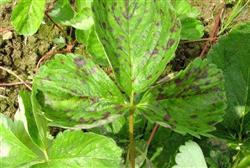 What harm does strawberry seedling powdery mildew cause? How is strawberry seedling powdery mildew controlled? Is there any netizen who can help explain?
Nowadays most strawberries are grown in greenhouses. Due to the influence of the high-temperature and high-humidity environment in greenhouses, strawberry diseases are becoming increasingly severe. A common one is powdery mildew, which generally reduces strawberry yields by 10-20%, and in severe cases by more than 50%, or even total crop failure, seriously affecting the yield and quality of strawberries. Zhongdi Network has compiled the harm and control methods of strawberry seedling powdery mildew, listed in detail below for netizens' reference.
The harm of strawberry seedling powdery mildew:
In the early stage, powdery mildew only produces spots of varying sizes on the leaves of diseased strawberry seedlings, and then white powdery material, namely the conidia of the pathogen, forms on the underside of the leaves. As the disease worsens, the white powder covers the entire leaf, the leaf margin curls upward into a spoon shape, and the leaf gradually turns yellow and withered;
If strawberry flower buds and petals are affected, they turn purplish red and cannot open or bloom abnormally; when the fruit is affected, the fruit surface is covered with white powdery material, the young fruit loses its luster and hardens, the green fruit stops expanding and becomes slender in shape, and coloring deteriorates, seriously affecting berry quality.
When strawberry powdery mildew is severe, besides the leaves, the petioles, flowers, flower stalks and fruits can all be affected, causing young fruits to stop developing and dry up; a layer of white powdery material forms on the fruit, making it unfit for consumption; in severe cases the entire plant dies.
Control methods for strawberry seedling powdery mildew:
Method one,Choose disease-resistant strawberry varieties, such as Mingbao, Yixiang and other relatively resistant varieties, and try not to use susceptible varieties such as Fengxiang.
Method two,Avoid heavily diseased fields for the seedling nursery; as far as possible use fields where cruciferous vegetables or legumes have been rotated for raising seedlings, and fields where solanaceous crops have been grown are also unsuitable as seedling nurseries.
Method three,Regulating the temperature and humidity of the seedling greenhouse can effectively control the occurrence of powdery mildew. (When the relative air humidity in the greenhouse is high and the temperature is 20~ 25°C, it is most suitable for the occurrence of powdery mildew.)
Method four,At the seedling stage before disease onset and in the early stage of disease, use protective fungicides for proactive prevention: spray 99% mineral oil at 200 times dilution plus 1×10⁶ spores/g Pythium oligandrum wettable powder at 3000 times dilution, or plus 2% wuyiencin aqueous solution at 200 times dilution, or plus 4% Nongkang 120 aqueous solution at 400 times dilution, or plus 75% chlorothalonil wettable powder at 600 times dilution, spraying once every 7 to 14 days; alternating the agents gives better results.
Method five,After powdery mildew occurs in strawberry seedlings, choose agents with protective and curative effects for control: spray 99% mineral oil at 200 times dilution plus 50% kresoxim-methyl water-dispersible granules at 3000 times dilution, or plus 4% tetraconazole aqueous solution at 1000 times dilution, or plus 10% difenoconazole water-dispersible granules at 1500 times dilution, spraying once every 7 to 10 days; alternating the agents gives better results.
Method six,When greenhouse humidity is high, for a 50 m × 8 m greenhouse use 4 pieces of 2% kresoxim-methyl smoke agent per greenhouse, or 4 pieces of 20% chlorothalonil smoke agent per greenhouse for fumigation; for sulfur fumigation with a sulfur evaporator, use 20 grams of 99.5% sulfur powder each time, fumigating 2 hours per day during the preventive period and 8 hours per day during the disease period, and after 7 to 10 consecutive uses, return to the preventive-period method of use; alternating the fumigation agents gives better results.
Click to get more strawberry cultivation techniques
Click to get more fruit cultivation techniques