Pollution-Free Standards and Production Technical Regulations for Strawberries
In early October, powdery mildew had already appeared sporadically at the seedling stage of greenhouse strawberries, with the disease occurring earlier, its severity increasing, and the affected area expanding year by year, seriously affecting the yield, quality and food safety of strawberries. Growers should strengthen field management of strawberries, scientifically select control agents, and use integrated control measures to control greenhouse straw...
 Q: How is temperature regulation carried out at different stages during the forcing period of strawberries?
A: One of the most important tasks in forcing cultivation of strawberries in solar greenhouses is temperature regulation. After the heat-preserving plastic film is applied, temperature regulation is mainly carried out by uncovering and covering straw mats, venting, temporary heating, and installing multiple layers of internal covering. The general principle of temperature regulation after heat preservation is high in the early stage and low in the later stage. The specific temperature requirements for different growth stages are as follows:
Initial stage after heat preservation begins: To prevent plant dormancy and dwarfing and to promote flower bud development, a relatively high temperature should be provided. The greenhouse can be kept closed so that the daytime temperature reaches 28-30°C; vent when it exceeds 35°C; maintain 12-15°C at night, with the minimum not below 8°C.
Bud emergence stage: Temperature management in the greenhouse should be slightly lowered, with 25-28°C during the day and 10°C-12°C at night. During this period, if the night temperature exceeds 13°C, axillary flower buds will degenerate and pistil and stamen development will be hindered. Therefore, the temperature during this period should be favorable both for the development of the first inflorescence and for the differentiation of axillary flower buds (the second inflorescence).
Flowering stage: Strawberry floral organs are sensitive to temperature. The daytime temperature should be maintained at 23-25°C and the nighttime temperature at 8-10°C, which is beneficial both for flowering and for pollination and fertilization after flowering. If the temperature is too low during this period, anthers cannot dehisce; pollination and fertilization after flowering will be poor, increasing the proportion of malformed fruit. Pollen germination is affected below 20°C and above 40°C, with the optimum temperature being 25-30°C; therefore, when the greenhouse temperature exceeds 25°C, venting should be carried out promptly.
Fruit enlargement stage: To promote fruit enlargement and reduce the rate of small fruit, the temperature should be kept lower. Generally, 20-25°C during the day and 6-10°C at night are appropriate.
Fruit harvest stage: Maintain 20-23°C during the day and 5-7°C at night. Temperature regulation should also be based on market demand to adjust the fruit harvest period so as to obtain better economic returns.
Q: What measures are there for heating and heat preservation in solar greenhouses?
A: The harvest period of forcing cultivation of strawberries in solar greenhouses is from December to March of the following year, and this period coincides with the cold winter in the north. As long as the solar greenhouse adopts a reasonable structure, selects film with high light transmittance, and strengthens external heat preservation, generally no fire heating is needed. Heating in solar greenhouses mainly relies on the greenhouse effect. During the day, sunlight passes through the film into the interior, increasing the indoor temperature of the solar greenhouse, and the heat is stored in the soil, walls and rear roof. At night, straw mats are covered outside the plastic film to prevent heat from escaping. Increasing the daytime indoor heat accumulation should be solved by establishing a reasonable lighting angle for the front roof, selecting long-life drip-free film, and cleaning the film in a timely manner. To raise the nighttime temperature of a solar greenhouse, it should also be solved by reducing the heat loss through conduction and convection of the greenhouse. Conductive and convective heat loss is the process of heat release through the covering surfaces (including the front roof, rear roof, rear wall and gable walls of the greenhouse). The convective heat loss from the front roof accounts for the vast majority of the total heat loss of the greenhouse and must be taken seriously. First, the airtightness of the plastic film should be increased to reduce heat loss through gaps; second, heat loss should be reduced by adding coverings such as paper quilts and straw mats. To prevent excessively low indoor temperatures, a small plastic arch tunnel can be added indoors, covered with plastic film, preferably with non-woven fabric, which is both breathable and heat-insulating. Non-woven fabric can also be directly placed over the upper part of the plants. Generally, before covering the straw mats, first cover the non-woven fabric well, and then cover the straw mats; the next day after uncovering the straw mats, remove the non-woven fabric.
Artificial regulation: The temperature inside a solar greenhouse should be regulated by the timing of uncovering and covering straw mats during the day and by the size of the vent openings and the duration of venting. The general principle is: when the outside temperature is relatively low and the indoor temperature needs to be increased, the straw mats should be uncovered late and covered early, the vent openings should be small, and the venting time should be short; when the outside temperature is relatively high and the indoor temperature needs to be lowered, the straw mats should be uncovered early and covered late, the vent openings should be enlarged, and the venting time should be extended. In different seasons or under different weather conditions, the timing of uncovering and covering straw mats and venting should be based on the indoor temperature.
Q: How can air humidity inside the greenhouse be controlled?
A: After heat preservation in a solar greenhouse, the indoor temperature is relatively high, plant transpiration is relatively large, indoor air humidity is high, and the soil is also very prone to water shortage. In production, plastic film mulching cultivation should be adopted. On the one hand, this reduces the frequency of watering and prevents lowering the soil temperature; on the other hand, it can also avoid excessively high air humidity and reduce the occurrence of gray mold. Generally, after heat preservation, cultivate the soil 2-3 times to promote root development, and cover with black plastic film when the terminal flower buds emerge. When black plastic film is used, strawberries grow steadily and are less prone to premature senescence. The width of the plastic film should cover down to the bottom of the furrow. Immediately after laying the film, cut the film and bring the seedlings out.
Water once before heat preservation so that relatively high air humidity is maintained in the facility during the early stage of heat preservation; after the plants emerge buds, appropriately lower the air humidity. During the flowering stage, maintain relative humidity at 30%-50%. During the fruiting stage, relative humidity should be 60%-70%.
Q: What technical measures are there for inhibiting strawberry dormancy?
A: Usually in forcing cultivation, while strengthening fertilizer and water management, two measures, spraying gibberellin and supplemental electric lighting, are used to prevent plants from entering dormancy.
After heat preservation, artificial spraying of gibberellin is a commonly adopted method. Spraying gibberellin can promote growth, most notably manifested in larger leaves and elongated petioles, and it promotes inflorescence emergence and elongation of inflorescence stalks. The period for spraying gibberellin should be after heat preservation begins in the greenhouse, when the second heart leaf of the plant unfolds. For deeply dormant varieties, gibberellin treatment can be applied on the 3rd day after heat preservation. Because gibberellin has an obvious effect at relatively high temperatures, spraying should preferably be done on a sunny morning, and after spraying the room temperature should be controlled at 30-32°C (daytime), so that the effect can be seen after 3 days. The amount sprayed varies with variety. Generally, for shallow-dormancy varieties such as Fengxiang and Chunxiang, spraying once is sufficient, at a concentration of 5-10 mg/L, with 5 mL per plant; for the more deeply dormant All Star, it should be sprayed twice, that is, once more at the bud emergence stage, at a concentration of 10 mg/L, with 5 mL per plant. Gibberellin should be sprayed on the core of the plant, and the amount and concentration should not be too high, otherwise it will cause excessive vegetative growth.
Varieties with deeper dormancy need supplemental lighting to break dormancy. Supplemental electric lighting has long been commonly used in technologically advanced countries such as Japan. Generally, one 100 W incandescent bulb is installed per 10 sq m-14 sq m, with the height of the lamp from the plant growing point being 1.0 m-1.2 m. Supplemental lighting is carried out from early November to late January, for 3 hours-4 hours each day after sunset or after the straw mats are lowered.
Q: What are the characteristics of water management for strawberries after heat preservation?
A: In the greenhouse, because of the covering of greenhouse film and plastic mulch, water droplets and beads are everywhere on the inner side of the greenhouse and inside the mulch, and the soil surface is also very moist. This easily creates the false impression that there is no water shortage. In fact, the soil in the root zone of the plants is often already short of water. Water shortage easily leads to delayed plant development, especially affecting root growth, and cultivating a strong root system before flowering is an important condition for high yield. According to research, irrigation from planting to before flowering is extremely important for vigorous root development. However, 80% of strawberry roots are distributed within the soil layer 15 cm below the surface, and the surface soil is very prone to drying out. Therefore, irrigation should be done in small amounts and frequently.
Generally, water once before heat preservation and once after heat preservation before covering the plastic mulch, and thereafter water in combination with topdressing. Where drip irrigation facilities are installed, drip irrigation is carried out about once every 1-2 weeks. After covering with plastic mulch, the principle should be "moist but not waterlogged, dry but not drought-stricken," and the relative soil humidity should be maintained at 50%-60%.
Q: How should topdressing be carried out for strawberries after heat preservation?
A: After heat preservation of strawberries, it is exactly the flower bud development stage, followed soon by bud emergence, flowering and fruit enlargement, with harvest beginning in December. By mid-February the harvest of the first inflorescence ends, but axillary inflorescences then emerge and bloom and bear fruit. It can be seen that under forcing cultivation the plant burden is relatively heavy and fertilizer cannot be lacking; if topdressing is not carried out in time, the plants are prone to premature senescence. According to research by Japanese scholars, from planting in September to May of the following year, each Chunxiang plant absorbs 2.5 g of nitrogen, 0.6 g of phosphorus and 3.0 g of potassium. From planting to the beginning of harvest and to the peak harvest period, the fertilizer absorption amounts account for 1/3 and 2/3 of the total absorption, respectively. Therefore, after heat preservation in forcing cultivation is an important period for fertilization. Topdressing should be carried out at least 4-5 times, namely before covering the plastic mulch, at the fruit enlargement stage, at the beginning of harvest, at the peak harvest stage, at the plant recovery stage after harvest, and at the beginning of harvest of axillary inflorescences, etc. Generally, topdressing is applied once every 20 days in the early growth stage and once a month in the later stage. During the flowering and fruiting stage, strawberries require relatively more phosphorus and potassium fertilizer, so a nitrogen-phosphorus-potassium compound fertilizer is best for topdressing. Each application should be 8-10 kg per mu. To improve fertilizer efficiency, it is best to dissolve the fertilizer in water to make a liquid and apply it with irrigation. Using drip tubes combined with liquid fertilizer topdressing gives even better results. During the leaf development stage after the first harvest peak, 0.5% potassium dihydrogen phosphate and other foliar fertilizers can also be sprayed on the leaves 2-3 times according to seedling conditions.
Q: How are plant management and flower and fruit thinning carried out in forcing cultivation?
A: After heat preservation of strawberries, the plants gradually begin to grow, and many lateral buds and some runners will appear, especially in certain varieties that readily produce lateral buds; lateral buds and runners should be removed in time, and at the same time lower old leaves, yellow leaves and diseased leaves should be removed. Generally, in addition to the main bud, 2-3 lateral buds are retained, and all other small buds growing on the outer side of the plant are removed.
If the plant flowers too much, nutrients are consumed, making the fruit smaller. Flower and fruit thinning measures should be adopted to remove high-order small flowers so as to concentrate nutrients to make the retained fruit larger and heavier. How many fruits to retain per plant depends on the fruiting ability of the variety and the vigor of the plant. Generally, 6-10 fruits are retained on the first inflorescence, and 6-8 fruits on the second and third inflorescences. In this way, high-order small flowers and small fruits and some malformed fruits are removed, and diseased fruits are removed at any time and taken out of the greenhouse.
Q: How are bees used for artificial supplementary pollination in forcing cultivation of strawberries?
A: The flowering stage of forcing cultivation of strawberries occurs in winter, especially from December to February, when the greenhouse temperature is low, humidity is high, and insects are few, making it very easy for pollen not to disperse and for pollination to be poor, and various malformed fruits are likely to occur, seriously affecting the yield and quality of strawberries from February to March. The use of bees and other insects for pollination in protected cultivation has become relatively common abroad. In recent years, the use of bees for pollination in the main strawberry-producing area of Mancheng County, Hebei Province, has gradually been accepted by the vast number of farmers. Practice has shown that greenhouse strawberries using bee pollination have significantly increased fruit set rate, with yield increases of 30%-50%, while also reducing the number of malformed fruits, with the number of malformed fruits only 1/5 of that in areas without bees.
10-15 days before the beehive is moved into the solar greenhouse, pests and diseases, especially insect pests, should be thoroughly controlled once. After the beehive is moved in, pesticides generally cannot be applied again, and insecticides in particular are prohibited. Generally, one solar greenhouse (for example, half a mu) can use 3-5 frames of queenless bee colonies. They should be moved into the solar greenhouse 1 week before strawberry flowering. In the early stage, there are fewer strawberry flowers in the greenhouse and insufficient nectar sources, so the bee colony needs artificial feeding. Frame feeders or top feeders can be used for large-scale feeding in a relatively short time. For supplementary feeding, use a thick feed, that is, 4 parts honey to 1 part boiling water, stirred to dissolve; 2 parts white granulated sugar with 1 part water, melted over gentle heat; add 0.1% tartaric acid to the syrup, boil and immediately remove from the heat, which can promote the conversion of sucrose syrup. During the bee activity season, dry sugar can be fed. In addition, pollen substitutes can also be fed. Defatted soybean flour, yeast powder, milk powder, soybean milk, etc. are rich in protein and can be used as pollen substitutes. Feeding water and salt is also indispensable. When feeding water, 0.1% table salt should be added to the water.
The optimum temperature for bee life is 15-25°C. When the air temperature is 5-35°C, bees can leave the hive and be active. When the air temperature remains below 10°C for a long period, bees reduce or stop leaving the hive. The temperature for bee activity is consistent with the optimum temperature of 13-20°C for strawberry anther dehiscence. Therefore, in order to maximize the pollination effect of bees, when the indoor temperature exceeds 30°C, venting should be carried out promptly.
Q: How can the coloring of strawberry fruit in forcing cultivation in solar greenhouses be promoted?
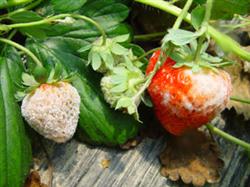
A: The color of strawberry fruit is generally red, and the fruit color of cultivated varieties usually varies from pink to dark red, with great differences. Red is due to anthocyanin pigments. In the early stage of fruit enlargement it is green, in the middle stage it turns white, and in the later stage it turns red; only when the fruit enters the late enlargement stage does the anthocyanin content increase sharply. Experimental results show that in the green-ripe and white-ripe stages, light has almost no effect on fruit coloring. By comparison, temperature seems to have a greater effect on fruit coloring; however, light during the color-changing stage is beneficial to fruit coloring.
The strawberry cultivation period in solar greenhouses coincides with the low-temperature and weak-light period, which is very unfavorable for fruit coloring. The following aspects should be used to improve the coloring effect of strawberries. (1) Reduce indoor humidity and increase nighttime temperature. (2) Remove old leaves covering the fruit at any time so that the fruit receives sufficient light. (3) Control fertilization; irrigation after fruiting should be carried out on sunny days before noon, and heavy irrigation should be avoided. (4) Select greenhouse film with high ultraviolet transmission and clean the greenhouse film frequently. (5) Hang reflective screens on the rear roof of the solar greenhouse.
Q: Why is carbon dioxide gas fertilization carried out in forcing cultivation of strawberries?
A: During the growth process of strawberries, the leaves receive sunlight and absorb carbon dioxide, and the root system absorbs water and mineral nutrients and transports them to the leaves. Under suitable temperature conditions, the chloroplasts in the leaves carry out photosynthesis to produce carbohydrates and release oxygen and energy. This is strawberry photosynthesis. Photosynthesis is the basis of strawberry matter production. In forcing cultivation in solar greenhouses, it is exactly the coldest winter, and in order to increase and preserve heat, the ventilation volume is generally small and the ventilation time is relatively short. Shortly after the straw mats are uncovered, strawberry photosynthesis uses up most of the carbon dioxide, quickly making the indoor carbon dioxide concentration lower than that outside (0.03%), causing strawberry photosynthesis to be in a starvation state. Since the mid-1960s, foreign countries have promoted the use of carbon dioxide gas fertilization technology; it is now widely used in vegetables, flowers and many other crops. China began testing carbon dioxide gas fertilization technology in the late 1970s, and it has now also been promoted and applied in vegetable production in greenhouses and plastic tunnels in some areas.
Because carbon dioxide has become one of the main limiting factors in winter strawberry production, increasing carbon dioxide application has become an urgent task. China's traditional greenhouse and plastic tunnel vegetable production all achieved high quality and high yield by applying large amounts of organic fertilizer and releasing carbon dioxide through the activity of soil microorganisms. At present, high-quality organic fertilizer sources are decreasing year by year, and the contradiction of carbon dioxide deficiency is becoming increasingly prominent, and it has become a major factor limiting high yield. According to research by Japanese scholars, increasing carbon dioxide application in greenhouses significantly improves strawberry photosynthetic efficiency and increases yield by 20%-50% compared with the control. At the same time, increasing carbon dioxide application can also increase the proportion of large fruit and raise fruit sugar content, thereby increasing the sugar-acid ratio of the fruit.
(1) Carbon dioxide fertilization concentration. The carbon dioxide fertilization concentration for strawberries depends on the variety, light intensity, temperature level, fertilizer and water conditions, etc. Generally, a concentration close to the carbon dioxide saturation point is the most suitable. However, considering the relationship between cost and benefit, even if an excessively high concentration slightly increases yield, it is of little significance. At present, Japan, the United States and various European countries mostly use 1000 mg/L (i.e. ppm) as the fertilization standard for carbon dioxide fertilization. Research results on strawberries show that with increasing carbon dioxide concentration, the photosynthetic rate of strawberries increases. At about 1000 ppm carbon dioxide, the photosynthetic rate reaches its maximum, at 34.3 mg CO2 (sq dm·hour). In recent years, Japan has mostly set the carbon dioxide fertilization concentration for winter forcing cultivation of strawberries at 750-1000 ppm. After March, as the ventilation volume increases, carbon dioxide loss increases, and the fertilization concentration is best reduced to 500 ppm.
(2) Application time. Practice has proved that in the cold winter of forcing cultivation, the best carbon dioxide fertilization time is from 9 o'clock to 16 o'clock. If a carbon dioxide generator is used as the carbon dioxide fertilizer source, the fertilization time should also be appropriately advanced so that the required carbon dioxide concentration is reached half an hour after the straw mats are uncovered. If ventilation is needed at noon, fertilization should be stopped half an hour before ventilation.
(3) Application period. The harvest period of forcing cultivation strawberries is from December to March, and the period when the plants bear the most fruit is exactly the season when the solar greenhouse is not ventilated or is ventilated little. Generally, carbon dioxide is applied in November, and yield is obtained in February. After the solar greenhouse strawberries are covered with film for heat preservation, the plants resume growth. It is better to apply carbon dioxide after 2-3 new leaves have grown.
(4) Carbon dioxide application methods. The more practical methods are the organic matter fermentation method and the carbon dioxide generator method. (1) Organic matter fermentation method: When organic fertilizer is applied to the soil and decomposes, it releases a large amount of carbon dioxide, releasing 0.4 g of carbon dioxide per hour. If 3000 kg of straw compost is applied per mu, the carbon dioxide concentration in the greenhouse can be made to average 600-800 ppm within 1 month. Using increased application of organic fertilizer to raise the carbon dioxide content in a solar greenhouse has the benefit of achieving several results at once. The main shortcoming is that the amount and rate of carbon dioxide release in this method remain steady, and it cannot quickly reach a peak during the period of vigorous strawberry photosynthesis, so it has certain limitations. (2) Carbon dioxide generator method: This uses chemical reactions between substances to produce carbon dioxide. Commonly used methods include the hydrochloric acid-limestone method, the sulfuric acid-limestone method, and the ammonium bicarbonate-sulfuric acid method. Among them, the ammonium bicarbonate-sulfuric acid method is easy to obtain materials for, has low cost, and is used more often. When applying it, sulfuric acid should be diluted into dilute sulfuric acid. One part sulfuric acid can be slowly poured into 3 parts clear water and then used. Complete sets of equipment are already sold on the market. In the residual liquid after the reaction, add excess ammonium bicarbonate to neutralize the sulfuric acid in the residual liquid, and it becomes ammonium sulfate, which can be used as topdressing after being diluted 50 times.
Q: How is the suitable heat preservation period for semi-forcing cultivation determined?
A: Semi-forcing cultivation usually begins heat preservation after the strawberry plants have passed dormancy. In northern solar greenhouses and plastic tunnel cultivation, film is applied from late November to early January; in southern plastic tunnels, the tunnel is covered for heat preservation from mid-December to mid-January.
Q: How is irrigation carried out in semi-forcing cultivation?
A: After the tunnel is covered, irrigation under the film should be adopted. Before flowering, control irrigation. After flowering, keep the soil "moist but not waterlogged, dry but not drought-stricken." Water once each at the fruit enlargement stage of the terminal inflorescence and at the late harvest stage of the terminal inflorescence. If irrigation above the film is used in the tunnel, water once at the fruit enlargement stage of the terminal inflorescence according to soil moisture conditions.
Semi-forcing cultivation does not require gibberellin or supplemental lighting treatment, because the plants have already passed dormancy or are awakening at the time of heat preservation. Other management practices such as temperature, light, plant management, bee pollination, and carbon dioxide fertilization technology can refer to forcing cultivation.