How to prevent deformed strawberries? These practical tips you need to master
1. Releasing bees in the greenhouse during the flowering period. Strawberries cultivated under protected conditions flower early, and there are few flower-visiting insects in the early stage. Therefore, when the first batch of flower buds forms, bees can be released in the greenhouse, with 2~3 boxes of bees per standard greenhouse. The beehives are placed evenly around the inside of the greenhouse, which can achieve a pollination rate of over 95%. The bee release times are 8~9 am and 3~4...
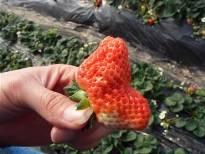
I. Releasing bees in the greenhouse during the flowering period. Strawberries cultivated under protected conditions flower early, and there are few flower-visiting insects in the early stage. Therefore, when the first batch of flower buds forms, bees can be released in the greenhouse, with 2~3 boxes of bees per standard greenhouse. The beehives are placed evenly around the inside of the greenhouse, which can achieve a pollination rate of over 95%. The bee release times are 8~9 am and 3~4 pm.
II. Reasonably regulating temperature and humidity. Generally, after the axillary flower buds differentiate and before entering dormancy, start maintaining heat. Keep the daytime temperature at 20°C~30°C and the nighttime temperature above 10°C. Especially during flowering and fruit setting, ventilation should be carried out frequently to reduce humidity and maintain heat. The daytime temperature is generally kept at 20°C~28°C, the nighttime temperature above 5°C, and the relative humidity controlled at 50%~60%. Use drip-free film for the greenhouse covering to prevent water droplets from washing the strawberry stigmas. Using drip irrigation can effectively reduce air humidity.
III. Timely flower and fruit thinning. Timely remove secondary flowers, small deformed fruits, and diseased fruits, and regularly remove old leaves, yellow leaves, and diseased leaves to reduce nutrient consumption, which is beneficial for ventilation and light transmission, reduces disease, and increases light. It can significantly reduce the rate of deformed fruits, and is also helpful for concentrating nutrients, ensuring the development of normal fruits, and improving single fruit weight and fruit quality.
IV. Timely use of pesticides and fertilizers. Adopt agricultural measures such as virus-free seedlings and plastic film mulching, and try not to use pesticides or reduce the amount and frequency of pesticide use. When pests and diseases are severe, apply pesticides before or after flowering. Spraying pesticides is strictly prohibited during the flowering period. In low-temperature, rainy weather, when humidity in the greenhouse is high, move the beehives outside the greenhouse, then use "Yixunling" smoke fumigant for fumigation control. During the flower bud differentiation and development stage, appropriately apply nitrogen fertilizer or spray foliar fertilizer, which is beneficial for flower bud differentiation and development. Keep the soil moist. Especially during the flower bud development period, flowering period, and fruit expansion period, irrigate in time to meet the needs.