How to Cultivate Robust Autumn Shoots on Mid-season Lychee Trees
1. For bearing trees in late May, apply 0.5 kg of compound fertilizer (nitrogen, phosphorus, potassium 15:15:15) per tree in a shallow ring trench or shallow strip trenches on opposite sides at the drip line of the canopy, then cover with soil to help stabilize fruit and strengthen shoots. 2. Sugar apple (Annona squamosa) roots are shallow-growing, and new roots are fleshy and slow to become suberized; the tree is intolerant of drought yet afraid of waterlogging. Because...
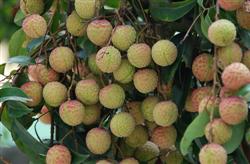 Mid-season varieties such as Shuidong, Heiye and Feizixiao are mainly grown to cultivate autumn shoots. At present, the cultivation of autumn shoots has a great bearing on later flower bud formation, flowering, fruit set, fruit growth and development, and fruit quality, so robust autumn shoots must be cultivated. ① Based on the fact that flower bud differentiation of mid-season varieties occurs after November, plan the time for the last autumn shoot flush. However, different fruit environments will affect the maturation time of the last autumn shoot. For example, Feizixiao in Hainan Island, western Guangdong and other areas needs earlier-maturing autumn shoots, generally maturing in October, so shoot control should begin in late September to ensure early-maturing fruit. In early-maturing production areas, the last autumn shoot should flush in late August or early September. If the new shoots in the orchard have just matured or have already matured, apply an appropriate amount of compound fertilizer and nitrogen fertilizer, and strive to have new shoots flush in late August; if the new shoots are still growing or have just stopped growing, spray agricultural nucleotides 1-2 times to speed up leaf greening, and strive to have new shoots flush in early September; if new shoots have just flushed, natural growth will induce winter shoots, so additional nitrogen fertilizer can be applied to extend branch length and delay maturation, or shoot-control agent can be sprayed to control branch length and speed up maturation, striving to have new shoots flush in mid-September and then controlling the shoots. For Feizixiao in other production areas, follow normal management at present and continue cultivating autumn shoots, striving to have the last autumn shoot mature in November. ② Fertilize to promote new shoot flushing. When the leaves of new shoots begin to turn green or mature, apply compound fertilizer and nitrogen fertilizer; if the orchard has sufficient base fertilizer, only nitrogen fertilizer may be applied when flushing new shoots. In orchards with water-fertilizer irrigation, under the current high temperature and drought conditions, add an appropriate amount of nitrogen fertilizer 5-7 days before shoot flushing and drench the tree basin to speed up new shoot flushing. ③ Irrigate and spray water to increase orchard humidity and promote new shoot flushing. Generally, when atmospheric humidity reaches above 75%, new shoots can flush normally, but excessively high temperatures can also affect budding. Therefore, in addition to ensuring soil moisture content, the humidity of the orchard microclimate should also be appropriately increased. In orchards without a water source, when spraying water on the canopy, agricultural nucleotides or cytokinins and other foliar fertilizers should be added, so that absorption through the leaves favors new shoot growth. When the soil lacks water, roots find it very difficult to absorb various nutrients in the soil; at this time, foliar topdressing is of great help to plant growth. ④ Prune branches to maintain ventilation and light penetration in the orchard and canopy. Lychee is a light-loving plant; if sunlight is insufficient, autumn shoots are not plump, nutrient accumulation is low, and flower quality cannot be guaranteed. Therefore, in shaded orchards or shaded canopies, branches should be appropriately thinned, mainly removing drooping branches, shaded branches, overlapping branches and pest- and disease-damaged branches. The density of canopy branches should be such that at noon when the sun is directly overhead, dappled sunlight can be seen on the ground within the canopy. ⑤ Spray pesticides to protect shoots. This is the only vegetative growth period of the year; if it is damaged by insects, it is a great waste, so attention should be paid to protection. When there is damage by lychee fruit borer, lychee leafminer, lychee looper and so on, spray 20% Lvzuoliang emulsifiable concentrate at 800-1000 times dilution.