Detailed Explanation of Key Citrus Cultivation Tasks for March
March (Awakening of Insects ~ Spring Equinox) Spring shoot budding and sprouting period--------------------------------------------------------------------------------Entering March, the climate gradually warms up, new shoots begin to sprout, and various overwintering pests and diseases will successively begin their activities and cause damage,...
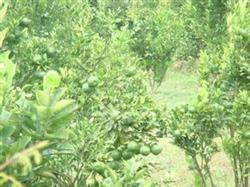
March (Awakening of Insects ~ Spring Equinox)
Spring shoot budding and sprouting period
--------------------------------------------------------------------------------
Entering March, the climate gradually warms up, new shoots begin to sprout, and various overwintering pests and diseases will successively begin their activities and cause damage. Doing a good job of current field cultivation and management is the foundation for a bumper harvest and high quality this year.
(1) Planting and fertilizing
Citrus seedling planting is best completed before early March when spring shoots bud. Due to the impact of citrus huanglongbing (HLB), introduction of varieties in various regions should pay attention to plant quarantine, and it is better to purchase excellent seedlings propagated locally. Choose according to market demand and variety characteristics. Newly planted citrus orchards should apply sufficient base fertilizer, applying 1.5~2.0 tons of decomposed organic fertilizer or farmyard manure per mu, mixing it evenly with the mound (hole) soil. The planting depth should be such that the root crown is exposed 5 cm above the ground. After planting, water thoroughly and lay straw to prevent drying. Citrus orchards on seabeach land and low-lying plains should be planted on raised mounds, and those planted as terraces should have good wall protection measures. For newly opened orchards where planting preparations have not been completed, a conveniently managed plot can first be selected for heel-in (temporary planting), with a heel-in spacing of about 50 x 50 cm. The application of spring fertilizer can promote strong and full new shoots and flowering and fruiting. After low temperatures rise in spring, spring grass begins to grow earlier than citrus roots. Fertilizing after weeding helps raise soil temperature and promotes earlier sprouting of new shoots. The fertilization amount accounts for about 15%~25% of the whole year. For young trees, quick-acting nitrogen fertilizer is mainly used; for mature trees, nitrogen and phosphorus fertilizers are mainly used. Weak trees and trees with large canopies can be appropriately given more. Strictly prevent applying fertilizer dry during drought, which damages roots and weakens tree vigor.
(2) Top grafting and renewal
For citrus trees with poor varieties (lines), excellent varieties can be selected for top grafting and renewal. Various regions can choose suitable varieties according to local ecological conditions. Recommended varieties include Tiancao mandarin orange, Nanxiang mandarin orange, Nichinan No. 1 extra-early-maturing Satsuma mandarin, Hongyu mandarin, Bendizao mandarin, seedless Ougan mandarin, sweet citrus pomelo (Tianchun citrus pomelo), etc. Scions for grafting should be cut before budding in early March, choosing spring shoots or summer shoots that are free from pest and disease damage and grow robustly. The collected scions can be stored in plastic bags, placed in the refrigerator compartment or in a cool, dark place. Grafting can begin in late March.
(3) Pest and disease management
Complete pruning before the Spring Equinox, cutting off diseased and pest-infested branches and leaves. Due to the severe drought in 2003, citrus orchards generally harvested too late and tree vigor was weakened. It is expected that this year's flower bud differentiation will be poorer than in an average year, so pruning should mainly be thinning. After new shoots appear, remove some spring shoots to ensure flower quantity and fruit-setting rate. Inspect branches and shoots, promptly dig out citrus resin disease lesions, and apply 5% Bordeaux mixture or 70% thiophanate-methyl 50-fold solution to the wounds. For citrus orchards with more scale insects, mites, and sooty mold, use 150~200-fold mineral oil emulsion to clean the orchard; for scab, use Bordeaux mixture and other agents when spring buds are 2 mm long; for orchards with frequent canker, use Bordeaux mixture and other agents when spring shoots are 2 cm long and leaves begin to turn green. Note that mineral oil emulsion must not be mixed with sulfur-containing fungicides such as Bordeaux mixture, and the interval before and after should be more than half a month.