How can strawberries be grown to achieve high yield and good quality?
When strawberries are grown in greenhouses, the high-temperature and high-humidity conditions inside the greenhouse are extremely favorable for the occurrence of various diseases and pests. Therefore, strengthening comprehensive disease control is a key step in achieving high and stable yields of greenhouse strawberries. 1. Leaf blight mainly damages leaves, petioles, fruit stalks, young stems and sepals. On the leaves, purple-brown...
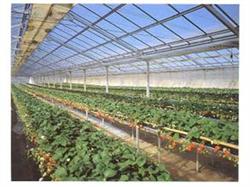 Conventional open-field seedling raising uses the daughter plants produced on the runners of the mother plant and cultivates them in place; the daughter plants do not separate from the mother plant until the strawberries are transplanted, when the seedlings are removed from the seedling-raising field.
Characteristics of conventional open-field seedling raising: relatively low investment in facilities, low technical requirements, and suitability for large-scale and mechanized production. However, in the hot and humid southern regions, weed problems, diseases and pests easily occur.
Preparation of the seedling-raising field: after the seedling-raising plot is selected, deep plowing and freezing of the soil clods should be carried out before overwintering. On one hand, this can eliminate part of the pathogens and pests; on the other hand, it helps loosen the soil. After spring begins and before strawberry transplanting, sufficient base fertilizer should be applied: 30 kg of superphosphate per mu, 3000-5000 kg of decomposed organic fertilizer or 100 kg of decomposed rapeseed cake, and for greenhouse strawberry cultivation techniques, 0.5 kg of 50% phoxim should also be applied to remove underground pests. In conjunction with applying the base fertilizer, deep plow the land again and level the ground. After plowing evenly and harrowing finely, make beds 1.2-1.5 m wide, 10-20 cm high, with ditches 20-30 cm wide. At the same time, the ditch systems around the field must be well opened, so that water can be drained during waterlogging and irrigation can be provided during drought. Where conditions permit, automatic sprinkler irrigation and drip irrigation devices can be used to spray and drip water to maintain moisture, so that the bed surface soil is moist but not waterlogged, providing suitable growth conditions for mother plant growth and runner production.
Selection and transplanting of mother plants: (1) Selection of mother plants. The selection of mother plants directly affects the quantity and quality of daughter plants produced on runners. Select healthy plants with the typical traits of the variety, that is, runner daughter seedlings with new stems more than 1 cm thick, well-developed root systems, normal leaf color, symmetrical leaflets, and no diseases or pests, as mother plants. If conditions permit, it is best to choose virus-free original stock seedlings, first-generation seedlings, or second-generation seedlings as mother plants for propagating production seedlings. (2) Cultivation of virus-free seedlings: cultivating and applying virus-free tissue-cultured strawberry seedlings is the most effective way to curb the degradation of excellent strawberry characteristics caused by viral infection. It can not only improve the disease resistance of strawberry plants, effectively reduce the use of pesticides, and produce high-quality green fruit, making strawberry production high and stable, but also effectively protect the ecological environment and accelerate the demonstration and promotion of excellent strawberry varieties. (3) Transplanting period: mother plants can be transplanted in autumn or spring. (4) Transplanting density and method: the transplanting density of the seedling nursery depends on the variety's ability to produce runners, soil fertility, and management level. As far as varieties are concerned, varieties such as Sagahonoka, Toyonoka, and Sweet Charlie have a strong ability to produce runners, so the density can be lower at transplanting, while varieties such as Benihoppe and Akihime have a weaker ability to produce runners, so the density can be higher at transplanting.
Management after mother plant transplanting: after mother plants are planted, they need to be irrigated thoroughly in time, watered again the next day, and thereafter lightly watered frequently to keep the soil moist until the strawberry plants become established. After the mother plants survive, apply urea once, and apply urea again after 15-20 days. The application amount should not be too high to avoid burning the seedlings. Apply 10 kg per mu, which can be applied directly around the mother plants without broadcasting over the whole field. It is best to apply fertilizer just before rain, or it can be applied as a liquid drench, with a concentration of 0.2%-0.3%.
Management of daughter seedlings: after the mother plant produces runners, adventitious roots begin to form from the second node of the runner and penetrate into the soil to form daughter seedlings. In order to cultivate robust daughter seedlings, the following points should be done well during the seedling propagation period: (1) Runner arrangement: after the mother plant begins to produce runners, check regularly, promptly straighten out the runner seedlings, and appropriately separate runners that are too close to each other so that the daughter seedlings are distributed as evenly as possible and have enough living space. For runners produced later, because the seedling age is short and it is difficult to form strong seedlings, they should be pruned promptly to reduce field crowding and ensure the robust growth of early daughter seedlings. (2) Timely pressing of runners: in the early stage of runner production, runners first grow upward, and when they approach leaf height, they grow downward along the ground. In order to make the adventitious roots produced at the even-numbered nodes of the runners penetrate into the soil in time, the runners should be pressed when the daughter seedlings have the second unfolded leaf. The method is to press firmly the runner near the newly produced daughter seedling with a clod of soil, taking care not to break it. (3) Controlling the number of daughter seedlings: in order to cultivate strong seedlings well, it is important to control the number of strawberry seedlings propagated according to the characteristics of different strawberry varieties and the transplanting density of mother plants. The number of seedlings raised per mu should preferably be controlled at about 30,000-35,000 plants. (4) Soil, fertilizer and water management: before runners are produced, carry out intertillage along with weed control to keep the soil loose, so that runner seedlings can take root and grow. After daughter seedling roots penetrate into the soil, apply 0.2%-0.3% compound fertilizer every 15-20 days. If the seedlings grow weakly, apply 0.2%-0.3% urea water. After early August, stop using nitrogen fertilizer and apply about 0.2% phosphorus and potassium fertilizer to promote flower bud differentiation. Water management should follow the principle of keeping the soil moist but not waterlogged. During the rainy season, attention should be paid to drainage and waterlogging prevention. Especially in the southern hot season after rain, water management should be strengthened particularly, with timely clearing of ditches and drainage. If necessary, shade nets can be used to lower the temperature, so as to avoid high temperature and high humidity burning the young seedlings. (5) Management of diseases, pests and weeds: during the strawberry seedling propagation period, disease, pest and weed management should be done well.