What are the key technical points for kiwifruit management after flowering?
The 40 days after kiwifruit flowers fall are a critical period for kiwifruit management. The fruit expands rapidly and requires large amounts of nutrients and water. 1. Fertilization: after the flowers fall, in mid-May, apply urea, diammonium phosphate, potassium chloride or a three-element compound fertilizer in a timely manner. For a full-bearing orchard, apply 20 kg of urea, 15 kg of diammonium phosphate, and 20 kg of potassium chloride per mu. The fertilization method is broadcasting followed by intertillage.
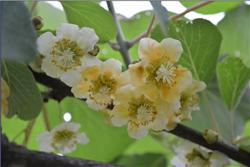
The 40 days after kiwifruit flowers fall are a critical period for kiwifruit management. The fruit expands rapidly and requires large amounts of nutrients and water.
1. Fertilization
After the flowers fall, in mid-May, apply urea, diammonium phosphate, potassium chloride or a three-element compound fertilizer in a timely manner. For a full-bearing orchard, apply 20 kg of urea, 15 kg of diammonium phosphate, and 20 kg of potassium chloride per mu. The fertilization method is broadcasting followed by intertillage.
2. Irrigation
During the period of rapid fruit expansion, water plays a decisive role in fruit expansion. Only with sufficient water can fertilizer take effect, promoting rapid growth of fruit and new shoots. During this period, the ground should be kept moist. If the ground is dry and the leaves have not yet wilted at noon, water should be applied promptly.
3. Reserved fruiting branches for next year
In early June, select fruiting branches or vigorous shoots in good positions as reserve branches. The number of reserve branches should be 30% greater than the number of branches determined during winter pruning. For an orchard with a plant spacing of 3 m, keep 26 reserve branches per plant; for an orchard with a plant spacing of 2 m, keep 19 reserve branches per plant. After the reserve branches are determined, thin out overly dense branches to achieve a sunlit canopy, with 30% sunlight patches under the canopy at noon.
4. Pest and disease control
Mid-May is the best time to control Pseudaulacaspis pentagona. You may choose 98.8% Shasidie Chaofan emulsifiable concentrate at 200 times or 52.25% Nongdile emulsifiable concentrate at 1500 times.
Early June is the damage period of the kiwifruit small longhorn beetle. You may choose 2.5% Kung Fu at 1500 times or 0.26% matrine at 800 times.
When spraying, add Jinong at 500 times to control nutrient deficiency disorders.