How to Improve the Fruit-Set Rate of Shatian Pomelo? A Detailed Guide to Practical Methods
1. Interplant or top-graft pollinator trees. Bring the proportion of pollinator trees in the whole orchard to about 10-15%, choosing pomelo varieties with abundant pollen, strong pollen viability, and a flowering period close to that of Shatian pomelo. At present, sour pomelo is mostly used in production as the pollinator variety for Shatian pomelo. 2. Carry out artificial pollination. Artificial pollination can significantly increase the fruit set of Shatian pomelo...
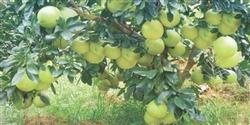
1. Interplant or top-graft pollinator trees. Bring the proportion of pollinator trees in the whole orchard to about 10-15%, choosing pomelo varieties with abundant pollen, strong pollen viability, and a flowering period close to that of Shatian pomelo. At present, sour pomelo is mostly used in production as the pollinator variety for Shatian pomelo.
2. Carry out artificial pollination. Artificial pollination can significantly increase the fruit-set rate of Shatian pomelo. The method of artificial pollination is: when the petals of most flowers on the Shatian pomelo tree have opened into a cross shape, choose clear weather, pick fully open flowers from the pollinator trees, remove the petals and pistils, and pollinate the Shatian pomelo flowers directly; or collect the pollen in a glass dish or paper bag, then pollinate well-developed Shatian pomelo flowers at 8-10 a.m. or 3-4 p.m. the same day, gently dabbing the pollen onto the stigma of the Shatian pomelo flower with a brush, taking care not to damage the flower. A mixed pollen liquid can also be used for pollination: mix 0.5% pollen from the pollinator trees, 0.1% borax, 0.2% urea, 0.3% brown sugar, 0.2% honey, and 98% clean water, then spray it onto the stigmas of the Shatian pomelo flowers with a small sprayer, for 2-3 consecutive times. The number of flowers pollinated per tree should be determined by the age and vigor of the Shatian pomelo tree; trees with strong vigor and a large canopy can be pollinated more, and usually the number of flowers pollinated is 4-5 times the number of fruits intended to be kept. The pollen is best used as soon as it is collected; if the pollen cannot all be used at once, it can be spread out on paper under dry conditions for storage, but it must not be sealed and must not be kept too long, so as to maintain a high germination rate of the pollen.
3. Spray trace elements at the late flowering stage or young fruit stage. If the magnesium content in the leaves of pomelo trees during the young fruit growth period is less than 0.2%, symptoms of magnesium deficiency will appear, causing leaf yellowing that affects the greening of spring shoot leaves and the ability to photosynthesize, and during the young fruit growth and expansion period the poor nutrient supply causes the fruit to turn yellow and drop, which is unfavorable for fruit retention. In pomelo orchards on low-boron soil, when the boron content in the leaves is less than 20 ppm, boron deficiency symptoms appear: brown or dark spots on the rind of young fruit, white streaks in the mesocarp, and accumulation of yellow-brown gelatinous material; small wart-like protrusions appear on the fruit surface, the fruit shape is irregular, and the young fruit is hard and cannot grow and develop normally. For this reason, trace elements must be supplemented at the late flowering stage or young fruit stage. A mixture of 0.1-0.2% boric acid or borax, 0.1-0.2% magnesium sulfate, and 0.2-0.3% monopotassium phosphate can be sprayed on the pomelo leaves 1-2 times to supplement appropriate amounts of trace elements, which is beneficial for fruit retention.
4. Keep bees in the pomelo orchard during the flowering period to promote pollination and increase the fruit-set rate. Shatian pomelo must be pollinated and fertilized by pollen from a different strain to have a higher fruit-set rate; after fertilization, many seeds can be produced, and in the process of seed formation a large amount of gibberellin is produced, which keeps the young fruit green and thus reduces fruit drop, especially reducing fruit drop during the second physiological fruit-drop period. For this reason, bees should be kept in the Shatian pomelo orchard during the flowering period, and pesticides harmful to bees should no longer be sprayed, so as to protect bee activity, help bees spread pollen from different varieties and strains, promote pollination and fertilization of Shatian pomelo, raise the fruit-set rate, and increase yield.
5. Use plant growth regulators. At present, plant hormones are already widely used in pomelo orchards for flower and fruit retention, with remarkable results. The plant hormones commonly used include paclobutrazol, cytokinin, gibberellin, and 2,4-D, among others. Paclobutrazol has the effects of controlling winter shoots, promoting flowering, inhibiting excessive growth of spring shoots, increasing the fruit-set rate, and raising yield, and its effect is especially obvious on young vigorous trees. From late November to early December, spray "Huaguoling" produced by the Guangdong Academy of Agricultural Sciences (a compound shoot-controlling and flower-promoting agent made mainly with paclobutrazol and mixed with various nutrient elements such as potassium, phosphorus, nitrogen, and zinc) once each time 20 days apart; this can effectively reduce the occurrence of winter shoots, significantly inhibit the growth of spring shoots the following year, shorten the internode spacing of spring shoots, make the leaves thicker and dark green, and make the petioles and fruit stalks short and thick, which is very favorable for fruit set and young fruit growth and raises the fruit-set rate. The combined use of cytokinin (BA), gibberellin (GA), and 2,4-D is more effective than using each alone. Spraying or smearing the fruit surface with the two mixed liquids of high-concentration BA plus GA and BA plus 2,4-D gives a high fruit-set rate, but both easily produce deformed fruit; if instead a mixed hormone liquid is smeared on the fruit stalk, the effect is remarkable and the production of deformed fruit is also avoided.
6. Fertilizer and water management during the flowering and young fruit stages. After Shatian pomelo has gone through the long cold and dry winter season, when the temperature gradually rises, the root system begins to slowly return to normal growth; at this time, fully decomposed farmyard manure must be used as the main fertilizer, diluted into a thin water-fertilizer for application, and too high a concentration must be avoided, as it injures the roots and affects the sprouting of new roots. At the same time, the application of quick-acting nitrogen fertilizer must be strictly controlled; especially for young bearing trees or excessively vegetative trees, do not apply quick-acting nitrogen fertilizer, or use quick-acting nitrogen fertilizer only as a foliar topdressing. If too much quick-acting nitrogen fertilizer is applied during the flowering period and the flower-fall period, it easily causes the flowering branches to grow too long and the vegetative spring shoots to grow excessively, creating a serious conflict between shoots and fruit, all of which is unfavorable for flower and fruit retention. During the flowering period and young fruit growth period, attention must be paid to drainage in the pomelo orchard; water accumulation in the orchard easily causes the pomelo tree roots to rot, affects the growth of new roots, and causes a large amount of flower and fruit drop, which is extremely unfavorable for flower and fruit retention. In case of severe spring drought or summer drought, timely irrigation is needed to preserve moisture.
7. Girdling and girdling with wire for fruit retention. Girdling and wire girdling can prevent nutrients from being transported to the roots through the phloem sieve tubes, so that nutrients accumulate in the branches, leaves, flowers, and fruits, ensuring that the young fruit has sufficient nutrients to expand rapidly and is not likely to turn yellow and drop, thereby achieving the goal of raising the fruit-set rate. When using girdling or wire girdling to retain flowers and fruits, the time of girdling or wire girdling must be chosen according to the method used, the strength of tree vigor, and the amount of flowers. The target for girdling to retain fruit is young bearing trees with vigorous vegetative growth and few flowers, and girdling must be carried out in the full flowering stage, that is, in early April. Trees with more flowers can appropriately delay the time, and girdling after the flowers fall in mid-to-late April gives good results.
When using the wire girdling method, because it cannot immediately cut off the passage of the phloem sieve tubes, it must be done earlier than girdling to be effective; generally, wire girdling is chosen in mid-to-late March when the flower buds show white, using No. 14-15 iron wire to girdle one loop around the trunk or main branches, and the wire must be untied from late May to early June after the fruit is set, otherwise, because the wire girdling is too deep, it will affect the normal growth of the tree.
8. Strengthen pest and disease control to reduce damage to flowers or young fruit. Before flowering, control of the citrus blossom midge and scarab beetles must be strengthened. The citrus blossom midge damages Shatian pomelo flower buds as larvae, making the buds turn white, swell and shorten prematurely, and fail to open normally, resembling lanterns, hence also called lantern flowers, seriously affecting the flowering and fruit set of Shatian pomelo. The control method is: when the flower buds have just turned white, loosen the soil around the tree disk and then immediately apply pesticide to the ground and spray the canopy; for ground application, carbaryl powder or phoxim can be used, and for canopy spraying, pyrethroid pesticides can be used. Plastic film mulching can also be adopted before the adults emerge from the soil, so that the adult citrus blossom midges cannot fly out from underground and die underground. Plowing in winter and spring can also kill some larvae. Manually removing the damaged "lantern flowers" during the full flowering stage is also an effective method. Scarab beetles cause damage during the flowering period of Shatian pomelo. During the flowering period of Shatian pomelo, because the flowers secrete nectar and aromatic substances, they often attract scarab beetles. In severely affected orchards, there can be more than 3 scarab beetles on a single flower damaging the flower or young fruit, causing damage to the stigma or young fruit, producing deformed fruit, or causing young fruit to drop. Pesticides can be sprayed before flowering or scarab beetles can be caught by hand during the flowering period.