Detailed Explanation of Key Points for High-Yield and High-Quality Lychee Cultivation Techniques
1. Choose a good orchard site. It is best to select open terrain with a slope below 30 degrees, loose and fertile soil, deep soil layers, organic matter content above 1%, and a water source on hilly slopes as a lychee planting orchard. 2. Choose good seedlings and apply sufficient base fertilizer. Select healthy branch seedlings or grafted seedlings with many new roots, smooth branches, and no pests or diseases...
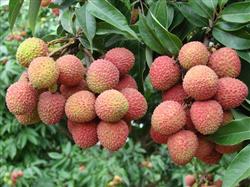
1. Choose a good orchard site. It is best to select open terrain with a slope below 30 degrees, loose and fertile soil, deep soil layers, organic matter content above 1%, and a water source on hilly slopes as a lychee planting orchard.
2. Choose good seedlings and apply sufficient base fertilizer. Select healthy branch seedlings or grafted seedlings with many new roots, smooth branches, and no pests or diseases. When planting, dig planting holes 1 m long, 1 m wide, and 1 m deep, and apply no less than 50 kg of decomposed organic fertilizer per hole as base fertilizer.
3. Management during the young stage. ① Apply frequent but light topdressing. To encourage more new shoots, apply "three fertilizers per shoot" in the first year after planting, and "two fertilizers per shoot" after the second year, with nitrogen fertilizer as the main type, supplemented with phosphorus and potassium fertilizer. Promote 4 to 6 flushes of shoots each year. ② Do a good job of protecting and strengthening shoots. Spray pesticide twice for each flush, once when the new buds and tender leaves unfold and once before the new shoots turn green. Appropriately add foliar fertilizer to the spray solution to promote robust shoot growth.
4. Management of fruiting trees. ① Cultivate strong fruiting mother branches. Determine whether to force one or two autumn flushes based on tree vigor. For trees with strong vigor, promote two autumn flushes, using the second autumn flush as the fruiting mother branch for the next year. Before forcing shoots, apply a good shoot-forcing fertilizer, mainly nitrogen. When the shoots mature, apply a shoot-strengthening fertilizer once, mainly organic compound fertilizer plus potassium fertilizer. Spray pesticide twice for each flush to control pests and diseases, and add foliar fertilizer to the spray to protect and strengthen the shoots. ② Control winter shoots and promote flower formation. To prevent winter shoots from sprouting from mid-to-late November to December and affecting flower bud differentiation, shoot control work generally begins in mid-November: spray shoot-control and shoot-killing agents; plow the soil under the tree canopy to cut some fine roots and reduce water absorption capacity; for vigorous trees, use spiral ringing or girdling to reduce the transport of organic matter to the roots, increase the concentration of tree sap, and improve the quantity and quality of flower formation. ③ Strengthen flower and fruit preservation. To improve the fruit-setting rate, attention should be paid to: placing bees during the flowering period; artificial supplementary pollination; during continuous rainy weather at the flowering stage, shake the flowers in time to prevent flower rot, and in dry weather, spray clear water in the morning and evening to promote pollination and fertilization; after flower drop, apply fruit-preserving and fruit-strengthening fertilizer to the roots 2 to 3 times, with a combination of nitrogen, phosphorus, and potassium, increasing the amount of potassium fertilizer, and spray fruit-preserving and fruit-strengthening foliar fertilizer 3 to 5 times; strengthen pest and disease control.