Early fruit retention for lychee and longan: timely management to reduce fruit drop
Lychee downy blight mainly harms flower panicles and fruit, causing panicles to dry up, young fruit to drop, and ripe fruit to rot and deteriorate. After temperatures rise in early spring, it first infects flower panicles, then young fruit and ripe fruit. If the occurrence and infection of this disease cannot be controlled before flowering, then young fruit and ripe fruit will be damaged...
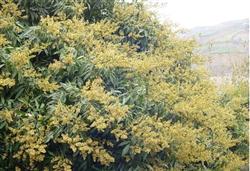 After the low-temperature late-spring cold spell in mid-March, most areas of Maoming rarely had a few sunny days from the 19th to the 22nd, and rainy weather began again on the 23rd. Currently it is the peak season for lychee blooming, and longan flowers are also opening one after another. Rainy weather during the flowering period is very unfavorable for flower organ development, pollination and fertilization, flowering and fruit set of lychee and longan. If, following the habits of previous years, fruit retention is started only after flower drop, severe fruit drop is likely to occur. Therefore, when rainy weather occurs during the flowering period, fruit retention work for lychee and longan should be carried out earlier, and effective measures should be taken promptly to increase the fruit-setting rate and reduce physiological fruit drop after fruit set.
I. Spray fertilizer when it clears up, and seize the opportunity to supplement nutrients
The flowering period of lychee and longan is a period of heavy nutrient consumption. In rainy weather, leaf photosynthesis is poor and nutrient supply is insufficient, so organic nutrients need to be supplemented in time. Applying organic fertilizer to the soil is absorbed and transported slowly and cannot provide emergency relief, so foliar nutrient supplementation is needed. However, spraying foliar fertilizer in rainy weather is quite difficult, so the opportunity should be seized and spraying should be done as soon as it clears up to supplement nutrients in time. Otherwise, the opportunity is easily missed, and even after all the fruit has dropped, ideal weather for nutrient supplementation may not be found. Foliar fertilizer spraying should focus on organic nutrients, and multiple foliar fertilizers can be selected for alternating use.
II. Do a good job of assisted pollination
Pollination and fertilization are a key link in turning lychee and longan flowers into fruit. When the weather is clear, lychee and longan pollen can also be blown by a breeze onto the stigma to achieve pollination and fertilization. But in rainy weather, flowering, pollination and fertilization of lychee and longan are relatively difficult, so assisted pollination and fertilization work needs to be done well to increase the fruit-setting rate. When rainy weather occurs during the flowering period, artificial methods should be adopted as soon as it is slightly clear: wrap an iron wire hook with cloth and shake the branches to shake off the water droplets accumulated on the flowers, speed up the drying and release of pollen, and increase the chances of pollination and fertilization. At the same time, contact beekeepers to place bees in the orchard, or hang decaying fish or fish viscera in scattered places in the orchard to attract pollinators such as flies, and use bees or other pollination vectors to assist pollination. Artificial pollination can also be carried out. The simplest method is around 10 a.m. to use a basin filled with clean water to dip and wash branches on the tree where male flowers are opening, wait until the water turns tea-brown, filter it, and then spray it on trees where female flowers are open.
III. Take measures before flower drop to reduce the first batch of physiological fruit drop
Due to the impact of the late-spring cold damage weather, the flower quality of lychee and longan is relatively weak and flower organ development is poor. During flowering, pollination without fertilization or "false fertilization" is likely to occur. After flower drop, there may appear to be relatively many fruit set, but the color is rather yellow and not clean and fresh enough, and a large amount of physiological fruit drop soon appears. Or the seeds of the small fruit do not develop, or the seeds of the small fruit are "hollow," and they will drop sooner or later during development. In rainy weather during the flowering period, the above fruit-drop phenomena become even more serious. Therefore, measures for fruit retention should be taken before flower drop. For both lychee and longan, when the flowers have not completely finished dropping, foliar fertilizer can be sprayed together with the two growth regulators 2,4-D and 920 (be sure to use them according to the instructions) to stimulate seed development and promote normal fruit development. For relatively vigorous lychee, one ring of girdling can also be added for fruit retention.
IV. Control pests and diseases
When the weather clears and temperatures rise, it favors pest activity and disease occurrence. When temperatures rise, focus on controlling pests such as the fruit borer. For the control of the fruit borer, forecasting of pest occurrence should be done well, and according to the monitoring results, pesticide should be sprayed during the adult emergence period and larval occurrence period of the fruit borer. Pesticides such as trichlorfon plus dimehypo or lichongqing, biqiaoling, and cypermethrin can be selected. After rainy days, humidity is relatively high and temperatures rise, making downy blight and anthracnose very likely to occur. Drugs such as pujunte, yibao, chuangtanjing, and thiophanate-methyl can be selected to control them when the weather clears, together with foliar fertilizer and insecticides.