Current production management advice for greenhouse Hami melons
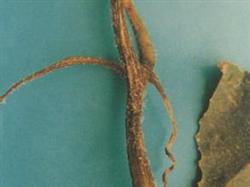
This is a typical case of gummy stem blight, also called melon black rot, in Hami melons. Generally, the early symptoms appear mostly at the stem nodes, showing light yellow-green oil-soaked spots, and the diseased part often secretes a reddish-brown gummy substance that turns into a dark brown mass after drying. In the later stage, the lesions dry out and become sunken, with a pale white surface, and are brittle and prone to rot. Control methods: 1. In cultivation...
 I. Specific cultivation measures for plants entering the vine extension stage are as follows:
1. Trellising and tying vines. Once the plants have grown to more than 6 or 7 nodes, trellising and tying can begin, but the trellis strings should be set up in time before vine extension so that the plants can twine around them.
2. Pruning and arranging vines. When the plants enter the vine extension stage, the stems and vines grow rapidly, so pruning should be done in time. Remove all lateral vines extending below the 12th node to reduce nutrient consumption. When necessary, stem smearing can be used to improve disease control.
3. Spraying borax. When the plants have grown to about 1 m, spray the leaves once with 0.1%-0.2% borax to promote fruit set.
4. Greenhouse temperature regulation: Autumn temperatures are high, so the greenhouse should be kept ventilated and cooled. If there is no invasion of heavy rain, typhoons or other weather, the skirt film on both sides can remain rolled up.
5. Greenhouse sanitation. Weeds inside and outside the greenhouse should be cleared in time to reduce breeding grounds for pests and diseases.
6. Smooth ditch drainage. Keep the outer ditches and greenhouse ditches clean to ensure smooth drainage during heavy rain. An excessively high groundwater level will make fruit set difficult and lead to premature senescence in the later stage.
II. Specific cultivation measures for plants entering the flowering and pollination stage are as follows:
1. Hand pollination. At present, some fields have entered the pollination stage. Artificial supplementary pollination should be carried out from 6:00 to 10:00 a.m., selecting male flowers of the same variety that open on the same day from different plants, removing the petals, and gently and evenly smearing the stamens on the stigma of the female flower. For the safety and hygiene of the melons and to improve their marketability, the use of fruit-setting hormone is not recommended.
2. Fruit retention and thinning. Select and retain lateral vines above the 12th node that bear female flowers for 4-5 consecutive nodes. For lateral vines with female flowers, keep two leaves and remove the growing tip, and remove all other lateral branches. One week after pollination, when the fruit has grown to the size of an egg, select and retain one fruit. Keep one melon per single vine.
III. Pest and disease control
Implement the comprehensive control principle of giving priority to prevention and combining agricultural control with chemical control. Through reasonable pruning and fruit retention, scientific fertilization, controlling humidity inside the greenhouse, and keeping the ground and air inside the greenhouse dry, reduce the occurrence and spread of diseases. At the same time, strengthen observation and inspection, and carry out chemical protection in time at the early stage of disease onset to ensure the normal growth of Hami melons.
1. The main diseases currently affecting greenhouse Hami melons include gummy stem blight, viral disease, and powdery mildew.
Recommended pesticides:
For gummy stem blight, 64% Shadufan wettable powder plus 50% Thiophanate-methyl wettable powder plus agricultural streptomycin can be mixed into a paste and applied to the stems to control the continued development of the disease.
For viral disease, pesticides such as Junkeduke (8% Ningnanmycin aqueous solution) and Shandu can be used for prevention. Note: if virus-infected plants are found, do not touch the diseased plants immediately. Wait until all farm work is finished and you are about to leave the greenhouse, then pull out the diseased plants and take them out of the greenhouse.
2. The main insect pests currently affecting greenhouse Hami melons include aphids, melon leaf borers, and tobacco whiteflies. The control methods are as follows:
Recommended pesticides:
Aphids: spray with 10% imidacloprid wettable powder, etc.; melon leaf borers: spray with 1% abamectin aqueous solution, etc.; tobacco whiteflies: use 70% Emamectin? no, 70% Aimile water-dispersible granules, 25% Actara water-dispersible granules, etc. for spray control.
3. For fields that already have fruit-bearing branches, when spraying for pest control, it is advisable to add 10% Shigao water-dispersible granules to prevent powdery mildew (at this stage, the use of 40% Fuxing emulsifiable concentrate is not recommended; it is mainly used in the middle and late stages). For the rest, 50% Thiophanate-methyl wettable powder or 70% chlorothalonil wettable powder can be used for comprehensive prevention.