Detailed Explanation of High-Yield and High-Quality Cultivation and Management Techniques for Pineapple
I. Site Selection and Land Preparation Pineapple is a tropical crop, fond of warm, humid, soft and fertile soil conditions, and afraid of cold frost, drought, sticky hard soil and barrenness. This county has a tropical climate and is the most suitable ecological region for pineapple growth. When arranging pineapple planting, it is advisable to choose land with deep, soft, moist soil layers and abundant organic...
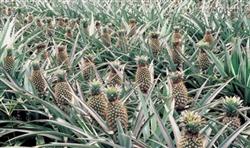
I. Site Selection and Land Preparation
Pineapple is a tropical crop, fond of warm, humid, soft and fertile soil conditions, and afraid of cold frost, drought, sticky hard soil and barrenness. This county has a tropical climate and is the most suitable ecological region for pineapple growth. When arranging pineapple planting, it is advisable to choose land with deep, soft, moist soil layers and abundant organic matter. It prefers slightly acidic soil, with acidic to slightly acidic soil at pH 5-6.5 being most suitable, while strongly acidic, neutral and alkaline soils are not conducive to pineapple growth. An open hillside with a slope below 20 degrees should be selected for opening an orchard for planting. When planting, deep ploughing and shallow planting are required. In land preparation, tractor deep ploughing is done in two passes: the first pass should be carried out 2-3 months before planting using a tractor with a single ploughshare to turn the soil more than 30 cm deep, so that small shrubs and weeds die off, and then the soil clods are harrowed and broken up; the second pass uses the ploughshare again to turn and level the soil, so that the soil meets the standards of depth, looseness and fineness. In this way, pineapple roots can penetrate deeply, and it is also conducive to the roots absorbing water and fertilizer, creating conditions for high pineapple yields.
II. Promote the Selection and Use of Superior Varieties
1. Smooth Cayenne Also known as Sarawak, Hawaiian, Salawa, Italian, and Thousand Mile Flower. The main characteristics of this variety: the plant type is upright and tall, the fruit is large, weighing 1.5-3 kg, long cylindrical in shape, with large and flat fruit eyes, shallow fruit cavities, pale yellow-white flesh, soft and juicy texture, and moderate sweetness and acidity. It is the main variety for canning. This variety has a relatively thin rind, is prone to sunburn and infection by wilt disease, and does not store well. Because the leaves are spineless, field management is relatively convenient. However, it requires a lot of fertilizer and demands fine management.
2. Bali This variety originated in the Philippines. Main characteristics: the plant has moderate vigor, the fruit is medium-sized, with a single fruit weight of 0.5-1.5 kg, cylindrical or slightly conical in shape, with medium-sized fruit eyes, conical protruding fruit eyes, relatively deep fruit cavities, attractive deep yellow flesh, moderately firm yet slightly soft texture, moderate juice content, balanced sweetness and acidity, sweet and fragrant flavor, and top-grade quality. It is suitable for fresh eating and can also be processed into canned goods. This variety has strong adaptability, is drought-tolerant and cold-tolerant, gives high and stable yields, and stores relatively well. However, during processing the fruit eyes are relatively deep, requiring more labor, and the finished product rate is low.
3. 57-236 A variety bred by the Fruit Tree Research Institute of the Guangdong Academy of Agricultural Sciences. This variety has an upright plant type, is suitable for close planting, produces large fruit and high yields, and its ripening period falls between Cayenne and Bali. It is a dual-purpose variety for both fresh eating and canning, and helps solve the problem of the market supply and processing periods being overly concentrated.
III. Proper Close Planting to Give Play to Population Advantages
Rational close planting is an important link in achieving high and stable pineapple yields, and the planting density of pineapple has a great relationship with yield. Because it is a plant that can only bear one fruit per plant, the increase in fruit number brought by close planting is more effective in raising per-unit yield than the increase in fruit weight brought by sparse planting. The general planting density is suitably 3000-4000 seedlings per mu in double-row planting, with a large row spacing of 110-130 cm, a small row spacing of 30-40 cm, and a plant spacing of about 20 cm. The Cayenne variety should be planted slightly more sparsely than the Bali variety. According to the test results of the Xuwen County Pineapple Experimental Station, the average yields per mu were 4906 kg and 4922 kg, with 6600 Bali seedlings planted per mu in each case. In a high-yield field with a yield of 5260.61 kg per mu, the number of Bali seedlings planted per mu reached 10000. Pineapple is a relatively shade-tolerant herbaceous fruit tree. Proper close planting can not only improve light energy utilization but also improve the natural microclimate, forming a self-shading environmental condition, reducing soil moisture evaporation from exposure to the sun, avoiding rainwater erosion, and improving the soil's water and fertilizer retention capacity, which is conducive to pineapple growth. Although the proportion of large fruits decreases after close planting, because the yield per unit area increases significantly, the absolute amount of first- and second-grade fruits is still greater than under sparse planting, and thus the yield is high.
IV. Select Superior Seedlings by Classification and Grading
When planting pineapple, it is necessary to adapt to local conditions and do a good job of selecting seedlings by classification and grading. For fertile land, choose the Cayenne variety; for poorer plots, choose the Bali variety. Within the same type of seedlings there are differences in size and vigor. If they are not carefully selected and graded by hand and are planted mixed together, phenomena of tall, short, large, small, strong and weak plants often appear in the same plot. During the growth process, large seedlings shade small seedlings, affecting the small seedlings' absorption of sunlight, rain and dew, and nutrients, so they grow slowly. Therefore, before planting, it is necessary to strictly classify and grade the different types of shoots of the same variety, and plant large, small, strong and weak seedlings separately in different blocks, so that they grow evenly, shoot flower buds uniformly, and bear fruit consistently.