Detailed Guide to High-Efficiency Cultivation Techniques for Cherry Tomatoes
Cherry tomato, also known as mini tomato or micro tomato, is a variety of the common tomato, grown for its berries. Cherry tomato fruits are small, with a single fruit weight of 10-20 grams. The plants have strong growth vigor and bear many fruits, with 400-500 fruits per plant. Fruit shapes include spherical, jujube-shaped, and pear-shaped, giving them high ornamental value. The fruits can be eaten raw...
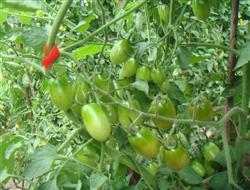
Cherry tomato, also known as mini tomato or micro tomato, is a variety of the common tomato, grown for its berries. Cherry tomato fruits are small, with a single fruit weight of 10-20 grams. The plants have strong growth vigor and bear many fruits, with 400-500 fruits per plant. Fruit shapes include spherical, jujube-shaped, and pear-shaped, giving them high ornamental value. The fruits can be eaten raw, cooked, and also processed into tomato paste, tomato juice, and canned tomatoes. Cherry tomatoes have high nutritional value, rich in carotene and vitamin C. Ripe fruits have a sugar content as high as 7%-10% and a unique flavor. They also play an important role in medical health care: the juice contains calomel, which has diuretic and kidney-protecting effects; the fine hairs on the fruit skin can secrete rutin, which has the same effect as vitamin E, lowering blood pressure and preventing cerebral hemorrhage and arteriosclerosis.
Cherry tomato is a warm-season vegetable, and its temperature requirements for growth and development are higher than those of the common tomato. The optimum temperature for seed germination is 25-30°C, the optimum temperature for growth is 20-25°C, and the optimum temperature during the fruiting stage is 15-25°C. It likes light; insufficient light causes serious flower and fruit drop. Its water requirements are low in the early stage and high in the later stage. It has strong adaptability to soil and performs best on sandy loam. It likes potassium fertilizer, and to prevent blossom-end rot, calcium fertilizer should be applied appropriately. Cherry tomato yields are relatively low, at 600-1500 kg per mu, and selling prices are relatively high. Main varieties include Shengnyu, Lingqiu, Cherry Red, and Lingtailang.
The main cultivation technique points are as follows:
I. Cultivation season. The cultivation season for cherry tomatoes is similar to that of common tomatoes. For open-field cultivation, spring sowing can be done by raising seedlings under protection in February, transplanting after the last frost in late April, and entering the harvest period in mid-to-late June. For autumn sowing, seedlings can be raised in July, transplanted in August, and harvesting begins in October. Protected cultivation can be appropriately advanced or delayed.
II. Sowing and seedling raising. Cherry tomato cultivation mostly uses the method of raising seedlings and transplanting. ① Seedbed preparation. The seedling bed should be chosen in a plot that has not grown solanaceous vegetables. Choose fertile garden soil and mix in 40%-50% decomposed organic fertilizer. For each cubic meter of nutrient soil, mix in 1 kg of superphosphate and 5-10 kg of plant ash. After mixing, sift and spread on the seedling bed. For early spring seedling raising, the seedling bed should be set up inside a greenhouse; if the temperature is too low, electric heating wires should be laid. For summer seedling raising, the seedling bed should be set up in a cool, ventilated place. Summer has a lot of rain, so the seedling bed should have rain-shelter facilities, and drainage ditches should be provided at the ends of the bed. ② Seed treatment. Diseases of cherry tomato are mostly spread by seed-borne bacteria, so seeds should be disinfected before sowing. To prevent viral diseases, trisodium phosphate is mostly used for disinfection in production. Method: first moisten the seeds with clean water, wrap them well in gauze, soak in a 10% trisodium phosphate solution for 15-20 minutes, take out the seed packet, wrap well in a warm towel, and place at 28°C for germination. During germination, rinse the seeds once a day. After about 3-4 days, when 1/2 of the seeds have sprouted, they can be sown. ③ Sowing. Water the seedling bed first. For early spring sowing, water can be appropriately less; for summer sowing, the seedling bed should be watered thoroughly. After the water seeps down, sow the seeds evenly, then cover with 1 cm of sifted soil. Use 3-5 grams of seed per square meter of seedling bed. Each mu of transplanting area requires 6-8 square meters of seedling bed. ④ Seedling management. For early spring seedling raising, attention should be paid to heat preservation. Before emergence, the soil temperature of the seedling bed should be controlled at 25-30°C. For summer seedling raising, rain prevention and cooling should be carried out. After most seeds have emerged, the temperature should be lowered in time, controlled at 20°C during the day and 12-15°C at night. When the seedlings grow 2 true leaves, they are pricked out. ⑤ Pricking out. As temperatures gradually rise in early spring, the pricking-out bed generally does not need electric heating wires. Early spring pricking out should be done on a sunny morning, using the method of planting in dark water: first open a furrow, then water, and after the water seeps down, place the seedlings and cover with soil. After covering, no muddy water should be visible on the surface. The spacing between plants and rows is 10×10 cm. Summer pricking out is done in the evening or on cloudy days, with the same method as early spring pricking out. The spacing between plants and rows is 10×10 cm. After planting, irrigate, shade the bed, and remove the covering after the seedlings recover. Before the seedlings recover, the pricking-out bed temperature should be 25-28°C during the day and 15-18°C at night; after recovery, 20-25°C during the day and 13-15°C at night. Do not water in early spring; water the pricking-out bed frequently in summer. Transplant when the seedlings grow to 8 true leaves.
III. Transplanting. First prepare the land. In combination with deep plowing, apply 5000 kg of decomposed organic fertilizer, 20 kg of N-P-K compound fertilizer, and 20 kg of superphosphate per mu. After leveling the land, make flat beds 150 cm wide (if plastic film is to be laid in early spring, make small raised beds 10 cm high with a bed surface width of 50-60 cm). For flat beds, transplant 3 rows per bed; for small raised beds, transplant 1 row per bed. Plant spacing is 20-30 cm, with 4500-6000 plants per mu. If plastic film is to be laid, first prepare the bed and lay the film, then make transplanting holes according to plant spacing and transplant. The transplanting depth should be such that the cotyledons are 1 cm above the ground.
IV. Field management. ① Watering. If sufficient water is applied at transplanting, no further watering is needed until the first flower cluster blooms and sets fruit. If less water was applied at transplanting, small amounts of water can be poured in furrows in the bed, preferably on a sunny morning. After the first flower cluster sets fruit, water heavily for the first time. The fruiting stage requires a large amount of water, so water once every 5-6 days, keeping the soil alternately dry and wet. Reduce watering during the harvest period to prevent fruit cracking. ② Topdressing. After the first flower cluster sets fruit, apply 10 kg of nitrogen-phosphorus-potassium compound fertilizer per mu along with watering. When the first cluster of fruits begins to color, apply 10 kg of compound fertilizer per mu to promote fruit development. Thereafter, apply fertilizer once every time 2 clusters of fruits appear, with 10 kg of compound fertilizer per mu each time. ③ Temperature management. For protected cultivation, the temperature should be higher than for common tomatoes, requiring above 10°C at night and 20-25°C during the day, with a maximum not higher than 35°C. ④ Pruning. Cherry tomato plants are tall and have poor upright growth. When the plants grow to 50 cm, insert stakes to prevent lodging. Side branches have strong growth vigor, so double-stem pruning is generally used: first keep 2 strong branches and remove the others. Generally, the growing tip is not removed; when the lower old leaves turn yellow, remove them promptly to reduce nutrient consumption. ⑤ Flower thinning and fruit retention. When temperatures are low in early spring, pollination is poor and flowers tend to drop. 2,4-D can be applied to the calyx and pedicel of newly opened flowers (only 1 application is needed). Each cluster of cherry tomatoes has many flowers and fruits; select and keep 20-30 well-set fruits and remove the rest.
V. Harvesting. Harvest when fully ripe, keeping the sepals and a section of the fruit stalk.
VI. Pest and disease control. Common diseases include early blight, late blight, viral diseases, and gray mold. Control methods: carry out a 3-4 year rotation with non-solanaceous crops. In the early stage of disease, use 70% mancozeb at 500 times dilution or 75% chlorothalonil at 600 times dilution, spraying once every 7-10 days for 4-5 consecutive sprays. The main insect pest is aphids, which can be controlled with 20% fenvalerate emulsifiable concentrate at 800-1000 times dilution or 50% pirimicarb at 2000-3000 times dilution.