How to grow loquat out of season? Detailed technical points
How do you grow out-of-season loquat fruit? What should you pay attention to? Out-of-season loquat (also known as Spring Festival No. 1, Xingning No. 1) is an extra-early-maturing loquat variety. Under good management conditions, it generally bears fruit 2-3 years after planting. Its cultivation points are as follows: 1. Orchard establishment and planting: When establishing an orchard on hillsides, terraces should be cut well and planting pits dug well,...
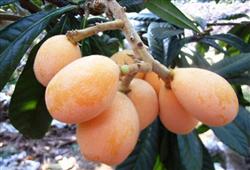
How do you grow out-of-season loquat fruit? What should you pay attention to?
Out-of-season loquat (also known as Spring Festival No. 1, Xingning No. 1) is an extra-early-maturing loquat variety. Under good management conditions, it generally bears fruit 2-3 years after planting. Its cultivation points are as follows:
1. Orchard establishment and planting: When establishing an orchard on hillsides, terraces should be cut well and planting pits dug well. The length and width of the pits are both 100 cm, and the depth is 70-80 cm. When digging the pits, first dig out the topsoil and subsoil and store them separately, then first fill the pit with the topsoil, mix the subsoil with organic fertilizer, and then apply it into the pit and fill it level. After it has been soaked by rain and settled, plant the seedlings. When establishing an orchard on flat land, attention should be paid to opening ditches for drainage to prevent long-term waterlogging and lack of oxygen in the soil, so as to avoid root rot and effects on the survival rate. Planting density: spacing between plants and rows 2 m x 3 m, planting 110 plants per mu.
2. Improving the survival rate: The planting time for loquat is generally after the autumn shoots stop growing and before the spring shoots sprout. After planting, water thoroughly to settle the roots. Due to insufficient preparation or weather reasons, if the seedlings cannot be planted temporarily after receipt, they can first be heeled in and then transplanted later. After transplanting, it is best to cover the roots with plastic film to retain moisture and promote new root growth, and remove the film after May. In the high-temperature season, it is best to cover with grass to lower the temperature and retain moisture.
3. Promoting vegetative growth: When the new leaves sent out by the terminal buds after planting have turned green, it proves that the seedling recovery period has passed and the seedlings have survived. At this time, sufficient fertilizer and water should be ensured, but attention should be paid to preventing death of seedlings or formation of stunted trees due to applying fertilizer and water too hastily or too concentrated. Generally, apply manure water every 15-20 days, and frequently loosen the soil and weed, to promote early growth and rapid development and form a high-yielding canopy as soon as possible.
4. Controlling shoots and promoting flowers to achieve early flowering and early fruiting: After 2-3 years of management, the plant has reached 20-30 branches. In June-July, when flower bud differentiation occurs, if fertilizer and water are sufficient, it will cause excessive shoot growth, thereby hindering flower bud differentiation and affecting normal flowering and fruiting. Therefore, depending on the tree vigor, attention should be paid to controlling nitrogen fertilizer and increasing phosphorus and potassium fertilizer, so as to achieve the purpose of promoting flowering.
5. Pest and disease control: During the year-round growth of out-of-season loquat, the main pests include yellow hairy caterpillars, black hairy caterpillars, etc. The larvae mainly feed on tender leaves, and also damage old leaves, weakening tree vigor and causing reduced yield. When such pests harm the leaves, spray promptly with 2.5% Decis pesticide at 2000 times dilution. In addition, leaf spot disease, angular leaf spot disease, and speckle disease (collectively called leaf spot disease) are relatively common, causing leaf drop, affecting photosynthesis, and affecting growth or yield.
Control method: In the disease season, every 2-3 weeks, spray the whole tree once with equal-strength 1% Bordeaux mixture to protect the leaves, which has a preventive effect. When the disease occurs, you can use 70% thiophanate-methyl at 800-1000 times dilution, or 65% zineb at 500-600 times dilution, or 50% carbendazim at 800-1000 times dilution, spraying the whole tree, used in rotation.
6. For management matters related to tree shaping, pruning, flower and fruit thinning, bagging, etc., other loquat management methods can be referred to for implementation.
Click to view more loquat cultivation techniques
Click to view more fruit cultivation techniques