What are the pest and disease control methods for loquat trees?
How do you control pests and diseases when growing loquat? Which season needs more attention? When growing loquat, focus on the control of anthracnose and the peach fruit moth. 1. Anthracnose. Anthracnose mainly damages the fruit, and in some years the leaves and young shoots are also severely affected. In some years the disease is very severe, and in others very mild. The fruit at the initial stage of the disease...
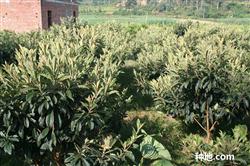
How do you control pests and diseases when growing loquat? Which season needs more attention
When growing loquat, focus on the control of anthracnose and the peach fruit moth.
1. Anthracnose. Anthracnose mainly damages the fruit, and in some years the leaves and young shoots are also severely affected. In some years the disease is very severe, and in others very mild. When the fruit first becomes diseased, small light-brown water-soaked round spots appear, which later turn dark brown and round or oval; the diseased part becomes sunken, forming concentric ring-patterned black lesions densely covered with small black dots, which are the pathogen's acervuli. When there is rain or moisture, the pink sticky substance inside the acervuli (that is, the conidial mass) oozes out. In the later stage the lesions expand very quickly, and often several lesions merge into large diseased patches, causing the fruit to become soft and rotten or to shrivel.
The pathogen of anthracnose is a kind of ascomycete, which overwinters as mycelium on diseased fruit remnants and infected branches and shoots; in the following spring, when it is warm and rainy, it produces new conidia, which are spread by wind, rain and insects and cause damage again. In gardens with poor drainage, dense shading of the shoots, and excessive nitrogen fertilizer, together with continuous rainy weather, seedlings and fruit are more affected by the disease; while under disastrous weather such as strong wind and hail, the leaves are prone to the disease. For late-maturing varieties, the ripening period falls in the plum rain season, so the disease is severe.
As for control measures, drainage ditches in the garden should be strengthened, and the garden should be chosen in a place with relatively high terrain where drainage and irrigation are possible. Apply more potassium fertilizer and the like to strengthen the tree vigor and improve disease resistance. After harvest, combine pruning with the removal of diseased fruit and diseased shoots to reduce the source of the disease.
For loquat gardens with severe disease, when the fruit begins to change color, use 0.3%-0.6% equal-amount Bordeaux mixture, or 50% thiophanate-methyl 500-600 times dilution, or 10% difenoconazole (trade name Score) 2000-3000 times dilution, or 70% chlorothalonil 300-1000 times dilution for control.
2. The peach fruit moth, also called the peach fruit-boring moth and the pear fruit moth. It occurs in 5-7 generations a year. It often damages the young shoots, flower clusters and graft unions of nursery stock of loquat; the larvae bore in and feed, directly causing withering and indirectly allowing pathogens to invade, which encourages the spread of diseases. On the fruit, the adult lays eggs in the calyx tube; after the larvae hatch they bore in and damage the seeds, and excrete feces around the seeds, making the fruit unfit to eat.
For control: first, avoid mixed planting of loquat, peach and pear. Second, kill the larvae and pupae, that is, before overwintering, bundle grass or cloth strips on the trunk to attract them, and before the overwintering pupae emerge as adults, remove the bundles and burn them. In winter, scrape off the old bark and cracked bark on the trunk and dispose of it, to eliminate the overwintering larvae and cocoons. Third, trap and kill the adults. A sugar-vinegar liquid made by mixing 1 kg of brown sugar and 2 kg of rice vinegar with 10-20 kg of water can be used to trap and kill the adults; add 0.1% mercuric chloride or a few drops of formalin to the sugar-vinegar liquid as a preservative.
If young shoots are found to be bored and wilting, cut them off promptly before they wither completely and burn them.
In addition, 3% acetamiprid 1000-2000 times dilution, 10% imidacloprid 2000-3000 times dilution, 2.5% cyhalothrin 3000 times dilution, and 2.5% deltamethrin 2000 times dilution can also be used for chemical control.
Click to see more loquat growing techniques
Click to see more fruit growing techniques