How to Grow Loquats for a Bountiful Harvest: Key Planting Techniques Explained
How can you grow loquats for a bountiful harvest? Here are the aspects to pay attention to. For growing loquats, you can refer to the following: Loquats are not only nutritious and have a unique flavor, but they also ripen during the off-season for fruit, making them sell well on the market. Therefore, cultivating loquats offers good economic returns. To achieve a bountiful loquat harvest, in addition to selecting good varieties, you should also focus on...
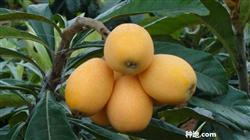
How can you grow loquats for a bountiful harvest? What aspects should you pay attention to?
For growing loquats, you can refer to the following:
Loquats are not only nutritious and have a unique flavor, but they also ripen during the off-season for fruit, making them sell well on the market. Therefore, cultivating loquats offers good economic returns. To achieve a bountiful loquat harvest, in addition to selecting good varieties, you should also carry out the following measures:
1. Scientific Fertilization
1. Flower-promoting fertilizer. Flower-promoting fertilizer should be applied early, generally in early September before flower buds appear, accounting for about 25% of the annual fertilizer application. For each mature tree, apply 3 kg of quick-acting cake fertilizer, 30 kg of human and livestock manure water, and 1 kg of compound fertilizer.
2. Fruit-setting fertilizer. Apply within one week before the spring shoot sprouting in early March, accounting for 25% of the annual fertilizer application. For each mature tree, apply 2 kg of decomposed cake fertilizer, 0.25 kg of urea, 1 kg of compound fertilizer, 30 kg of human and livestock manure water, and 1 kg of phosphate fertilizer.
3. Post-harvest fertilizer. Timely heavy fertilization before fruit harvest is the guarantee for a bountiful loquat harvest the following year. This fertilization accounts for 50% of the annual fertilizer application. For each mature tree, apply 5 kg of decomposed cake fertilizer, 0.25 kg of urea, 50 kg of human and livestock manure, 100 kg of composted stable manure, and 2 kg of phosphate fertilizer.
4. Foliar feeding. Based on tree vigor and fruit set, foliar feeding can be carried out multiple times throughout the year. Generally, spray with 0.3% multi-element compound fertilizer or 0.3% urea solution.
2. Summer Pruning. Summer pruning can quickly restore tree vigor and stimulate the sprouting of summer shoots, ensuring a bountiful harvest year after year. Summer pruning should be completed within 10 days after fruit harvest; new shoots will sprout immediately after pruning. If pruning is too late, the summer shoots will not fully mature, hindering flower bud formation and reducing the following year's yield. For dense branches, crossing branches, and overlapping branches, thinning is the main approach, leaving only 2 strong branches per branch; for water sprouts, pruning should depend on their position. Where space allows, heavy cutting can be used to induce fruiting mother branches or retain them as branches; under normal circumstances, water sprouts should be removed from the base; for strong fruiting mother branches, no pruning is needed, while weak fruiting mother branches should be cut back at the base leaving 3-4 leaves as branches, removing weak ones and keeping strong ones; for adult trees with a dense canopy, the central upright large branches should be thinned out to improve light conditions and promote the sprouting of latent buds in the middle and lower parts of the canopy, achieving the goal of three-dimensional fruiting; for thin and weak branches, dense branches, and diseased and pest-infested branches on the outer canopy, all should be thinned out; for aging trees, the main branches and secondary branches should be heavily cut back over several years to achieve full tree renewal within two to three years.
3. Flower and Fruit Preservation and Fruit Thinning
1. Flower and fruit preservation. Spray nutrients and plant growth regulators. Spraying 10 PPM "920" on loquat leaves during the flower-fading stage can increase the fruit-setting rate by 38.5%; spraying a mixture of 0.25% potassium dihydrogen phosphate plus 0.2% urea on flowers when two-thirds of the flowers have bloomed can increase the fruit-setting rate by 34.8%.
2. Fruit thinning. First thin out frost-damaged fruits, then thin out densely set fruits. Large-fruit varieties should retain 2-3 fruits per cluster, medium-fruit varieties 3-5 fruits per cluster, and small-fruit varieties 5-8 fruits per cluster.
4. Preventing Fruit Cracking and Sunscald.
Starting from the end of March before fruit ripening, cover the tree base with weeds, rice straw, or crop stalks, which can cool the soil and retain moisture. In case of high temperature and drought, spray water promptly. During the color-turning stage (from green to light green), spray 0.14% ethephon solution once a week for 2-3 consecutive times, which can prevent loquat fruit cracking, significantly reduce fruit rust spots, give the fruit a bright orange-red color, make the flesh soft and juicy, and advance ripening by 7-10 days.
5. Drainage and Drought Resistance. Loquats are afraid of both drought and waterlogging. Prolonged drought during the flowering period without rain can cause flower withering. Prolonged drought during the young fruit stage can easily cause shriveled fruit, so measures such as mulching, furrow irrigation, and water spraying should be taken promptly to combat drought. During the rainy season, root rot can easily occur and cause tree death, so ditches should be cleared promptly to drain excess water. For heavy clay soil, dig 1-meter-deep drainage ditches in the orchard and bury cobblestones to facilitate drainage.
Click to see more loquat growing techniques
Click to see more fruit growing techniques