What are the precautions during the sweet cherry harvest period?
What should be noted during the sweet cherry harvest period? During the sweet cherry harvest period, note the following: 1. Determining the ripening stage. The ripening stages of cherry varieties grown for cultivation are very inconsistent; even fruits in the same inflorescence ripen at different times. "Forty days after flowering, the cherry shows its freshness." In May-June, cherries can ripen and reach the market. But fruit harvesting...
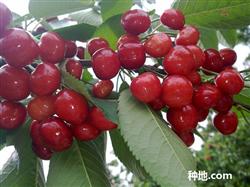
What should be noted during the sweet cherry harvest period?
During the sweet cherry harvest period, note the following:
1. Determining the ripening stage. The ripening stages of cherry varieties grown for cultivation are very inconsistent; even fruits in the same inflorescence ripen at different times. "Forty days after flowering, the cherry shows its freshness." In May-June, cherries can ripen and reach the market. The fruit harvest period is an important part of the annual growth and development cycle.
Determining the harvest time of sweet cherry fruit should be based on whether it is ripe, and the determination of its maturity should take into account comprehensive factors such as coloring, fruit size, flesh firmness, and flavor quality. It is best to harvest when the fruit is fully swollen, the flesh is elastic but not softened, and it has already shown the flavor quality specific to the variety.
2. Harvesting methods. Harvesting should be done in batches and by stages. The harvest time should be determined comprehensively according to fruit maturity, use, and market demand. Varieties that ripen unevenly should be harvested in stages. If the fruit cannot be processed immediately after harvest, low-temperature preservation measures should be used to achieve a high yield and a good harvest. Moreover, on a single cherry tree, because the flowering times differ and the fruit is located in different positions, the ripening stages are not completely consistent. Generally, early-opening flowers and fruit on the upper and outer parts of the canopy ripen earlier than late-opening flowers and fruit inside the canopy. Therefore, harvesting should be done in batches and by stages according to the fruit's ripening condition.
Harvesting should take the variety into consideration. Among sweet cherries, soft-fleshed varieties ripen and soften relatively quickly, so their harvest period is shorter and more concentrated; hard-fleshed varieties store and transport well, so the harvest period and processing time can be slightly longer. The same variety often has its harvest period advanced or delayed in different years due to climate influence: in dry weather, the ripening stage is advanced and the harvest period is shortened; in slightly cool and humid weather, the ripening stage is delayed and the harvest period is extended.
Harvesting depends on the intended use of the fruit. Fresh-eating cherries sold locally should generally be harvested when fully ripe and showing the characteristics of the variety; cherries for out-of-town fresh sale or processing should be harvested at 8 maturity, 5-7 days earlier than for fresh eating; if used for winemaking, they should be harvested when fully ripe.
3. Soil, fertilizer, and water management. Intertillage and grass planting. After rainfall or watering, intertillage and loosen the soil in time to keep the soil loose and free of weeds. The intertillage depth is 5-10 cm to regulate temperature and conserve moisture. Planting grass means interplanting nitrogen-fixing plants such as clover and alfalfa in the orchard to increase soil organic matter.
Topdressing measures. For soil topdressing, apply it 20 days before the harvest period in the late fruit growth stage. The fertilizer amount is preferably 1 kg pure nitrogen, 05 kg pure phosphorus, and 1 kg pure potassium per 100 kg of large cherries produced. The fertilization method is to open furrows under the tree canopy with a furrow depth of 15-20 cm. Water immediately after topdressing. For foliar topdressing, mainly use phosphorus and potassium fertilizers, and supplement with trace elements needed for the growth and development of large cherries. The application concentrations are: urea 0.3%-0.5%, monopotassium phosphate 0.2%-0.3%, borax 0.1-0.3%.
Water management. Large cherries are not tolerant of waterlogging. After rain, standing water in the orchard must be drained immediately. Water-saving irrigation measures such as drip irrigation and sprinkler irrigation are recommended, and water-wasting irrigation methods such as heavy flooding should be minimized.
4. Training and pruning during the harvest period. Mainly focus on bending branches to open the angle, and promptly thin out vigorous upright branches, dense branches, and sprouting branches at pruning and saw cuts inside the canopy to increase canopy ventilation.
5. Pest and disease control. The control principle is to be based on agricultural and physical control, with biological control as the core. According to the occurrence patterns of pests and diseases, give priority to prevention, use chemical control scientifically, and effectively control pest and disease damage so as to achieve ecological balance.
Agricultural control. Take measures such as pruning diseased and pest-infested branches, clearing fallen leaves and dead branches, scraping off cracked and peeling bark on trunks, turning the tree plate, covering the ground with straw, and scientific fertilization to suppress the occurrence of pests and diseases.
Physical control. According to the biological characteristics of pests and diseases, use methods such as manual piercing to eliminate scale insect pests, wrapping straw rope (bundles) around trunks to eliminate caterpillar pests, and using black light lamps to trap and kill moth adults.
Chemical control. When pest and disease occurrence shows a trend of relatively high density and agricultural and physical control are difficult to achieve the control goal, low-toxicity pesticides can be used for control.
Click to get more cherry cultivation techniques
Click to get more fruit cultivation techniques